


This is the second in my series of short, quickly-written, weekly philosophy essays.
One of the most annoying popular ideas of the moment is the idea that AI is going to take all the jobs. There are many reasons this idea annoys me. But today I’m going to focus on making one simple argument about why ‘AI taking all the jobs’ is a silly thing to worry about. This argument hinges on the value of — and the ease of doing — good conceptual analysis.
I want to begin, however, by emphasising that there are good reasons that philosophers typically don’t get into the prediction game. And that those philosophers who do are not philosophers like me. For a start, I oppose many of the philosophical theories that might (reasonably or not!) predispose philosophers to trying to foresee the future: consequentialism, longtermism, determinism, and so on.
Beyond that, I strongly believe in the value of an intellectual division of labour. I mean, there are people who are clearly much better placed than philosophers to make predictions, when making predictions is useful! To that end, this is not a piece about labour market trends or the relevance of historic parallels — though I do think there are good arguments that can be made against the idea that ‘AI is going to take all the jobs’ that depend on those kinds of approach.
Rather, all I’m going to do today is make a simple argument drawing on some non-controversial claims about some ordinary concepts. Then, I’ll end by briefly discussing what I see as a more general flaw in much current writing and discussion about AI.
I’ll begin by admitting that my strong assumption is that most people who push or buy the idea that ‘AI is going to take all the jobs’ haven’t thought much about what ‘jobs’ are, in a fundamental sense. Or, indeed, about the more fundamental concept of ‘work’. I’ll talk below about the relation between jobs and work. But one very simple thing that the ‘AI is going to take all the jobs’ people seem at risk of forgetting is that work isn’t just something human beings do to earn money. Though, of course, that is a key reason most of us do indeed work.
Work — or the kinds of work that most of us want to do, anyway — also offers a sense of purpose. Working brings fulfilment and achievement. Again, this doesn’t mean that all work always brings these things, or that everyone manages to find work that does this for them. Indeed, it seems right to feel sad when someone fails to find such work. We feel that they are missing out. That, regardless of their particular skills and interests, there probably is such work out there for them.
We feel sad about such people, I think, mainly because fulfilment and achievement are basic fundamental goods. What I mean by this is that fulfilment and achievement are things that are objectively and irreducibly good for us, as humans. Of course, there are many other ways to find fulfilment and achievement beyond working! But work is perhaps the standard route to these things, for most people. It’s certainly an ordinary and easy route, for many of us.
Moreover, it seems clear that working resonates with something in our nature. It resonates, that is, with being the kind of thing that we are, as human beings. And this resonance suggests that the value of work may go beyond the ways in which working is instrumentally valuable for us.
We humans have the distinctive capacities to reason, to act of our own volition, to create, to innovate, and to acknowledge and take pleasure and pride in these things. And work, of so many kinds, enables so many people to do these things, at a complex level, on a daily basis. And to get better at them. This helps to explain why some philosophers list work, itself, as one of those basic fundamental goods.
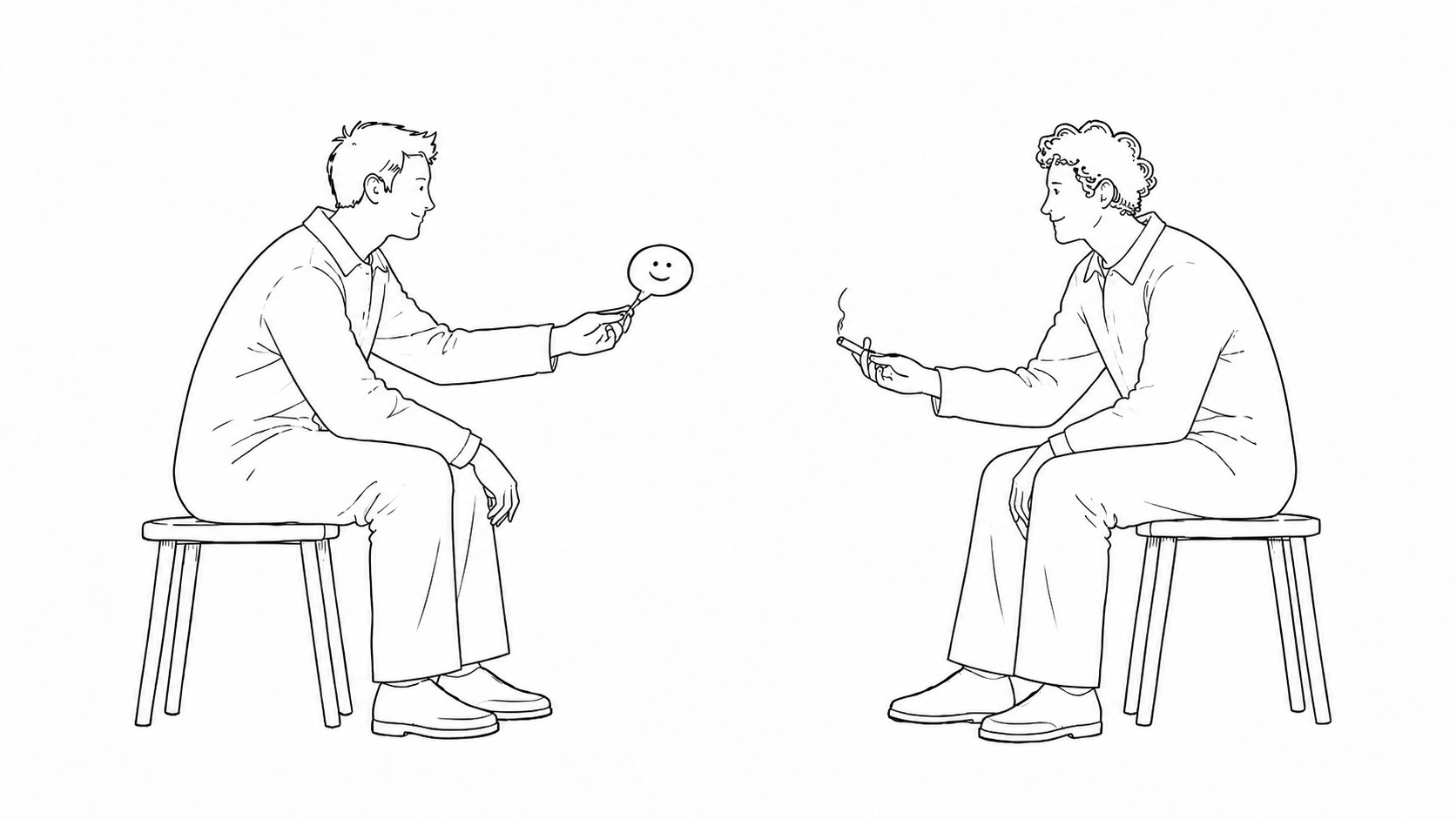
None of what I’ve said so far is controversial. And, for current purposes, it offers us a strong story about why people in all cultures and times have worked. An example of this, which I often think about, is how even in prisons people find ways to trade with each other: they exchange skills and goods, swapping jokes for cigarettes, and giving social advice in return for help filling in forms. I bet this happens in the most brutal labour camps, too, when it is possible. This simple example helps me to conclude that it’s almost incoherent to think that humankind could ever be totally jobless.
All that said, we can and should debate what counts as ‘work’, and relatedly what counts as a ‘job’. People often disagree, for instance, about whether taking care of your kids or your aging parents counts as either of these things. And there are overlapping debates about whether the moral status and relevance of certain kinds of activities affects the extent to which they count as ‘work’ or ‘jobs’. You can see some of this play out when people use the term ‘sex worker’, for instance. That said, broadly, my take is that the use of this term is generally motivated more by a kind of relativistic virtue-signalling, than a desire to comment on what counts as ‘work’.
For now, however, let’s agree on a very simple and overly reductive descriptive distinction, on which ‘work’ includes all of those types of activity above, but the term ‘job’ is reserved for types of 'work’ which are recompensed.
It’s worth noting that even on this reductive distinction, the prison examples do count as ‘job-type work’ — whereas the family caregiving examples generally do not — because it’s not only money per se that counts as recompense. And, of course, recompense is valuable to us in multiple ways, too. I mean, sure, being rewarded for our work enables us to support ourselves and our families, and to access the goods and services we prefer. But being paid also represents respect shown for skills used and commitment given, and relatedly helps to confer status.
When you think about these standard concepts in this deeper (but very ordinary!) sense, then the idea that AI will ‘take all of the jobs’ only really makes sense in some sci-fi world in which all the humans have been locked in pods or uploaded to the cloud. And at least in the latter situation — if we halt reality and take such a crazy notion as possible! — then jokes and social advice could, of course, still be exchanged.
Okay, by this point, the ‘AI is going to take all the jobs’ people are no doubt dying to tell me that they don’t really mean ‘all the jobs’! That instead, they mean ‘the current jobs’ (at which point I refer them to my friends the economic historians). Or they mean ‘the good jobs’ (at which point I do the same, while also telling them to be more pluralistic). But regardless, at least I’d have got them to stop talking about ‘all the jobs’. This is a crucial first step towards sanity!
The bigger point I want to end by making, however, pertains to the deficiency of good conceptual thinking that I see, more generally, in writing about AI. I see this particularly in writing about AI that hits the headlines by making these over-the-top claims about what the future holds. My favourite example of this is not ‘work’ but ‘scarcity’.
I’ve argued here previously that an end to scarcity — and again, I’ll halt reality and accept that such a thing is possible, even though actually thinking it through will make you laugh — would not rid us of our need for property systems that are productive and allocative. In other words, ‘abundance’ wouldn’t undermine the core comparative strengths of private-property systems. No matter how many trees there are, I want that one! No matter how many cakes there are, I want that one! And no matter how many cakes there are, we’re going to need to keep producing them for us all to get cake!
Now, you can read my previous piece to find the clever complex arguments that back up these shouty claims, if you want. But you really don’t need to! This is because it’s all incredibly obvious, if you just stop and think about it. Same with the jobs thing. And, of course, the two interrelate.
So why do people fall for this stuff? I mean, I see smart people falling for it, day after day, at the moment. Well, again, I’d rather leave such matters to the psychologists, and get back to doing my philosophy. But the best analysis I can offer is the following, which I said in a recent podcast episode:
“I think a large part of this is you don’t really get experts in their particular domains writing about AI. Instead, you get ‘the AI expert’, and they want to reinvent the wheel. You see this when they write about economics, or when they write about philosophy. You talk to an AI person and suddenly they’re like, “I’ve just discovered this thing!” And it turns out they’re talking about, like, supply and demand. And you’re like, oh my God.”
Start with the ordinary concepts! Don’t reinvent the wheel! Whether the rest falls into place is a matter for the clairvoyants..
Thanks to GPT for the picture.
Excellent point about a certain kind of AI expert that opines universally but had expertise in nothing in particular.
Excellent essay!