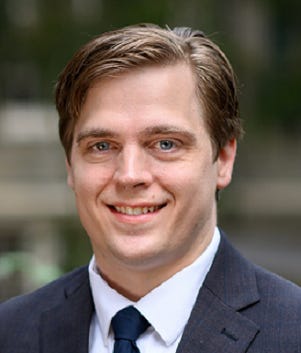

In this episode, Thomas Howes and I discuss postliberalism.
We talk about the relation between postliberalism and liberalism, whether postliberalism is best thought of as a political movement, the current-day and past thinkers who’ve become key to different branches of postliberalism, the values and principles that seem central to postliberalism generally, and much more.
In short, we do some philosophy! I hope you enjoy it...
TRANSCRIPT
[The following transcript was generated by AI, so while it’s been checked over, it may contain small errors.]
REBECCA: Hi, I'm Rebecca Lowe and welcome to Working Definition, the new philosophy podcast in which I talk with different philosophical guests about different philosophical concepts, with the aim of reaching a rough, accessible, but rigorous working definition.
Today, I'm joined by Thomas Howes. Thomas lectures in politics and ethics at Princeton. He has a background in philosophy. He's the co-author of a recent excellent book, Why Postliberalism Failed. He has an upcoming book with Notre Dame Press, called Beyond Postliberalism. And today, yes, as you might have guessed, we're going to be talking about postliberalism. Thomas, thanks so much for joining me.
THOMAS: Oh, thank you for having me on the show.
REBECCA: So, I thought we'd start with a bit of a silly philosopher's question about the relation between postliberalism and liberalism. So, I'm wondering things like, could you understand what postliberalism is if you didn't know what liberalism is? So say you've just never heard of this thing, liberalism, could you get into getting what postliberalism is? To what extent is it parasitic on liberalism?
THOMAS: Gosh, that's a really good question, and I guess one of the issues is identifying what liberalism is actually really difficult. [laughter] I think I mentioned to you earlier the… Wittgenstein has this concept of words as defined by family resemblance.
REBECCA: Mm-hmm.
THOMAS: And, you know, you can think of that like how in a family, Bob looks like Harry because of one thing, and then Harry looks like Karen because of another thing, and Karen looks like Susie because of another thing. But Susie, does she really look like Bob? Well, definitely not in the same way. You know what I mean? All that, right?
So that's kind of how it ends up becoming with a lot of…. In philosophy, we can avoid that with clear definitions. But the problem is, when you're working with political movements, there's such an organic component to them that brings together many different people and different ideas under certain banners. So I don't know if it's actually helpful to give a, you know, a perfect definition of these.
People will fight forever about what ‘fascism’ is. I think all of them make good arguments, and that maybe at the end of the day, there is a little bit of choice in whether you're going to call something ‘fascist’ or not. The best thing you can do is say it has similarities with the other things that people call ‘fascism’, right? Similar thing with liberalism.
We see that — one of the postliberals that we address in the book is Patrick Deneen. And really, we're focused on these Catholic postliberals. We almost have to use an ostensive definition where we point to this clique of Catholic postliberals like Patrick Deneen, and Adrian Vermeule of Harvard Law School.
Patrick Deneen's a political theorist at Notre Dame, and he wrote a book in 2016 called Why Liberalism Failed.
REBECCA: Yes, which gives a little signal to the context of your book.
THOMAS: Yes, that's right. That's right. So we're just teasing, right? [laughter] Some people got so mad about that title, and I was like, it was just a joke…
REBECCA: It's funny to me, though, because this second book you're writing, Beyond Postliberalism. Because one thing somebody might say, if they were being super cynical is, like, look, you're trying to, on some level, there's some sense in which your book is trying to warn us against postliberalism.
THOMAS: Yeah.
REBECCA: You do a very nice job, for instance, of saying how postliberal instantiations have failed. Here are bad things about postliberalism. Yet, you’ve said it's failed! So does that mean we don't need to worry about it?
THOMAS: Oh, yeah. Well, within the book — you know, it's supposed to be a provocative title. Within the book, we qualify what exactly we mean by failure. It doesn't always mean failing politically, at least as far as gaining power. But if gaining power ends up with outcomes that even your own moral worldview can't accept as moral, then I think that's a kind of failure, even if it's a political success. And I think that's what you see in a lot of the cases that we identify in the book.
But back to Deneen, though. When he has his argument against liberalism, he connects people from Thomas Hobbes all the way to John Rawls and Barack Obama — and, as if this target is liberalism. So, as part of the same target are George Washington and James Madison and John Dewey, right? So, that's a similar issue to nailing down what liberalism is.
And I think one of the criticisms that I had of his book, and it was a very rhetorically brilliant book. It was a diatribe, which are generally more fun to read than other academic works, at least for the general public especially. And he's also very good at identifying problems in contemporary society. And I think that's where a lot of the — what attracts people to the book is that he's not afraid to identify certain problems that maybe other people are afraid to mention. Like, with education, or with the expansive bureaucracies, and all these other things that we deal with today.
But I think the big criticism that I had right away was it's too broad. I mean, you're attacking George Washington and James Madison at the same time as John Dewey, and that seems to me like too big of a target. And his narrative, that it all came from — the whole thing emerged from the seed of a sort of social contract theory from Hobbes. First, I don't find believable for historical reasons. I don't find it believable for philosophical reasons. But the idea then that John Dewey or, you know, one of the hot button issues for the postliberal right are some of these social issues today, dealing with wokeness, for instance.
I don't believe that there's a necessary relationship between George Washington and wokeness. [laughter] I'm saying you can support George Washington and reject wokeness, right? And whatever wokeness is, too. That's also a family resemblance word probably as well. [laughter]
So our target then is… But after Why Liberalism Failed, at the end of Why Liberalism Failed, Patrick Deneen has a pretty sensible solution. He says that we should just focus on local democracy.
REBECCA: Yes.
THOMAS: And at the end, people are like, well, what's so radical about that? It's like, no, it wasn't radical in its policy proposal! It was more radical that it engendered a sort of resentment against the American experiment.
REBECCA: So I read a bit of the opening section, last night. I'd been meaning to read this book. Last year, we had a load of interns at Mercatus, and they were all reading this book because it's this big social phenomenon.
THOMAS: Yeah.
REBECCA: I think it came out, what, 2017 or something?
THOMAS: I think so, yeah.
REBECCA: But it seemed to have this almost, like, little set of resurgences.
THOMAS: Yeah.
REBECCA: And it was clearly going through one of these moments, last summer. And I think it's still around…
THOMAS: I think it sold over 60,000 copies, which for an academic press is incredible.
REBECCA: That is incredible. And he certainly is a, like you say, a rhetorical writer. He's very easy to read. I found the opening quite amusing in its treatment of liberalism. It does that thing of, "Hey, maybe liberalism's failed because it's illiberal!" I find this amusing. Liberalism can be many things, but liberalism can't be illiberal.
THOMAS: Yeah, that's right.
REBECCA: And then he also is sort of trying to say, "Hey, I'm going to save the good things", at the same time as saying, "We need something else".
THOMAS: Yeah, yeah.
REBECCA: Which is a kind of sophistic… It might gain you some popular appeal. And another thing I found amusing is that he, and he says it explicitly a couple times in the opening, he wants to say that liberalism is statist.
THOMAS: Yeah, that actually, that might be surprising if you're reading it, if you're thinking about his cohort of — Adrian Vermeule, who's very much a statist.
REBECCA: This is right. But also because I think it's fair to say a lot of liberals, and certainly the classical liberals and the kind of tradition I'm in anyway, we are quite obsessed by the state. The kind of oppression, or the kind of constraints on our freedom that we often are most focused on are state-based threats to our freedom.
And sometimes people, I think quite fairly, say, "Look, there are these other kinds of constraints on our freedom". I’m thinking of someone like Elizabeth Anderson. She says, "Hey, look, some similar kinds of constraints happen in the workplace". That seems to me fine. I still am pretty concerned about the threat of the state!
THOMAS: Yeah, the one that you can’t get away from is the more dangerous one.
REBECCA: This seems right. It also just seems like it's a different kind of power. There are these bigger questions about where the authority lies. But I also think, because the liberals are concerned by the state, but also accept some small kind of state, as opposed to, say, the anarchists. The idea, therefore, of calling liberalism statist, I find this amusing.
THOMAS: Yeah, it's interesting. It all goes into his thing that whatever happened with George Washington and James Madison necessarily leads to John Dewey. [laughter] And it's like then now George Washington and James Madison are to blame for an over-expansive state.
REBECCA: Right, yes. It seems to me, again, he's sort of playing games with words, isn't he?
THOMAS: Well, I think, yeah, I think sometimes he gets lost in his own rhetoric.
REBECCA: Yes, that seems to me, that seems to be fair. Going back, so one thing you said, which I want to pick up on — you referred quite early on to postliberalism as a political movement.
THOMAS: Yeah.
REBECCA: Or, at least when you were talking about postliberalism, you used this term.
THOMAS: Yep.
REBECCA: So it strikes me, if we were to think, for instance, about the relationship again between postliberalism and liberalism. Even though I agree with you that there are different — at least the way I see it is something like, liberalism is a kind of family set of theoretical frameworks for addressing important politico-philosophical moral questions. Or something like this. And I completely agree that it can be hard to find common threads between these different liberalisms.
THOMAS: But there are some, like, core things.
REBECCA: Yes.
THOMAS: That are probably common to at least most of them.
REBECCA: That seems right. I mean, my personal view is that I think they have some kind of commitment to the value of freedom.
THOMAS: Yeah.
REBECCA: In some objective sense.
THOMAS: Yeah, it'd be hard to call liberal something that didn't have a value of freedom.
REBECCA: This seems to me right. And then maybe some conception of individual and social freedom. And I also tend to think that they adhere to some kind of moral worldview that has, again, some particular commitment to freedom. But that's relatively broad. That's quite a pluralistic conception.
THOMAS: Yeah.
REBECCA: But nonetheless, within this kind of approach, which I think is relatively mainstream, I'm saying something like, look, liberalism is a kind of theoretical framework for addressing politico-philosophical moral questions. Whereas, it seems like postliberalism is not that. On your view, at least. It seems like it's a political movement. Is that fair, or am I overconflating?
THOMAS: Well, yeah, I think it's similar insofar as — so, we leave alone the Protestant postliberals, who are more ivory tower critics of liberalism.
REBECCA: So with these people — like, John Milbank?
THOMAS: John Milbank, that's right. And they tend to be — if they get into politics, it's, like, they're in the Labour Party. [laughter]
THOMAS: That's not — it's kind of like Alasdair MacIntyre, I guess.
REBECCA: Yes, right. Who again I find, it's funny, I was recently… Sadly, he died last year, wasn't it?
THOMAS: Yeah, 2026, I think.
REBECCA: I was rereading that nice prologue to the third edition of After Virtue, where he says, "Look, I'm not a liberal! I'm not a conservative! I'm not a communitarian!" And the thing he does admit to, is he loves Marx, and he loves the Marxists.
THOMAS: Yeah.
REBECCA: And it was very amusing when I was reading all the obituaries, and they were all trying to claim him for their team, like, "Secretly, really, he's a communitarian!" It's like, guys, he's literally telling you what he is!
THOMAS: Yeah. No, I have this love, I have this interesting rapport with MacIntyre, because he was so important in my own thinking. And at one point, he was my favourite philosopher. But then, I had to move past his politics, because…
REBECCA: Yes. Where do you stand — the thing I enjoyed most reading by him, I think, was Dependent Rational Animals.
THOMAS: I thought that was pretty good. I actually preferred the stuff on, because I have sympathies…. I don't know where you stand on this, but I have sympathies with hermeneutic thinking of, like, Gadamer. I actually like Michael Polanyi, even though he's kind of a…
REBECCA: Yeah, yeah, I'm afraid I don't get anywhere with — I have a lot of friends who are into these people, and I should try again, but I don't really get them.
THOMAS: Oh, okay.
REBECCA: I'm the boring, dry, analytic philosopher, who wants to read Quine, and thinks Rawls is a good writer, even though I disagree substantively.
THOMAS: Oh, I'm fine with Rawls' writing, yeah. I don't mind reading Rawls. [laughter] But MacIntyre is kind of, I guess, like Polanyi, he's able to put into... And also, like late Wittgenstein, I think, speak to an Anglophone audience to some of these ideas about the relationship between whole and part, and our cognition, and the value of tradition.
And I think his third book of that trilogy about — well, I'm just blanking on the name of the book — but it was about, he had three models of moral inquiry. And he basically defends the value of tradition in moral inquiry.
REBECCA: Yes.
THOMAS: And he also had — out of that comes his theory of education. And I actually am very sympathetic to this idea, right now. I get myself into trouble talking to academic philosophers, because I think sometimes as academic philosophers, any kind of academic, there's the water that we swim in and we don't see it.
And the university is structured with guilds. And we have a guild, in the philosophy guild. Although you have competing guilds. Like, continental and analytic and whatever. But you have guilds, right? And they're hierarchical. They try to be meritocratic, but like in any human system, they're not going to be perfect, right? And the system for evaluation, and whatever.
It’s like, you know, the NFL spends millions of dollars a year on talent evaluation and they get it wrong all the time. We don't spend nearly that much in academia, and we're gonna get it wrong even more, because it's not a perfect system.
REBECCA: Yes. I have a lot of problems with academic philosophy, per se. I quite enjoy not — I mean, I'm at a research center in a university, but a lot of my friends are philosophers in philosophy departments.
THOMAS: Yeah. So, more than anything, than a critique, it's just calling attention to the reality of it. And I bring up philosophy because that's the one I know best, or that one and politics, I know best. But we're in a context, an academic and institutional context, which I think is dominated — there are some elite private schools that are, sectarian. But they're the exception, not the rule. And I think a non-sectarian university has most of the hegemony in our system. But there are advantages and disadvantages to have a non-sectarian versus sectarian university.
REBECCA: Sure.
THOMAS: There are advantages to having: this is our constitution, here. This is our plan. These are what we believe as a thing for a competing university, that you're allowed to develop a tradition of thought that then you can enter into competition with other traditions of thought, through, right? I think MacIntyre's ideal for the university was to have competing sectarian universities.
REBECCA: Yes.
THOMAS: So you have the Catholic university, versus the Baptist university, versus the Muslim university, versus the progressive university, versus the secular humanist university. [laughter] Or at least departments like that, where they're allowed to whatever. And then there's a sort of competing pluralism, competitive pluralism.
REBECCA: Yes, I like this idea. So one thing I enjoy that we have here, is we have a big focus on disciplinary expertise. I really enjoy being around the excellent economist, the excellent political scientist. I worry I wouldn't get that so much in a philosophy department.
THOMAS: Yeah.
REBECCA: I also don't like a lot of the incentives in academia, per se. So I think, for instance, the idea that the university effectively has a monopoly over the production of academic goods, I think the journal system is bad and wrong. It often leads to quite bad outputs. But I do like this idea of competition. I think, for me, it would always be at the individual level. I don't like the idea of intellectual heroes. I struggle with the idea of being within a…
THOMAS: In a school, yeah.
REBECCA: In some traditional school. Although I think I'm pretty obviously a Lockean classical liberal. But even there, I'm constantly looking for the things I disagree with. So I love that idea of competing between.
THOMAS: Yeah, so that's the tension I have. And I think it would be a tension for MacIntyre, too, because MacIntyre couldn't find a room of five people that he had any significant agreements with, you know?
REBECCA: That seems, yes that seems fair.
THOMAS: Because he was such an outsider.
REBECCA: I would also say, I do enjoy — I mean, I think he's very clearly a very serious philosopher. If we're thinking about the serious philosophers of the last 50 years, 100 years. It's very clear that, even though I…
THOMAS: Have strong disagreements with him.
REBECCA: Yeah, I do. I do. And I think some of that is at the level of, I mean, if you think of the key, or at least what I think of as the key argument in After Virtue. Which is something like, to be able to understand the kind of modern cultural moment, we have to be able to sort of stand outside of it. Therefore, hey, we can look to Aristotelian virtue ethics! But only a special person can do that and look also from within! And I mean, I struggle... It also seems to me, on some level, I feel like there is some of the Marxism playing in terms of the focus on the conditions, and the…
THOMAS: There's that in Deneen as well.
REBECCA: Yes.
THOMAS: Deneen has admitted a Marxist influence as well.
REBECCA: Do you think this comes — so, if we come back to the political movement sense of postliberalism, it seems to me, if you were looking for some simple definition of what it is, you'd say something like it's a reaction to a caricature of liberalism?
THOMAS: Mm-hmm.
REBECCA: So I was just talking to some of my colleagues before this, and I was saying, "Hey, what do you think postliberalism is?" And quite a lot of times, this idea that it's this set of people attacking this kind of… “Hey, neoliberalism is evil!” It's led to the poor people not getting anything. It's a very sort of monolithic, quite caricaturey sense.
THOMAS: Yeah.
REBECCA: This also then speaks into your point around the distinctions between the different liberals. The idea that Barack Obama has the same set of policy prescriptions as John Locke is very amusing.
THOMAS: Yeah, it is very amusing. Yeah, no, I think that's also one of the... Listen, I should say something nice about Deneen. [laughter] I wrote a review of his book on The Odyssey, recently. And I enjoyed 85 per cent of it.
REBECCA: Hey, that's great.
THOMAS: But back to criticising Deneen. [laughter]
REBECCA: I like that. You did the one little shout-out.
THOMAS: Yeah, I had to say something nice.
REBECCA: Just to show that, you know, we're not biased here.
THOMAS: Yeah, we're not trying to attack him personally, you know. But he…
REBECCA: Sure, sure.
THOMAS: But he does — I think he is so good at the rhetorical techniques that he gets lost in them sometimes.
REBECCA: Yes.
THOMAS: If you bring up the very real unobjectionable advancements of the modern world, like the fact that it used to be the case, that, what was it, over 50 per cent of our children would die before they got to adulthood. I mean, that makes it so the past is unlivable for most of us. Like, we wouldn't wanna go back in time and start a family.
REBECCA: I think this seems right. I mean, it seems to me undeniable that the opportunity to live a happier, healthier, longer life, is available to everyone. Even those people who don't have many of the advantages we have in a developed nation like America. In terms of the knock-on benefits to other places, and the opportunity to be able to develop those things, because new solutions have been — technological solutions to old problems have arisen. I mean, this just seems pretty undeniable.
THOMAS: Yeah, absolutely. But the problem is, and I think for Deneen, and it's a similar issue with MacIntyre, too, is there's a tradition of thought, of these really brainy — MacIntyre is a really bright guy.
REBECCA: Sure.
THOMAS: But there's this tendency in that MacIntyre is kind of a proto-postliberal. [laughter] You know, he's kind of like their godfather, but he disowned them, though. Somebody wrote an article like he's like the godfather of postliberalism, disowned this postliberalism.
REBECCA: So, this is yet another one! He's like, "Look, I'm not this! I'm not this! I'm not this!"
THOMAS: Yeah, exactly.
REBECCA: "I love this! I love this!"
THOMAS: Yeah, exactly.
REBECCA: I mean, I've got a lot of sympathy for that.
THOMAS: The thing is, his leftist sympathies never left him. So, if he saw anything that looks fascisty he would get really…
REBECCA: And good for him, because, I mean, and we should get on to this. One thing I find very concerning about this kind of postliberal movement is this… Sometimes it's a shy adherence, but nonetheless an adherence, to some of these thinkers. I mean, Schmitt comes up all over the place.
THOMAS: Yeah.
REBECCA: I find this, I personally find it insane.
THOMAS: Oh, I know, yeah. Well, most of them don't want to say Schmitt, because he’s… the Nazi thing.
REBECCA: That's right.
THOMAS: Because he was a Nazi.
REBECCA: He's literally the Nazi jurist.
THOMAS: Yeah.
REBECCA: I find liberals doing this, too. I recently was speaking with some German liberals, and they were trying to do this Schmittian rehabilitation. And I'm like, "Guys..."
THOMAS: He's not even really profound.
REBECCA: I completely agree.
THOMAS: I read a significant amount of Schmitt, to write essays to try and understand the Schmitt thing. And what I got out of it was he just really wasn't a profound thinker. But he gave a sort of framework for rationalizing thug politics, basically.
REBECCA: Yes. You know, I have this very boring but very standard view, which is, like, what a surprise, the stupid person has stupid views. Like, if you're a racist, you're stupid.
THOMAS: Yeah, I know.
REBECCA: I mean, this is just pretty obvious.
THOMAS: I know.
REBECCA: So therefore, the guy who comes up with justifications for the Nazi regime, what a surprise, they're stupid.
THOMAS: Although I have to say that I did get a lot out of the first half of Being and Time by Heidegger. He's kind of the exception, not the rule.
REBECCA: So Heidegger, I think — I just I can't get anywhere reading it.
THOMAS: He wasn't a very good person.
REBECCA: No, clearly a horrible person.
THOMAS: Yes.
REBECCA: I can't get anywhere reading it, but…
THOMAS: On multiple levels.
REBECCA: Yes, on multiple levels.
THOMAS: There you go.
REBECCA: This seems correct. But nonetheless, it does seem to be the case that philosophers I admire get more out of Being and Time than they do out of, say, some comparable books by some of these other people.
THOMAS: I think so.
REBECCA: I'm willing to give that.
THOMAS: Yeah.
REBECCA: And if you're into thinking about metaphysics, you probably... And I do love metaphysics, so I probably should spend more time with that book. I'm also just, like, I don't know. The person who reasons to come to those conclusions in their life. I'm just hesitant to consider whether I'm really going to get much out of their reasoning on other topics. Not because people are coherent and consistent. But just because, if you're capable of coming to these really fucking stupid... [laughter]. Sorry, we're talking about Heidegger!
THOMAS: Yeah.
REBECCA: These stupid conclusions. Do I really want to spend my time thinking about his conceptions within metaphysics?
THOMAS: Although I think you could probably just skip Heidegger and read the more easier to read, more coherent, like Herbert Dreyfus, or something.
REBECCA: Sure, sure. Maybe that's…
THOMAS: I don't think, I've never heard anything negative about him. I think he was a nice guy, or whatever. I know people who were in Berkeley faculty, and were like, “Nice guy."
REBECCA: So, look, while we're on some of these people. Some of these key figures within postliberalism. Because I do think one way you might start to cohere around some concept, or think about what the edge is, or think about what the content of something is, is “Who are the key figures?”
Okay, so a couple of other people I'm intrigued by. One, I have to say, when I came to America, and all my friends, particularly my Catholic friends, are talking about postliberalism, and integralism, which we should get on to.
THOMAS: Mm-hmm
REBECCA: They kept bringing up the name Tom Pink.
THOMAS: Oh, yeah.
REBECCA: Now, this is interesting to me because I know him a little.
THOMAS: Yeah, he's an analytical philosopher.
REBECCA: Yes. When I was doing my PhD in London, we would sometimes meet up and chat about free will.
THOMAS: Oh, yeah. He's a libertarian free-willer, right?
REBECCA: That's right. Like you and me. We are part of the gang.
THOMAS: That's right. I'm a libertarian free-willer.
REBECCA: That's right. Part of the cool gang.
THOMAS: We should do a conference with Tom Pink sometime.
REBECCA: We should!
THOMAS: Oh, we should. I would like to befriend him. I hear he's a nice guy.
REBECCA: He's a very, very nice guy. But the thing I found amusing was that my friendship with him was entirely predicated on we'll talk about free will. And I was interested in thinking about Locke on free will, and free will generally. He's very interested in Suárez. So I kind of see him as this…
THOMAS: Yeah, so I am.
REBECCA: Yeah, Suárez is very interesting. But I saw Tom very much as this very smart analytic philosopher who's thinking about, like, causation within Suárez. And then, all of a sudden, I come to America, and it's, like, Tom Pink is the guy behind postliberalism!
THOMAS: Yeah, so I'm going to say something about Tom Pink, because Tom Pink was more of an excuse for the postliberals than anything else.
REBECCA: Right.
THOMAS: I don’t agree with Tom Pink… Tom Pink does write some articles on the Second Vatican Council of the Catholic Church's document on religious freedom, Dignitatis Humanae. He has an interpretation of it that I don't agree with. And in our book, we address Pink about this. But, you know, some people told me I was too easy on Pink. But I was like, no, I don't think I really was too easy on him. You have to understand the issue is that Pink, like MacIntyre, has no sympathy with political movements like this. He has no interest in Vermeule and Deneen, and any of that stuff.
REBECCA: Yes.
THOMAS: He's very ivory tower. And for him, it was like an intellectual exercise of interpreting this theological tradition. And even if you ask him, you break it down, it's not as hardcore as it sounds. There was one of these postliberals that I mentioned, on Twitter said something about the affirming of civil penalties for Protestants for being apostate from the Catholic Church.
REBECCA: Right.
THOMAS: Well, Thomas Pink would not accept that at all. He says that that would just be unjust. They couldn't be reasonably expected to recognise this as being true, so you should not punish them for that. And even the civic penalties that he thinks in theory, abstractly, might be justifiable in some cases are — he doesn't defend, like, burning people at the stake, or anything like that. He's more just, for him, it's like a math problem, almost.
REBECCA: Right.
THOMAS: It's like an intellectual problem. But then you ask him, "Well, what kind of government do you want, given the real world?" He actually prefers republican government. He doesn't think it's realistic to have anything like an integralist regime in the modern world. He just wants to hold out in some abstract sense. It's ideal. I guess it's like we were talking about Cohen and socialism, right?
REBECCA: Yeah.
THOMAS: He has that kind of thing with integralism. Like I said, one of my criticisms of the abstract integralist is you create conditions ideal enough — at that certain point, then why do you even need a government, at that point? Because everybody's behaving, right? [laughter] Although you might need some coordinating body, or whatever.
REBECCA: So, this is funny. This is almost, you know, there’s this sort of reading of Rawls, which is something like, if we could make the conditions so perfect, people would behave perfectly. I find this very interesting. I mean, to be fair, Rawls does acknowledge that we have, you know, psychology. And it seems to me any society in which people weren't acting on their bad intentions, and doing bad things, would be a very oppressive society. But possibly, if the conditions are so good such that we all live in these wonderful ways, maybe it becomes a super marginal thing. But yes, I agree. This just doesn't seem to be very feasible.
THOMAS: Yeah, exactly. And that's the reason I kind of pit Pink against the other postliberals. Because it's like, also for Pink even to get there, you need the Pope to support it. First, you need a constitutionally Catholic regime, because otherwise you're going to be usurping power from some political community.
REBECCA: So, one thing I was going to ask you is — a lot of people associate, or at least there is this strand within postliberalism of integralism, in the sense of, I don't know how you sloganise this: ‘Political Catholicism’, or something?
THOMAS: Yeah, yeah.
REBECCA: This idea of integrating back in, such that you have within the state, religious edicts, something like that.
THOMAS: Yeah, that's right. You could punish heresy…
REBECCA: Heresy laws, this kind of thing, right. I'm intrigued. Could you have a similar thing with another religion? Could you imagine a kind of postliberalism that attaches itself to, say, I don't know, Hinduism? Or indeed, some other, I mean, we've talked a little about the Anglican postliberals, but…
THOMAS: Yeah. There's a little bit of a tension in the history of integralism and postliberalism for their theory and their practice. So their theory is that... Now, I'd say not all postliberals are integralists.
REBECCA: Sure.
THOMAS: Patrick Deneen is not an integralist. Adrian Vermeule is. But a lot of them stopped using the term because, as a sort of a PR move, right?
REBECCA: Right. These guys! I mean, their rhetoric, their tactics!
THOMAS: I know.
REBECCA: Political movement! Political movement, like you said.
THOMAS: Well, Patrick Deneen says in his last book to use Machiavellian means for Aristotelian ends, right? [laughter]
REBECCA: Aim above the target! Don't tell you what the target is! [laughter]
THOMAS: That's right, that's right. But in actual practice, their theory says that the temporal authority should be subordinate to the spiritual authority. So that when there's any tension between the ends of both authorities, the spiritual wins out. So, the spiritual is then allowed to direct the temporal end towards its own ends, right?
REBECCA: So, it's a subsidiarist kind of move.
THOMAS: Yeah, I think so. I think so. But, so this invoking the higher authority of the Pope, for instance, then could be used to justify heresy laws and apostasy laws that wouldn't be justifiable in a normal temporal whatever.
REBECCA: Uh-huh.
THOMAS: So they will use that to say, "So we're only allowed to do it because we actually have a Pope, right?” [laughter]
THOMAS: So it makes everyone else laugh, you know, because they're not allowed to do it, right?
REBECCA: It’s also just, again, the argument structure…
THOMAS: But they say they’re not theocrats either, because they're not pretending — this isn’t a clerically-run state.
REBECCA: Yeah, that's right.
THOMAS: It's just a temporal-run state, which is subordinate to the, you know, whatever….
REBECCA: So another question I had, and some of the things I was reading were suggesting, would it then be the case that Catholics are under a different set of rules, for instance, from the state, than non-Catholics, in this scenario?
THOMAS: Oh, yeah. I mean, in a certain sense, yeah. I think Thomas Pink realises the problem of justice more than the other ones do. Like, he thinks it would only work where you’re in a world where everyone just kind of accepted Catholicism as true.
REBECCA: Yes, this seems…
THOMAS: And they accepted the spiritual authority.
REBECCA: So, another person you've mentioned a few times is Adrian Vermeule. I've read some Vermeule, a while back, when I was thinking about the concept of the common good. I liked that he tried to fight against the aggregationist conception. Although my view is he sometimes falls into that trap, himself.
THOMAS: I think that's probably right, yeah. Like, when he talks about it theoretically, abstractly, I find myself agreeing with it. But then he starts applying it politically. I'm like, wait a second.
REBECCA: I feel this seems to me right. Nonetheless, he's quite clearly a serious academic lawyer.
THOMAS: Yeah.
REBECCA: But I'm interested in this — I mean, you used him as a comparand to Tom, in the sense of maybe having some more political leanings.
THOMAS: Yeah.
REBECCA: And I just had a look this morning at some of his writing on Substack and some of his articles. His academic articles. And I came across some things which… I don't want to try to put motivations on the guy. But, I mean, for instance, one of his recent pieces of writing is talking about the relation between presidential will and reason. And he's making this argument that ‘the President says so’, as he sloganises it, can be a sufficient reason for a government agency to take some authorisable action. So it's not, I think, affording authority. But it's providing sufficient reason for taking that action. Now, this is…
THOMAS: He really liked the Roman Empire, and the imperial edicts. And there's that principle in Roman law where, what pleases the prince is the force of law.
REBECCA: Right. So this is, to me, intellectually interesting, and…
THOMAS: Which sounds kind of like the Führer principle, if you actually think about it. But go ahead…
REBECCA: Yeah, so… No, you should explain that to our listeners.
THOMAS: Oh, sure. I mean, I think there's a nostalgia for the Roman Empire.
REBECCA: Yes.
THOMAS: I'm always more team Roman Republic, when we look at the ancient Rome, right?
REBECCA: Yeah, me too.
THOMAS: But there were a lot of good things about the way that Roman law was assimilated in the Middle Ages. Where it gave them a legal framework, which ended up making things much better. But they had these sort of appendages to Roman law that were just there because you had an emperor.
So those were relatively weak in their effect during the Middle Ages, because the Middle Ages were so decentralised, and they had these decentralised authorities, and whatever. But as the modern state grew, and you had these large geographical territorial states that were forming in the modern period, like late medieval and the modern period, this Roman law — some of these principles that were more autocratic — became a bigger deal. Where the prince, who was the princeps, which would be in the kingdom would be a king, would say, "What I say has the force of law," right? So then it would create, it promoted a sort of autocratic rule.
REBECCA: And it does seem something that a lot of these thinkers, and the different strands of the political movement seem to cater around, is this “Maybe if we had a strong man, things would…”
THOMAS: Yeah.
REBECCA: And I was wondering, so for instance, on the Vermeule thing. Outside of any legal interest — and obviously he's making a conditional argument, and he's talking about it within the context of particular American law — I'm like, what might be your reason at the moment for making these arguments about executive power? [laughter]
THOMAS: Yeah, yeah.
REBECCA: And, you know, the cynic might say, "Well, I think someone like Trump offers certain things". The other kind of cynic might say, "Well, you know, this kind of lily-livered liberalism has left us all atomised and dispersed, and we have this income inequality which is off the scale, and if only we could go back to the days of the Leviathan!"
THOMAS: Yeah, yeah.
REBECCA: I mean, this doesn't seem like the Tom Pink doing the intellectual puzzle.
THOMAS: No, yeah.
REBECCA: This seems like an intellectual project, which is guided by some, or at least that's my assumption, that Vermeule's project at least for now is guided by some views about how our society should be ordered in the moment. Is that fair?
THOMAS: I think that is fair.
REBECCA: Yeah.
THOMAS: And the thing is, while Vermeule is comfortable citing Carl Schmitt, because that's, I guess, his favourite thinker.
REBECCA: [laughter] Yeah, yeah.
THOMAS: The other ones aren't comfortable saying Carl Schmitt. But even Deneen one time favourably spoke about Juan Donoso Cortés, which was one of the major influences of Schmitt. And Juan Donoso Cortés was no Nazi or anything like that, but he did favour dictatorship. And the thing is, I wrote this one article once that I was proud of. I didn't get a ton of feedback on it. But I had this realisation that Carl Schmitt, whether the postliberals say they like Carl Schmitt or not, he's kind of their id. Or he's a window into their id. Because there’s a sense, the way Carl Schmitt talks about a dictator, right?
REBECCA: Yeah.
THOMAS: There's almost this religious devotion he has to dictatorship.
REBECCA: Yes, yes.
THOMAS: And it's almost like when you talk about, when Hobbes talks about the mortal god, like Leviathan as a mortal god, right? There's a sense in which this leader who stands above the political community, and transcends the…
REBECCA: That's right, not bound by the…
THOMAS: Not bound by it. It almost has, like, a transcendent character. Like he's a god down on earth, right?
REBECCA: Yeah, I mean, if you're held to different standards, then there is a — well, it's not just an implication — there's a hierarchy there, isn't there.
THOMAS: Yeah, exactly. And I think there's a sort of sense in which that fills the desire, some sort of theological desire for these types. Where it's like a provident God down here on Earth that you can sort of submit to. And I think that's what's common. And you get that with Adrian Vermeule, that he wants to give basically absolutist power to the executive, and he wants the only person to have any limitations or control over the bureaucracy to be the executive.
So he combines a unitary executive, which, there are reasonable people who argue that. I've kind of moved away from it. You know, I used to think it was a way to hold the bureaucracy in check, but I've kind of moved away from it, myself. But then you would still have checks on the executive.
REBECCA: And also, what is your reason for appealing to the thing? These things seem important. There's also this notion of exception, isn't there? I mean, certainly within Schmittian thought. The time of emergency. But also exception in the sense that there is this leader, or this branch, which is not held to equal standards.
THOMAS: Yeah, that's right. And the exception thing is really, kind of, it's a Trojan horse for just absolutism, right?
REBECCA: This seems to me right.
THOMAS: That seems to be, because there are ways of dealing with exception. Locke deals with exception.
REBECCA: Yes.
THOMAS: With the dear hope that it won't lead to it. You know what I mean? Like, you want to have checks on it, so that it doesn't lead to all those. But I see them as wanting those consequences.
REBECCA: I think you are managing, intentionally or not, to persuade me that really — and this is a view I already hold — the bad guy here is Thomas Hobbes! [laughter] I love reading Thomas Hobbes. He's very, very smart. He's a great writer.
THOMAS: Yeah.
REBECCA: He's a great arguer.
THOMAS: Yeah, yeah.
REBECCA: But I just think he's wrong on everything.
THOMAS: Oh, I'm same way. Yeah.
REBECCA: He's so authoritarian. One of my least favorite things is where people want to call Thomas Hobbes a liberal. My personal theory is that they do this because he's in the social contract theory tradition. I love the social contract theory tradition. We could talk about this some other time.
THOMAS: But he's kind of an aberration in that tradition.
REBECCA: Just because he thinks that there is some contractarian argument that we can make for the justification of the state, the legitimacy of the state, which is the kind of thing that those guys are trying to use a consent condition for. Unlike someone like Rawls today, who's trying to use consent to come up with principles of justice.
THOMAS: Yeah.
REBECCA: Hobbes comes up with this horribly illiberal argument. He's also illiberal in these other ways. He doesn't believe in free will. He's a materialist. I mean...
THOMAS: Oh, I know. Yeah, no, I actually, as much as I do think Leviathan, it deserves to be treated as a great book.
REBECCA: Oh, yeah.
THOMAS: And it's beautiful. Some of the lines.
REBECCA: One of the greatest philosophy books of all time, quite clearly.
THOMAS: Yeah, exactly. And some of the lines in there are just bangers, you know. Where he talks about the state of nature as what? I can't remember that famous line, but it's just like…
REBECCA: Brutish, nasty, and short.
THOMAS: Yeah, yeah exactly.
REBECCA: [laughter] So many jokes to be had.
THOMAS: Yeah, exactly. But I'm the same way as you. I mean, what people don't realise is because we get this education on these things from almost like a sort of canon perspective that he was not the founder of social contract theory. There was lots of social contract tradition before him. And frankly, I thought it was better than his. His was kind of an aberration.
REBECCA: But I wonder if we’ve now… If we were to finish by saying, what are the substantive commitments of postliberalism in the sense of some, like values? It seems to me that some kind of themes that have arisen — both in our discussion of postliberalism, but also in the kinds of things that the postliberals don't like about the liberals — are these things, like, they are more in favour of things like authority, like power, tradition, the strong leader. Obedience is this notion which seems to come up quite often in the postliberal writings.
THOMAS: I think they try to avoid talking too much about policy.
REBECCA: Right.
THOMAS: So, I actually had this disagreement, and we talked about it over Twitter, there's this really good book on postliberalism by Matt Sleat. But he treats Deneen as a moderate, like that. And I said, well, if you ask him his policies, they're moderate. But where he's radical is with institutions. Like, by regime change, he's down on the whole idea of separation of powers, and checks and balances, and whatever. And he appears to be more in line with Vermeule on some of these institutional things. And, to me, that's more dangerous than bad policy, because you concentrate power and remove checks and balances and separate. That's just a recipe for chaos.
REBECCA: And one of the ways you do it is by promising some seemingly quite benign, or nebulous, not very extreme, outcomes…
THOMAS: Yeah, yeah exactly.
REBECCA: Like, you know, the Nazis offering people…
THOMAS: Better education…
REBECCA: Better education. Or prizes if they have enough kids. Or solving the roads. But the way in which you're going about it is like…
THOMAS: That's right.
REBECCA: Hey, guys…
THOMAS: That's how they got the center party in Germany. They said they'd offer better education, or improve the education setup for the Catholics.
REBECCA: Without giving a very explicit plug for my Substack, which is the ends don't justify the means, it seems to me like one of the criticisms we can have of this is if you just focus on the ends…
THOMAS: Yeah, yeah, that's right. Then, exactly.
REBECCA: It's like, yeah, Tom, I'll give you a chocolate cake. And you're like, yeah, where did you get that chocolate cake from, Rebecca? Well, I definitely didn't go kill the person next door to get the chocolate cake… But hey, we get some chocolate cake!
THOMAS: Yeah, exactly.
REBECCA: I mean, this is just quite clearly...
THOMAS: And I think, one of the things that we cover in the book is the history of the sort of reactionary Catholic political groups that are postliberal, anti-liberal.
REBECCA: Yes.
THOMAS: And one common mistake we see is they go into coalition with a strongman.
REBECCA: Right.
THOMAS: And they think, well, once we get the strongman in power, then we can start doing things the way we want to do them. And a lot of times, those are sort of nebulous ideas of, like, we're going to control the schooling so that they promote more Catholic vision of things. Or we're going to put crosses on every street, and, you know what I mean? Things that, sort of cultural things that they tend to care about, right? That are cultural, that are enforced, like, they're using the government to enforce these cultural things.
REBECCA: Again, the means…
THOMAS: Yeah.
REBECCA: You don’t just have the things. This is the reason you have the things.
THOMAS: Exactly. But in every one of these cases, it turns out they're actually a minority in their coalition. And it's like what they say about the anarchists are the first ones to get shot after their revolution. It's like, they get thrown under the bus after they gain power.
REBECCA: They've lent their voice and lent their support.
THOMAS: Yeah, exactly.
REBECCA: This stuff doesn't come cheap, as the analytic philosophers say.
THOMAS: Yeah, exactly. So I think that's always just as likely, or more likely than anything else happening. They lend their support to some strongman, and then they get thrown under the bus. But then, actually, the worst outcome is when they don't. When their guy actually is the strongman. And then they start committing war crimes, and committing other crimes, and whatever.
REBECCA: So, yes, one thing you do in the book is you pretty forensically go through these different times when postliberalism has been tried, as the kids would say. And you call it the kind of persistent failure. But these failures are pretty horrible. It's not just that the approach failed.
THOMAS: Oh yeah.
REBECCA: It's that there's very, very serious human cost along the way.
THOMAS: Yeah. No, no, they don't have an appreciation of how dangerous autocracy can be. And autocracy was always dangerous, but it's even more dangerous in the modern world with the modern state. With the machinery of the modern state.
REBECCA: Yeah.
THOMAS: Which is why, we've seen these extreme atrocities in modern states, when the machinery of constitutionalism and stuff breaks down. Like in, obviously the famous ones, Nazi Germany or Franco's Spain.
You know, if you ever read The Education of Cyrus. Obviously, it's a fictionalised version of Cyrus, but I mean, I find it plausible that living under Cyrus's Persia was still probably better than about anything else back then, because everything else was so terrible. So that's one of the reasons he was successful at taking over Babylon is because they were under this awful dictator, and people were….
REBECCA: Whereas now we have these beautiful societies, where you can go to the shop and buy the chocolate cake. And not just one chocolate cake, but a whole load of chocolate cakes. You like this one, I like this one.
THOMAS: Yeah. But also Cyrus didn't have the machinery of the modern state. And there was already a drop-off, then. There's, right after Cyrus, we had these terrible sons and grandsons that he had after, and then you get Xerxes, and stuff like that. So it already didn't work back then. But here, imagine with the modern state, and our weapons and our ability to survey, all these tools that we have to control people. To throw them into camps, right? All this stuff is there. So, the drop-off from a Cyrus is even more serious, right?
REBECCA: This is right.
THOMAS: And that's what Locke — it was one of his insights that a benevolent leader is almost more dangerous, because the people will give him all this power because they trust him. And then they have to deal with that power being abused in the next generation, right?
REBECCA: Yeah. So, whether you do it just by fiat in the beginning, like Hobbes, or whether you just allow the conditions which enable this takeover….
THOMAS: Yeah.
REBECCA: Okay, good. So let us finish by… [laughter]
THOMAS: Sorry!
REBECCA: No, no, this has been excellent! I’ve really enjoyed it.
Let us finish by offering the simplest possible definition of postliberalism. So imagine a little kid comes up to you in the street and, "Hey, I see you've written this book. My dad told me you wrote this book. What is this postliberalism? I’ve got to go into school today and tell the other kids!"
THOMAS: Yeah.
REBECCA: What is the short…
THOMAS: That's really tough. The book, again, is focused on a very specific clique of Catholic postliberals.
REBECCA: Mm-hmm.
THOMAS: And we're not even claiming, nowhere are we claiming that all postliberals are as bad as others, or sorry, as radical as others.
REBECCA: Sure.
THOMAS: But I think what a common, let's say, a common theme that they have is a sort of criticism of modern constitutional democracy. An insistence on, an emphasis on giving more power to the government to promote substantive ends, beyond the limited framework of modern constitutional democracies, which are more focused on providing peace and freedom and justice. They want it to be able to promote more than that. In fact, a substantive vision of the good, including — and the ones that aren't integralist, it won't be a Catholic vision of the good. But it will be more substantive than our current political culture would allow.
REBECCA: So like, “Democracy, boo! Political or government-ordered good, yay!”
THOMAS: It's tough, right? Because Deneen likes local democracy, but Vermeule does not like democracy. Ok, sorry, Vermeule likes democracy: he likes a democratically-elected autocrat. That's the same as Carl Schmitt.
REBECCA: Uh-huh.
THOMAS: Whereas, but he doesn't like — he has an article on what would it be like if we didn't have Congress. And he says it'd be great. [laughter] He doesn't like Congress.
REBECCA: One concern I have with this. I mean, I have many many concerns, is reducing democracy down to some process like this, rather than saying it's some set of conditions that obtain. To me, it's not a democracy, if you have a tyrant.
THOMAS: Oh, I know.
REBECCA: Just because you get there by voting.
THOMAS: Yeah.
REBECCA: But I think we can…
THOMAS: And good luck maintaining the integrity of a democracy for very long.
REBECCA: This seems right. Okay, so this has been awesome. So, maybe we finish by just saying “using politics to bring about a thin notion of the good”, or something? I mean, what do we...
THOMAS: Oh, a thicker notion of the good, or…
REBECCA: Well, yeah, I mean, depending on what you…
THOMAS: A more substantive notion of the common good, yes.
REBECCA: I think my concern is that what they think of as being the thicker notion is thin! [laughter]
THOMAS: I know. And a sort of critique of modern constitutional democracy or liberal democracy, right?
REBECCA: Reaction against a caricature of liberalism.
THOMAS: Yeah, that's right. But they really, yeah, the downplaying of checks and balances, et cetera. So, really, I'm just going to give you a bunch of things that cover most of them, again, but not all of them, and like…
REBECCA: So, we come back to where we started. This is great.
THOMAS: Yeah, exactly.
REBECCA: Thank you so much, Tom. This has been excellent.
THOMAS: Oh, thank you.