


Resignation speech, George Washington
Quest for a Tempered Utopia, James Buchanan
The New York Trilogy, Paul Auster
The Truth about Love, Armand D’Angour
Washington Nationals v Baltimore Orioles, Nationals Park
This is the twenty-first in a weekly series. As with previous editions, I’ll move beyond things I’ve been reading, toward the end.
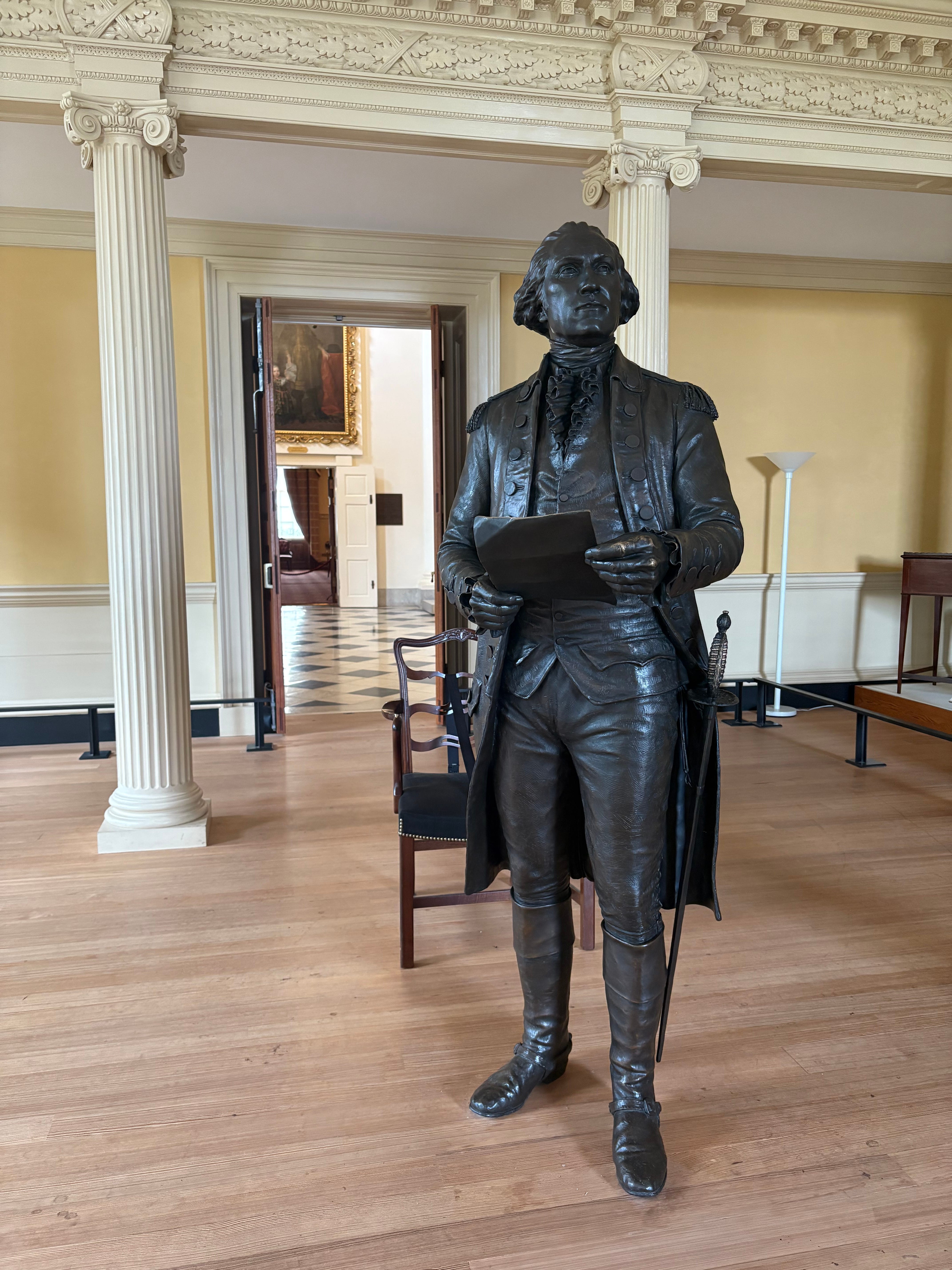
1) On December 23, 1783, almost four months after the Treaty of Paris had brought a formal end to the American Revolutionary War, George Washington stood on the wooden floor of the Old Senate Chamber in the Maryland State House, ready to speak to Congress. The fighting itself had mostly finished two years previously, British rule was finally over, and here was the great American war hero and winner, about to take the next step forward for the country — and for himself. Would he consolidate his success and call himself king? Would he announce America the kingdom? Nope. “I am retiring from the service of my country,” he said, apparently shaking a little.
That’s right. Here’s a political leader who, when faced with the opportunity to translate the ultimate national success into the seemingly ultimate personal gain, effectively said, "No thanks.” Rather, Washington’s resignation represented the moment when a specific fight against a specific monarchy became a general fight against monarchy as a form of political rule.
I've written previously about why I believe monarchy is an instantiation of unjustified political power. About how the qualities of any particular monarch, and the particular benefits that monarchy might offer as a system, can’t outweigh a dependence on non-accountability. I’ll write here about my views on this, properly, sometime. But for now, I'll recommend a trip to the Maryland State House. As much as I enjoy visiting places of historical significance, I rarely feel the full hit of temporal importance. So perhaps it was just that I’d been enjoying myself so much in Annapolis when I visited the site of Washington’s resignation on Saturday — sunshine! seafood! — but I really felt it there.
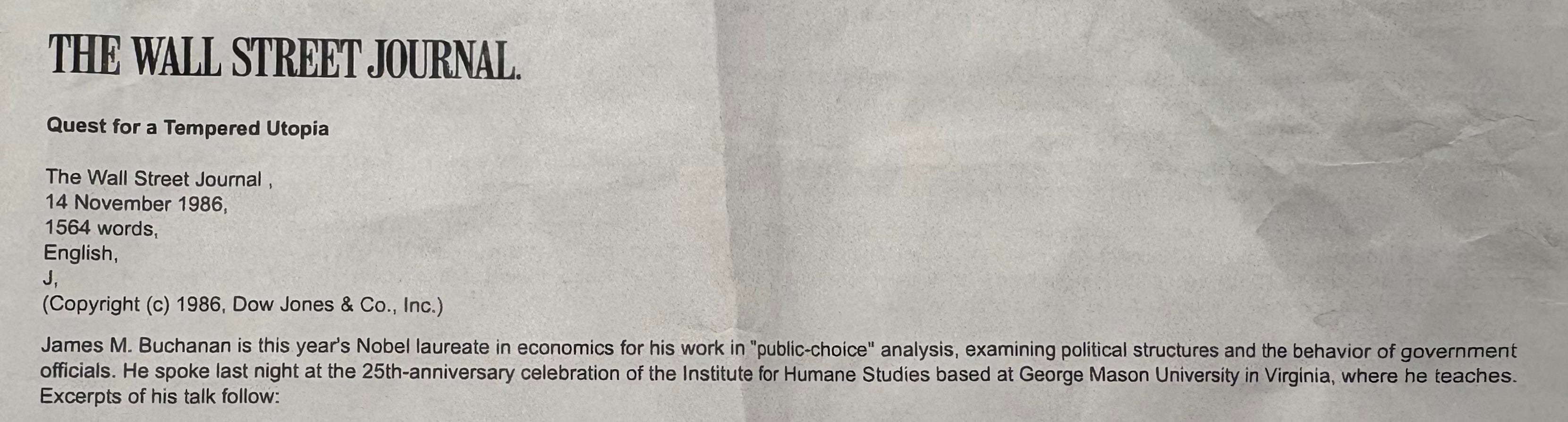
2) In this 1986 Wall Street Journal op-ed, James Buchanan argues that the Reagan era — by then, almost six years in — wasn’t revolutionary enough.1 Sure, he tells us, the Keynesian overreach of the JFK era had been exposed and deflated, thanks to the combination of real-world evidence and the hard-hitting arguments of thinkers like Hayek, Friedman, and Nozick. But the only thing that had taken its place, Buchanan admonishes, was sloganised suspicion of government.
There was nobody offering “hope for substantive reform”. There were no changes to the rules of the game; any institutional improvements were simply “negations” of the “sham of Camelot”. And the people whose ideas had helped to “puncture the delusions” of the previous era were themselves partly to blame for the failure to make progress, because they’d put their own ideals and interests above the compromises of serious reform. It’s a colourful piece, you see. A call to arms, as romantically written as the Camelot narrative! Unsurprisingly, it’s formed from excerpts of a speech.
I enjoyed reading this piece, yet feel the need to note that it’s only in the final paragraphs that we get any detail about Buchanan’s own hopes. Here, they lie in an attractive approach to institutional formation on which “men and women [are] considered able to take a more comprehensive view than that measured strictly by their net wealth”. Of course, you can learn much more detail from his extended writings! But it seems a little unfair for Buchanan to spend the piece decrying the other ideas-guys for their lack of practical heavy-lifting, while kind of falling into the same trap.
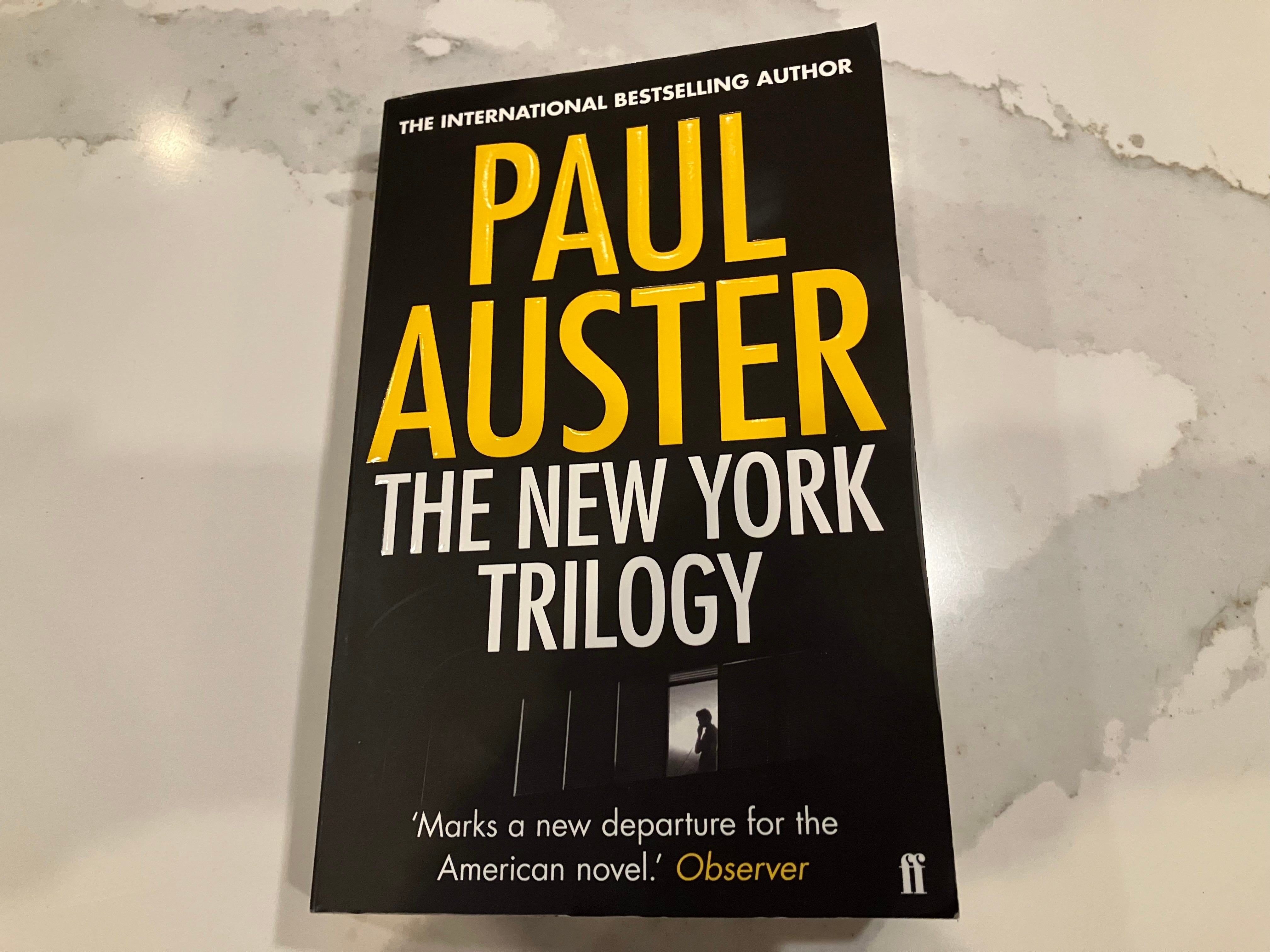
3) Last week, I wrote about City of Glass, the first of the three novellas that combine to constitute Paul Auster’s The New York Trilogy (1987). The first time I read this book, I didn’t get much further than City of Glass. But I now see this was crazy! Now I see that I was wrong! The following two are also seriously excellent. The third may be the best of the bunch.
All three are stories about surveillance and persistence; about men watching men, while being watched themselves. They overlap and intertwine in cryptic ways, which itself is a comment on the comment that Auster is making, through the book, on the classic American detective story. But it’s all grounded by New York City: by its grids, houses, stations, and parks, as much as its norms and trends.
The second story starts confusingly, with a cast of undifferentiated characters named after colours, but settles in quickly. The third — like the first – builds almost unbearable dread. I totally get the fuss about this book now. Maybe I still think Brooklyn Follies is Auster’s best, but man I was wrong.
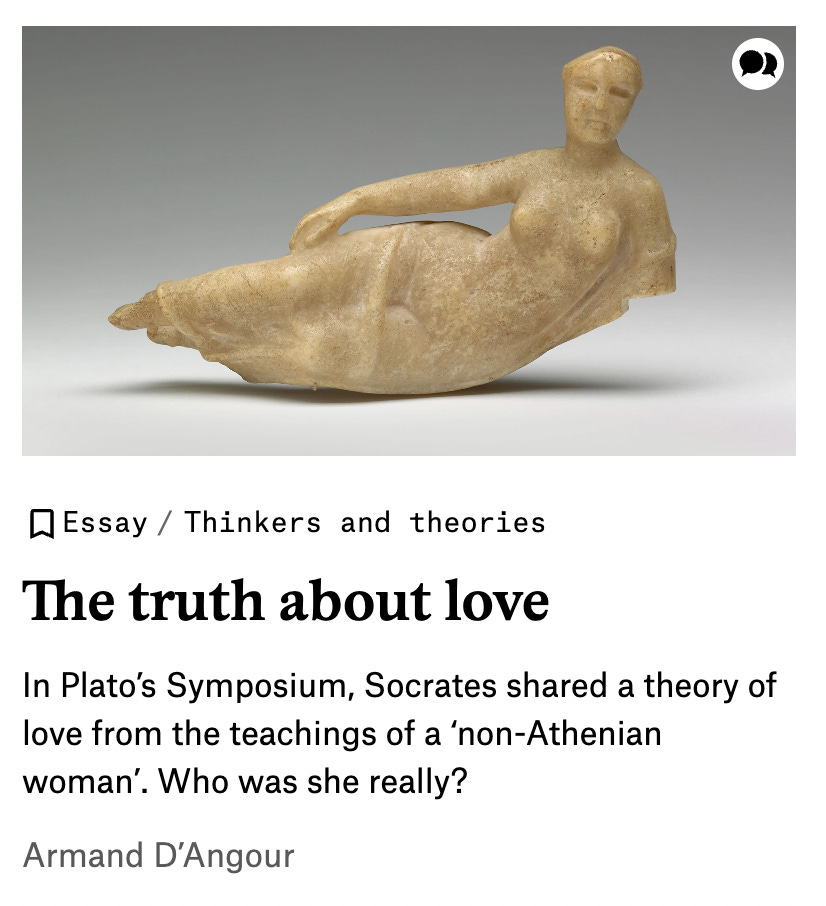
4) I really enjoyed this new Aeon piece about Socrates, Aspasia of Miletus, and love, by my friend Armand D'Angour. It's a great example of how to do public philosophy. Little is left unexplained for the uninitiated, but Armand’s clever original interpretations — which, as they unwind, give the piece a detective-story edge of its own — provide much interest for regular readers of Plato alike.
5) On Wednesday, I went to my first baseball game. I mean my first ballgame. No, I mean my first game! There wasn't a multi-sided Jumbotron, like when I went to the hockey. But I loved the stadium: so big, so American. And I bought a cool red cap. And I now know the infield fly rule! And the Nats won. Fantastic evening.

Buchanan, James M. “Quest for a Tempered Utopia.” Wall Street Journal, November 14, 1986.
As a baseball blogger, I'm so glad you enjoyed your first game! I once took a British colleague to his first baseball game, and I had a wonderful time introducing him to the sport. Hope you'll watch more!
I'm trying to understand why people like Peter Thiel seem to think monarchy is needed in America. Other than just so they can get richer. I think it's because they believe that only state power can overcome C21st challenges at the necessary scale. But that states are paralysed by democracy. If they are correct then we are heading towards neofeudalism.