


This is the thirteenth in my series of short, quickly written, weekly philosophy essays.
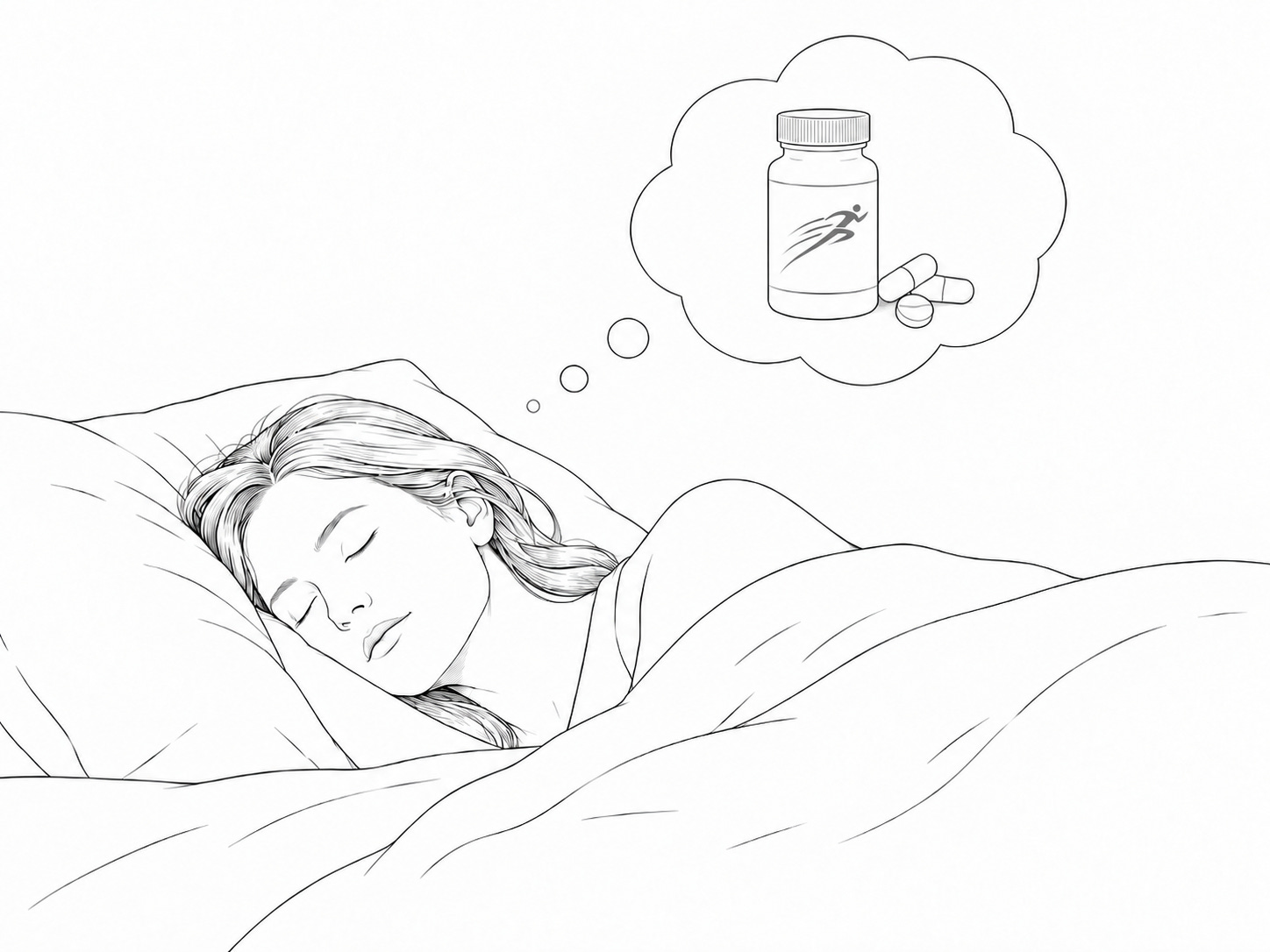
If someone created a drug that took away the need for sleep, would you take it?1 Let’s imagine that this drug is as well-tested as paracetamol, costs less than a cup of coffee for a year’s supply, and has no side effects at all. Do you take it? One of the things I enjoy most about this question is that many of the intuitive reasons that’d lead you to an almost immediate “No!” end up showing that you haven’t thought hard enough about it, yet.
I mean, perhaps your first thought was, “But having a good sleep makes me feel more energetic!” or “But I enjoy sleeping!”. Well, we can pretty much dismiss the relevance of the first answer on the grounds that if taking the drug means you no longer need to sleep, and if you also won’t suffer any side effects from taking the drug, then presumably this means you won’t reduce your ‘energy levels’ by doing so!
Okay, perhaps you want to respond that your energy levels are different depending on how well you’ve slept, and that you don’t want to lose those ‘high energy’ moments. But, again, presumably we can stay within the bounds of the question and conclude that either taking the drug means that you keep within your average energy levels — perhaps even distributed somewhat similarly — or, better, that taking the drug means always having the energy levels that you would have had if you’d slept well.
More significantly, however, a key reason — surely the main reason — that you ever feel ‘down on energy’, in the first place, is that you are tired! Okay, perhaps you doubt the implicit conclusion that never needing to sleep would also mean never feeling tired. And, sure, there are other ways to ‘feel tired’ beyond the classic ‘needing to sleep’ tiredness. You can be ‘tired of’ a job or a relationship, for instance. And a boring meeting might leave you ‘feeling tired’ in the sense of feeling frustrated or listless.
Nonetheless, tiredness, taken in the very ordinary sense, is clearly deeply tied to the human need for sleep. And accepting this can help us to conclude that “But having a good sleep makes me feel more energetic!” is not a strong reason, in itself, to turn down the drug. I find the second intuitive answer much more interesting to analyse, however. And, as it happens, doing so can also offer us further ballast against the first answer.
“But I enjoy sleeping!” you said. Well, what does that really mean? I mean, while you’re asleep, you aren’t aware that you’re asleep, are you? Surely you don’t experience being asleep, in the ordinary sense of experiencing something? I mean, even if you’re one of those people who can do the ‘lucid dreaming’ thing, then it’s the dreaming you’re aware of, rather than the sleeping, isn’t it? Okay, at this point, you might say that you’d turn down the drug on the grounds that you enjoy dreaming, but that would be different from turning it down because you enjoy sleeping!
Alternatively, you might come to the conclusion that it’s the waking moments before and after sleep that you really enjoy. That you enjoy the feeling of being about to fall asleep after a long hard day. Or the feeling of having just woken up after a good long sleep — when you’re still a little drowsy but feeling nicely refreshed. Well, a lot of this also seems to come down to the value of sleep in mitigating tiredness and bringing you ‘new energy’! Sure, you could conclude that you enjoy the drowsy feeling, or that you enjoy the ‘about to fall asleep’ feeling, regardless of any relation that either of these feelings have to tiredness and rejuvenation. But I think you’d be on quite thin ice.
A stronger response, I think, would depend on the value of sharing such moments with someone else. Think about falling asleep while the person you’re in love with is lying next to you — chatting with them, and then gradually chatting less, until you are both asleep. Or reading to your kid, while they get more and more sleepy. These are things that many people understandably value a great deal. But isn’t it the ‘spending time awake together’ moments that are valuable, here? Doesn’t sleep invade on those moments?
Indeed, the non-sleeping practices that humans have built around sleeping, and the joy we take from engaging in these practices, are surely practices aimed primarily at coping with the fact that we need to sleep! Again, I’m not denying that we get joy from these things. Rather, I’m emphasising that we do them in response to what has always been a basic human need. And that, aside from anything else, this makes me assume that if the need for sleep went away, then these practices would likely change.
I mean, imagine your partner had chosen to take the drug, and you’d chosen not to take the drug, then would your partner continue to lie down beside you while you fell asleep — solely to be there while you did? Okay, perhaps, as with the parent and child example, your partner would choose to do so out of love, or some other reason. Perhaps they would do it to try to tempt you to stay awake, to spend some ‘waking time’ with them! But would your partner lie there beside you all night long, when they no longer needed to sleep? No, they’d be off using their new found ‘extra time’!
What’s more, if both of you had chosen to take the drug, then you would have gained the valuable option of spending a great deal more ‘waking time’ together. Or, of course, spending that ‘extra time’ doing ‘non-together’ valuable things, instead. Things like earning money or learning new skills, which could, among other valuable consequences, have the knock-on benefit of improving your ‘waking time’ together!
Here, we come to the many advantages of taking the drug. The obvious main advantage is that if there were no side effects from taking the drug, and if taking the drug meant that you no longer needed to sleep, then you’d gain a whole load of ‘extra time’ by doing so.
I read a study this morning that suggests we underestimate how much sleep humans typically get, including ourselves. And my guess is that your response to learning such news would be: “Oh good! People are getting more sleep than I thought”. But my guess is also that the reason you’d be glad to have learned this is because you know that humans need sleep! And because you know that when people don’t get the things they need, this can have bad effects. It’s also the case, however, that the longer you sleep, the more ‘awake time’ you miss out on! And the ‘awake time’ is when you really live your life: it’s when you experience the world around you, it’s when you learn and achieve things, it’s when you share good times with other people, and so on.
Okay, you can do a very limited amount of some of these things while you are dreaming, but who would give up the real life to spend their time dreaming, instead? If you think you might be tempted, then try out Robert Nozick’s experience machine, but make sure it’s on the ‘possibility of nightmares’ mode! What I’m getting at here, you’ve no doubt realised, is that in the world in which people didn’t need to sleep, learning that people were getting more sleep than you’d thought wouldn’t automatically count as a ‘good thing’!
Of course, I should note here that if you were very unhappy in your ‘real life’, then you might well take the sleeping option, in order to escape. You might say, “Being asleep is the only time I can escape my horrible life”, and this might seem like a good response. Until you remembered that you aren’t aware of being asleep… and that this means that sleeping can’t really give you any respite from a horrible life. After all, sleeping feels like no time at all, because you don’t experience any of it.
Instead, it seems likely that if you do feel you gain some respite from a horrible life by sleeping, then this relates to the feeling of ‘having slept’ or ‘feeling as if you are about to sleep’. And again, this seems to reduce to the value of mitigating tiredness, or the feeling of rejuvenation. Or, sadly, it could be because you value the idea of ‘total escape’ — in which case you should consider talking with a friend or mental health professional, in case you’re at risk of attempting suicide.
I should also note, at this point, that sleeping leaves you vulnerable. Aside from anything else, your lack of general awareness while sleeping leaves you unable to respond to any dangerous things happening around you. And my guess is that a decent proportion of the people who turn to sleep to gain respite from a horrible life are also scared that something bad might happen to them while they are sleeping. And that this fear often does track real risk. I also assume that if you have a horrible life, then your dreams are unlikely to provide much respite, too.
The final point I want to make in response to any ‘horrible life’ reason someone might choose not to take the drug, therefore, is that we should notice when people are living horrible lives, and use our particular talents to work hard at changing this. And that someone choosing to sleep over being awake can be an important sign of failure, to this end.
All in all, the case for taking the drug seems very strong. And this is even though I’ve hardly focused, at all, on the advantages of no longer needing to sleep! Rather, I’ve emphasised that most of the intuitive reasons for not taking the drug seem to hinge on valuing things that are not sleep, or on disvaluing things that would go away when you didn’t need to sleep. One of the advantages that I did touch upon, however, consists in gaining ‘extra time’ to be productive. Just imagine all the additional things you could do! Imagine all the things you could achieve, and all the experiences you could enjoy and share with other people! And, of course, if you want to point out that some of these ‘extra times’ could be horrible, then I refer you to the conclusions of my previous paragraph.
Now, my assumption is that in my lifetime — likely quite soon — I will have the option of taking the drug. As it happens, I already don’t need much sleep. I’m one of those people who can get by quite well on 4 or 5 hours. And when I want to, I can just skip a night’s sleep with very little downside. I’ve always been like this, since I was a tiny baby. And this already enables me to do more of the things that I value than if I needed the ‘usual’ amount of sleep. I can stay up late, or even all night, doing things like reading and writing. And this leads me to conclude that if more of the other people around me were like this, then I could also do valuable things with them, in the ‘extra time’ they gained! And if all of us were like this, then just think of what we might achieve…
I’ll leave you, however, with a different question. How would the possibility of being able to take the drug interact with the possibility of being able to live forever? I wrote here recently about my assumption that quite soon we will gain the possibility of avoiding disease and ageing. So, if the time ‘ahead of you’ were infinite, then what difference would taking the sleep drug make? “Zero!” seems like a good answer, until you remember that the time ahead of you would not necessarily be infinite, in such circumstances.
I mean, even with the end of disease and ageing, you could still die in an accident. And even with the end of disease and ageing, the world might still end one day. More relevant to our initial question, however, is the following conclusion. Even if the time ahead of us did seem to be infinite — that is, even if we solved the ‘dying in an accident’ problem, and even if we had good reason to believe the world could never end — then the people who chose to take the sleep drug would still experience more of it than the people who didn’t.
I remember reading a Substack note a while back posing this interesting question. Thanks to whomever that was! Though, as it happens, I’ve been thinking about this question since before I read that note. This is partly because, as I’ll mention below, I feel lucky that I need less sleep than most people. And partly because I’m aware that there are people currently working on reducing the human need for sleep.
This assumes that more waking time automatically means more valuable time. Maybe sleep’s value isn’t in experiencing it, but in the rhythm and boundaries it gives to waking life.
I liked this article. Some more off the cuff objections:
I find the moments when I’m falling asleep, when my mind is less consciously controlled, to be more emotionally salient. I uncover bits of my feeling and thinking I wouldn’t have access to without the fading of consciousness.
I sometimes have the answer I need to a problem by sleeping on it — the subconscious gets to work and I have the explanation the next day. (The mind needs quiet and stimulation, I think.)
GDP knock on effects would be crazy. Laborers who work only eight hours would fall relatively behind. Would productivity improvements from all the extra labor help?
I would still prob take this pill…