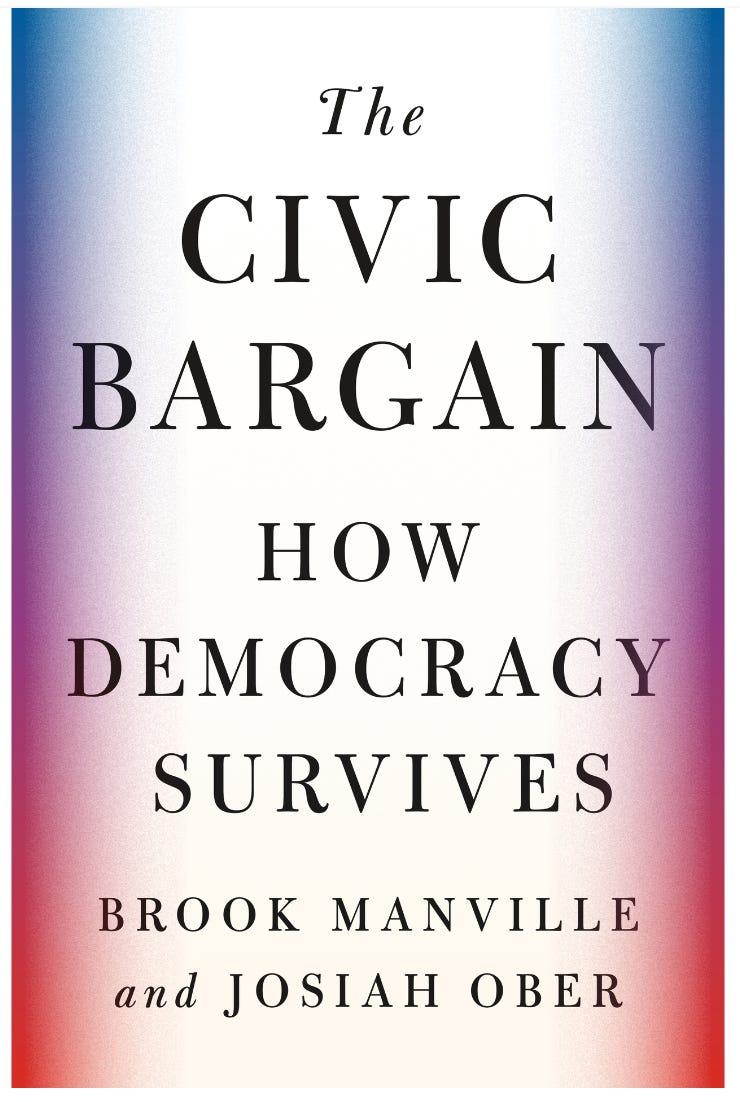
The Civic Bargain, Brook Manville and Josiah Ober
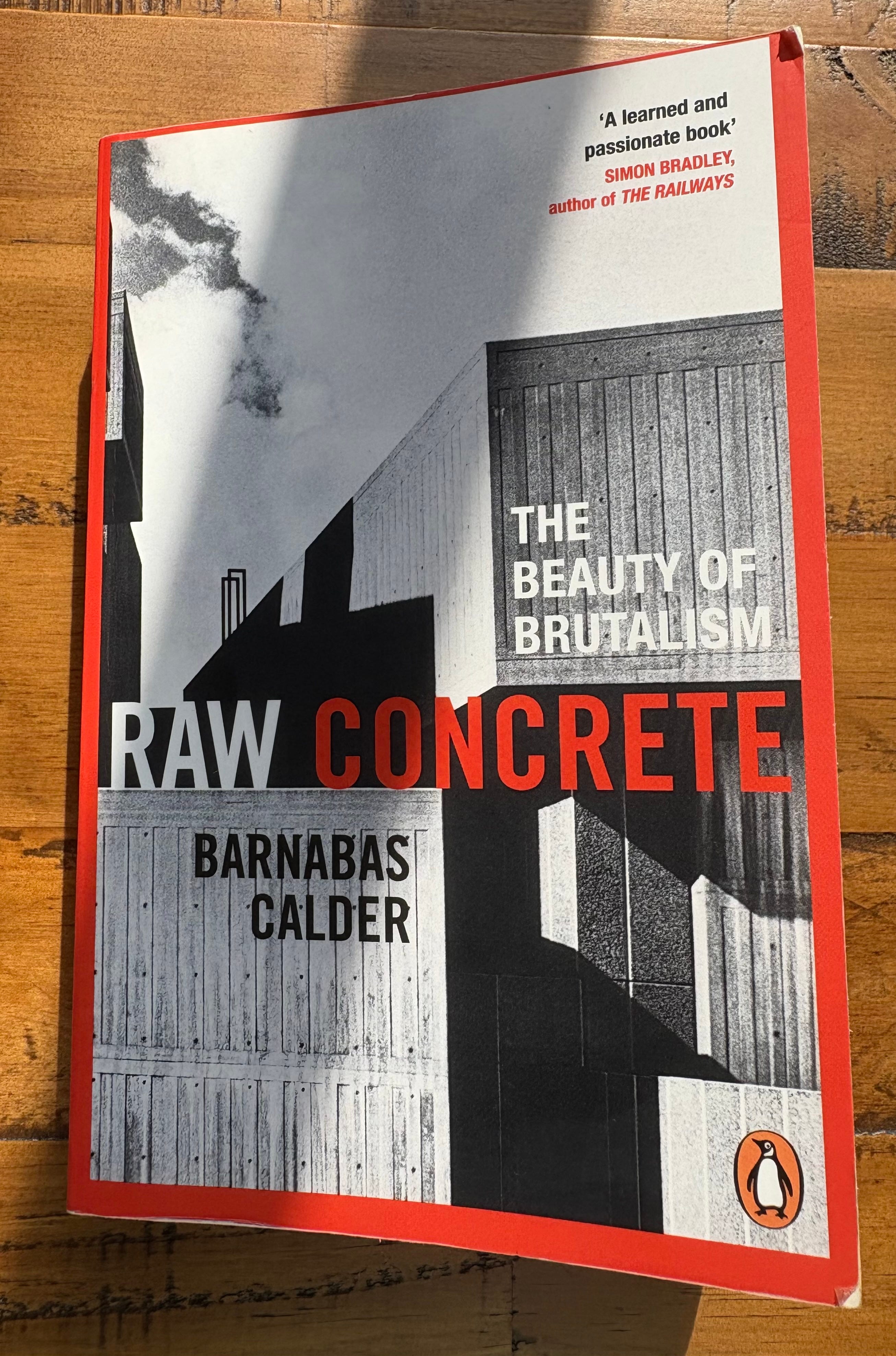
Raw Concrete, Barnabas Calder
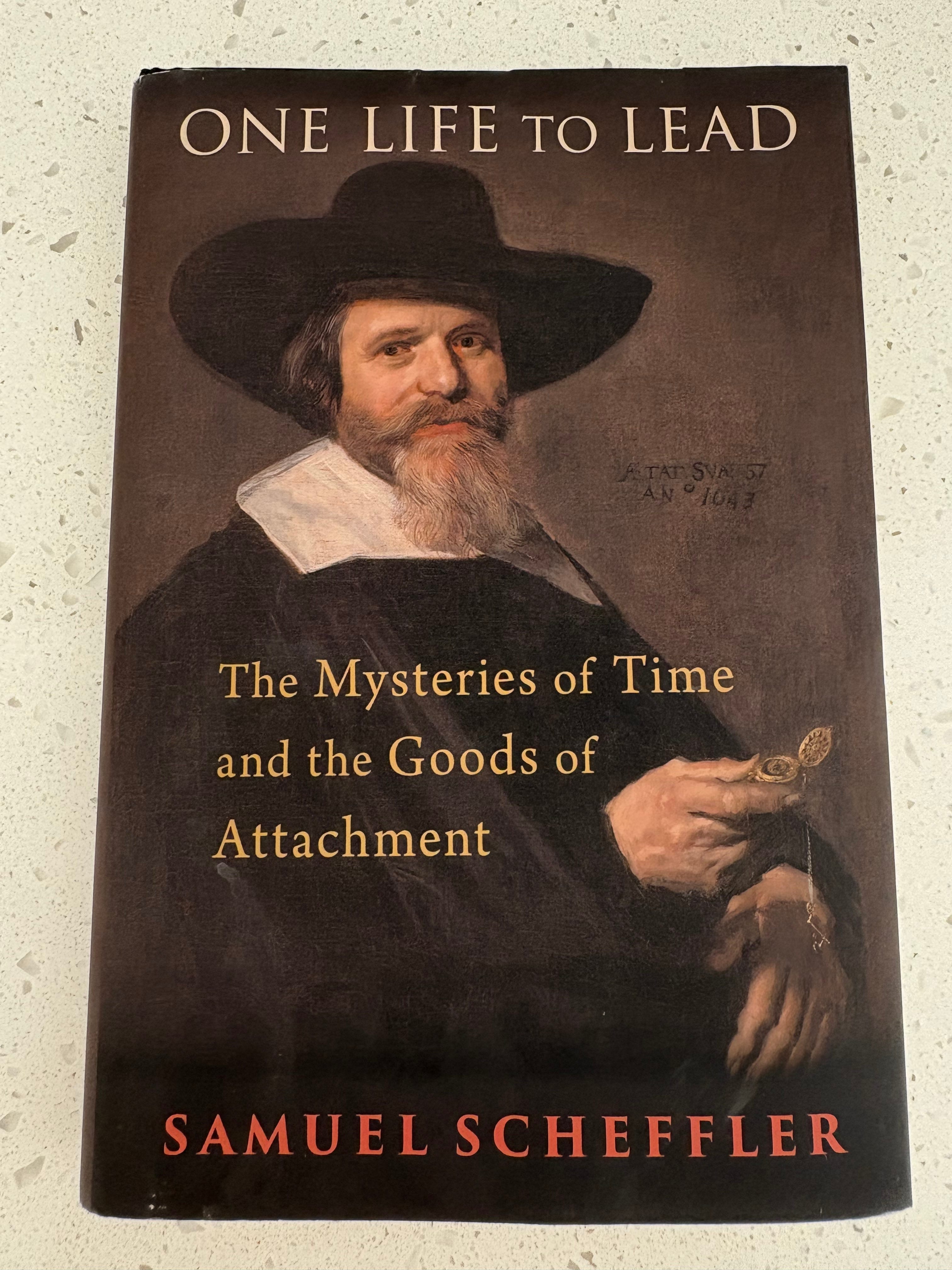
One Life to Lead, Samuel Scheffler
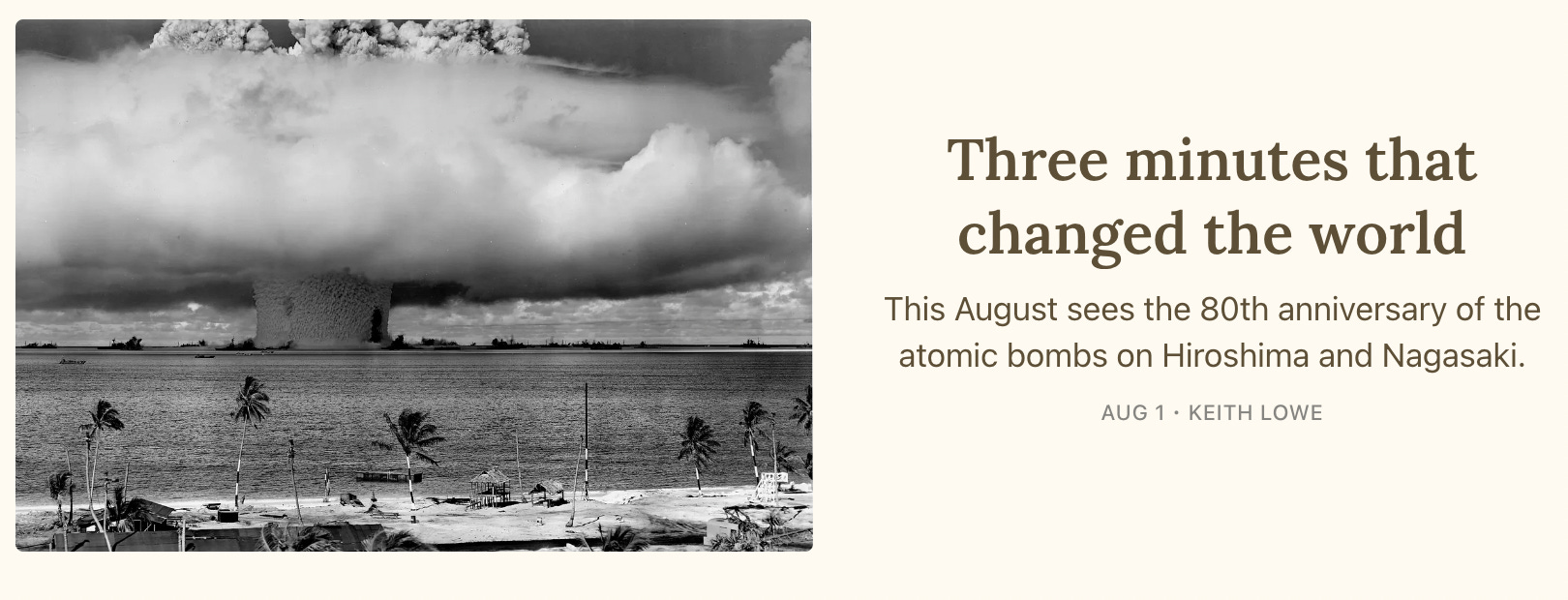
Three minutes that changed the world, Keith Lowe
Flute Sonata, Carl Reinecke
This is the thirty-fifth in a weekly series. As with previous editions, I’ll move beyond things I’ve been reading, toward the end. I’ll keep everything brief this morning, however, as I posted something substantial here yesterday: the second episode of my new philosophy podcast, Working Definition!1
1) As I may have mentioned, I just published the second episode of my new philosophy podcast. This episode takes the form of a discussion about the concept and value of democracy, with democratic theorist and classicist Josiah Ober. In preparation for the episode, I reread some of Demopolis: Democracy Before Liberalism in Theory and Practice (2017), Josh’s excellent book about the possibility of non-liberal democracy. We discussed this topic quite a lot in the episode.
Among other things, I also revisited Chapter 7 of The Civic Bargain: How Democracy Survives (2023). Here, having discussed the core obstacles in their way, Josh and his co-author Brook Manville describe a route to U.S. democratic renewal. Their approach, focused on civic education, includes widening the “limited historical perspective” that helps bias the public in favour of top-down solutions to societal problems, publicising truths about the benefits of population growth and diversity, and — above all — developing norms in favour of “good faith compromise” and civic friendship. If anyone can fix this stuff, it’s Josh.
2) I’ve been enjoying Raw Concrete: The Beauty of Brutalism (2016), by Barnabas Calder. An architect’s paean to British brutalist classics, it has too many words like paean in it. But it’s also satisfyingly comprehensive. I read the chapter on the Barbican Estate the other night, which covers everything from the costs of hammering its concrete walls to intimations about the closeness of its designers. For the first time since arriving in America a few months ago, I wished I was back in the UK — so I could go see all the aesthetic details I’ve previously overlooked.
How did I miss the moment, at the start of every performance I’ve been to at the Barbican Theatre, when “the many Peruvian walnut side-doors (one at each end of every row of seating) all shut smoothly, quietly, and in exact synchrony”? Or did I see this each time, but fail to register it? How did I never spot the pedestrian ramp with arrow slits near the tube station? I’m not very observant.
3) So far, I’ve only read the opening section of Samuel Scheffler’s new book, One Life to Lead: The Mysteries of Time and the Goods of Attachment. But sometime soon, I’ll skip ahead and read all the sections focused on time. The guiding question Scheffler addresses in this book is “what is it to lead a human life?”. His metaphysical starting points — that each of us has only one life to lead, and that these lives are finite lives — pit him against the religious and the romantic transcendents. If the opening section is anything to go by, he stands his ground not only coherently but interestingly. It’s nice to read a mainstream contemporary philosophy book on such a deeply ambitious topic.
4) My excellent historian cousin, Keith Lowe, published a short article on his Substack a few days ago in recognition of this week’s eightieth anniversary of the atomic bombings of Japan. Most striking, I thought, was the poetic nature of the first-hand testimony he included by Toyofumi Ogura, who saw the bomb explode on Hiroshima:
“I don’t know how to describe it. A massive cloud column defying all description appeared, boiling violently and seething upward. It was so big it blotted out much of the blue sky. Then the top of it began to spill down, like the break-up of some vast thundercloud, and the whole thing started to seep out and spread to the sides... Its shape was constantly changing and its colours were kaleidoscopic. Here and there it glittered with some small explosions.”
5) I listened to the Reinecke flute sonata (1882) this week, for the first time in probably twenty years, although I’ve thought about parts of it often. This Emmanuel Pahud recording is excellent — feels effortless.