


Speech on the assassination of Martin Luther King, Robert F. Kennedy
Franny and Zooey, J.D. Salinger
“Denisons” and “Aliens”: Locke’s Problem of Political Consent, A. John Simmons
One L: The Turbulent True Story of a First Year at Harvard Law School, Scott Turow
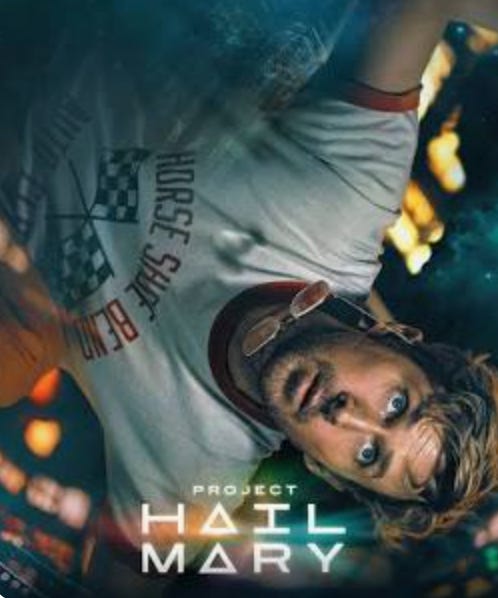
Project Hail Mary, directed by Phil Lord and Christopher Miller
This is the sixty-fifth in a weekly series. As with previous editions, I’ll move beyond things I’ve been reading, toward the end.
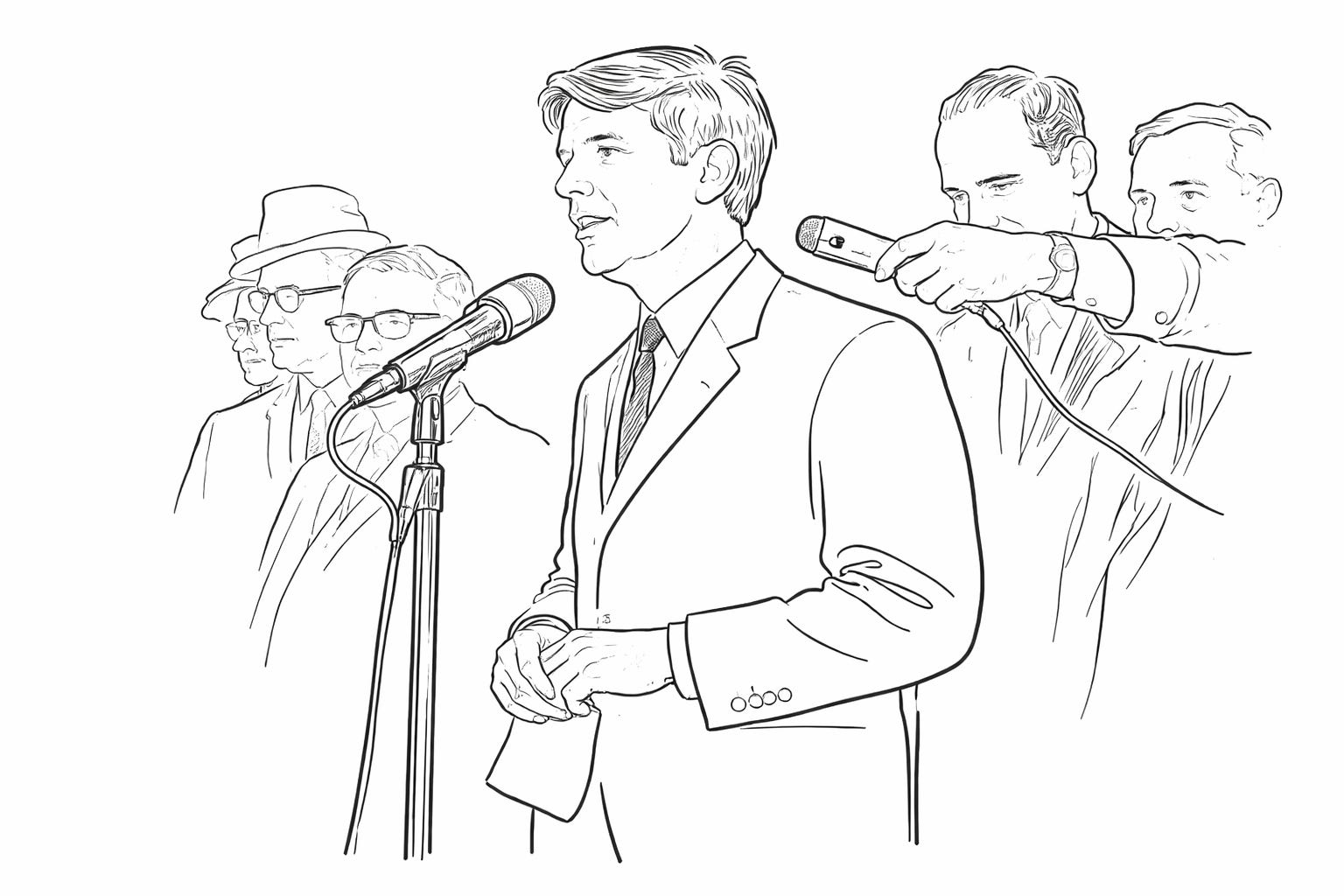
1) The other day, I rewatched my favourite political speech, because I’d been talking with a friend about what RFK might have been like as a president. It’s the extemporised speech he gave the night of Martin Luther King’s assassination, in April 1968.
It’s a speech in favour of treating individual wrongs as individual wrongs, rather than as the basis for group conflict. It has strength as a statement of liberal values, as a well-judged attempt to relieve tension, and as a thing of beauty. Watch it or read it, not least for the Aeschylus.
On topic, I recently bought a collection of MLK’s writing on love, and you can expect to hear about it soon. A while back, I started reading the Jonathan Eig book about him, but found it nowhere near as good as Eig’s fantastic Ali: A Life (2018). I find boxing morally concerning and know nothing about it except for what I learned from that book, but I couldn’t stop reading, and particularly valued the way Eig situated Muhammad Ali’s life within political America.
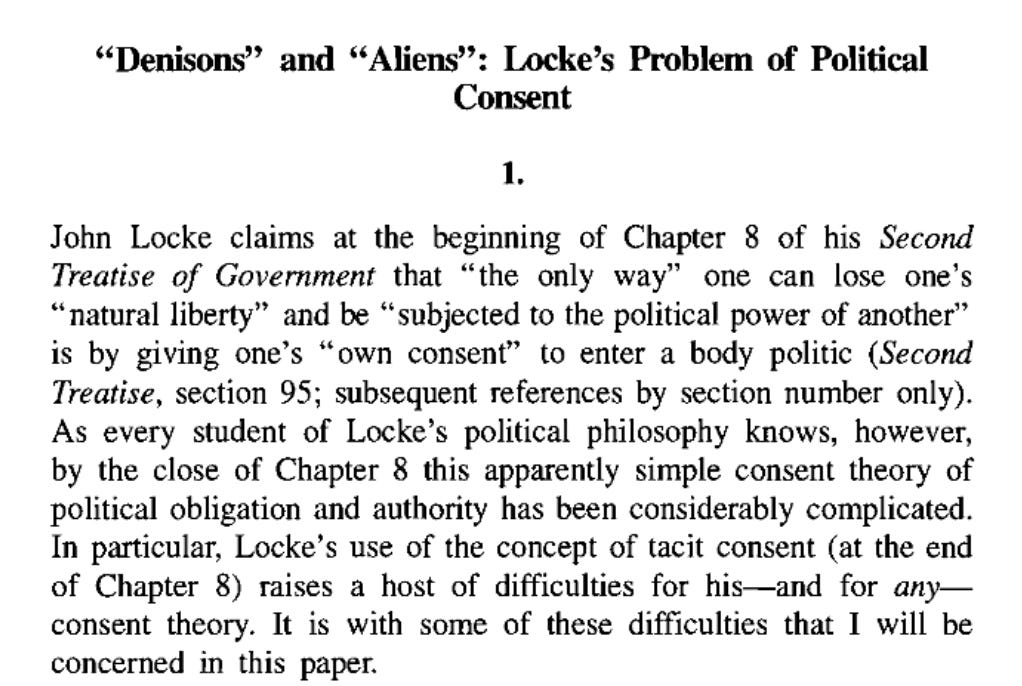
2) I was thinking yesterday about John Simmons’ classic article “Denisons” and “Aliens”: Locke’s Problem of Political Consent (1998), so I had a quick reread of it last night. I like Simmons’ writing on Locke generally, and also his book on justification and legitimacy.1
This paper is mainly about tacit consent. That is, the idea, found particularly in Locke, that an important kind of consenting — a kind of consenting that is taken to morally underpin both state power and personal political obligation — can be given non-’expressly’.
I’ve thought a lot about the relation between political consent and obligation, and will write about it here at length, sometime. But, for now, the thing that made me think of this paper was a conversation I had with a friend about the legal protections a state should afford to resident and visiting non-citizens. I thought in particular about this section:
“While there were undoubtedly larger numbers of explicit oath-takers in Locke’s day than there are in our own, in neither time have these express consenters constituted more than a small minority of the permanent residents, and in neither time have these express oaths really even been taken to be what confers membership in the society (except, perhaps, in the case of the naturalization oaths taken by aliens). So most denizens appear to be thrown by Locke into the same group of non-members that include foreigners on vacation in the state.”
The question about what the members of a political society are owed and owe, and the question about what makes someone count as a member of such a society — indeed, as different kinds of members — are ever-pressing. They are, of course, being deliberated in America, at the moment, in the ongoing Trump v. Barbara Supreme Court case. You can read about that here.
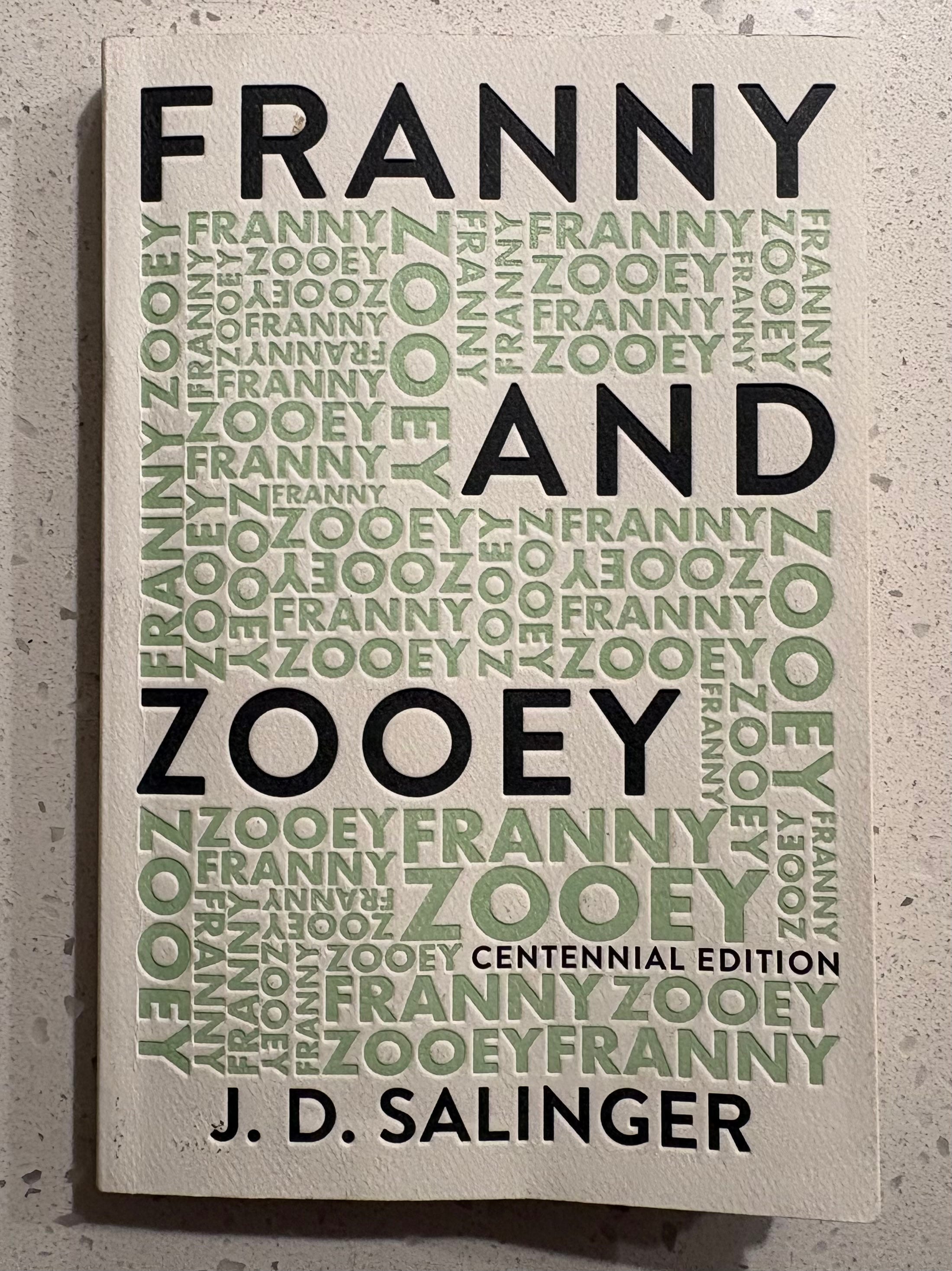
3) Franny and Zooey (1961) brings together a couple of stories J.D. Salinger wrote for the New Yorker. Together, these stories outline the limited world of two siblings, now in their twenties, both messed up by early success on a TV show for genius children. We’re so clever, they tell each other, and imply to everyone else. Nobody gets it! Yet they are flailing — pushing away the opportunities and the people they care about.
I’ve been delaying reading this book since I was about 11, and fully obsessed with The Catcher in the Rye (1951). I was sure back then that Franny and Zooey wouldn’t be as good, but also that I should save it up to read. These were bad reasons to delay! But somehow they held until last weekend.
I was right about it not being as good. Franny and Zooey is all over the place. Occasionally, this is great. The opening Franny chapter feels urgent, for instance. The tension with the show-off boyfriend is pretty unforgettable. The chicken sandwich! And less often, this all-over-the-placeness is really fantastic. There’s a long scene in which Zooey is talking with his mother in the bathroom — an unbearable scene, for the most part — with a few astonishing moments. The way he talks to her! Against the blandness of the everyday items! Then a little later, the same, occasionally, in the sitting room.
Nevertheless, when the word ‘phoney’ finally hits, maybe three-quarters of the way in, it’s with a second-hand hit. Franny and Zooey feels like the attempt of a great writer to recreate his great book, in a more grown-up way. It comes across as childish.
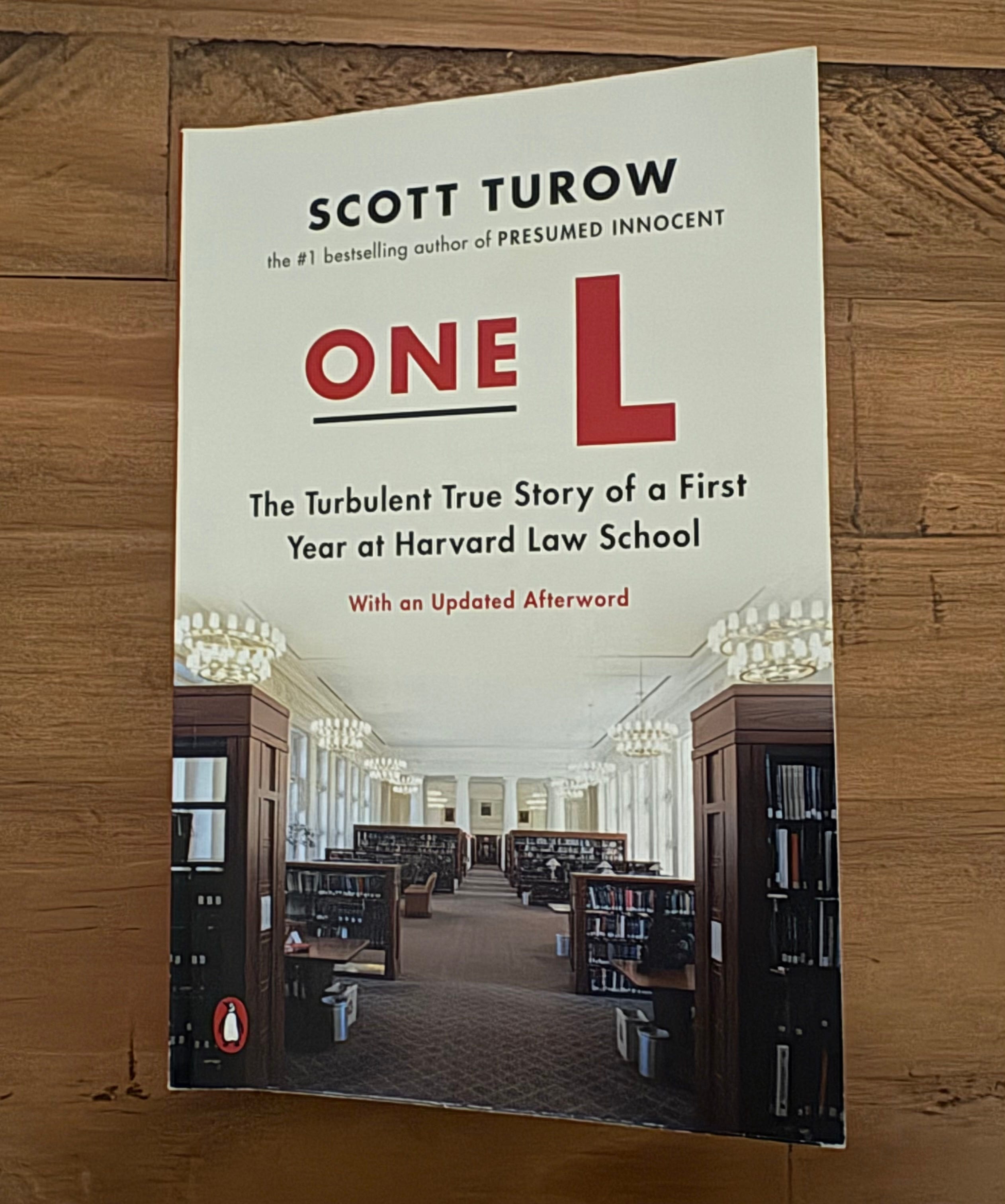
4) I just started reading One L (1977), Scott Turow’s famous chronicling of his first year at Harvard Law School. As interesting as I find the idea of law, and as much as I love reading Hart and Raz and all those guys, and as many excellent lawyer friends as I have, I’ve never really understood why anyone would want to go down that route.
A few chapters in, it’s clear this book isn’t going to help with that. But it’s a great read. And it’s crucial to my ongoing attempt to understand this country. Some of it is also very funny:
“Look,” he told me, “if I was going to law school, I’d be going because I wanted to meet my enemy. I think that’s a good thing to do. And if I wanted to meet my enemy, I would go to Harvard, because I’d be surest of meeting him there.”
5) Perhaps this wasn’t the best week to go see Project Hail Mary. What could rival the real-life photos sent from Artemis? I went a few days ago, nonetheless.
I’m afraid I wasn’t sure what all the fuss was about. I’d found the book too annoyingly written to finish. And while I stuck out the whole film pretty happily, it clearly can’t count as great, on any level. It’s not beautiful, the dialogue is limited, the story predictable. Sure, it’s fun, and moving at times. But there are so many vastly better space films.
That said, I’m assuming I napped through the part where Ryan Gosling attempted to communicate with the amoebas. And maybe that was the best bit! I mean, surely when he’d found it so astonishingly easy to converse with the first living thing he came across up there, he must have given the poor amoebas a bit of a chance.
This is a collection of essays; it includes Denisons and Aliens as chapter 8.