


The Theory of Moral Sentiments, Adam Smith
Adam Smith on Equality, Elizabeth Anderson
My Honest Views, Colin McGinn
One Hundred Poems from Old Japan, translated by Michael Freiling
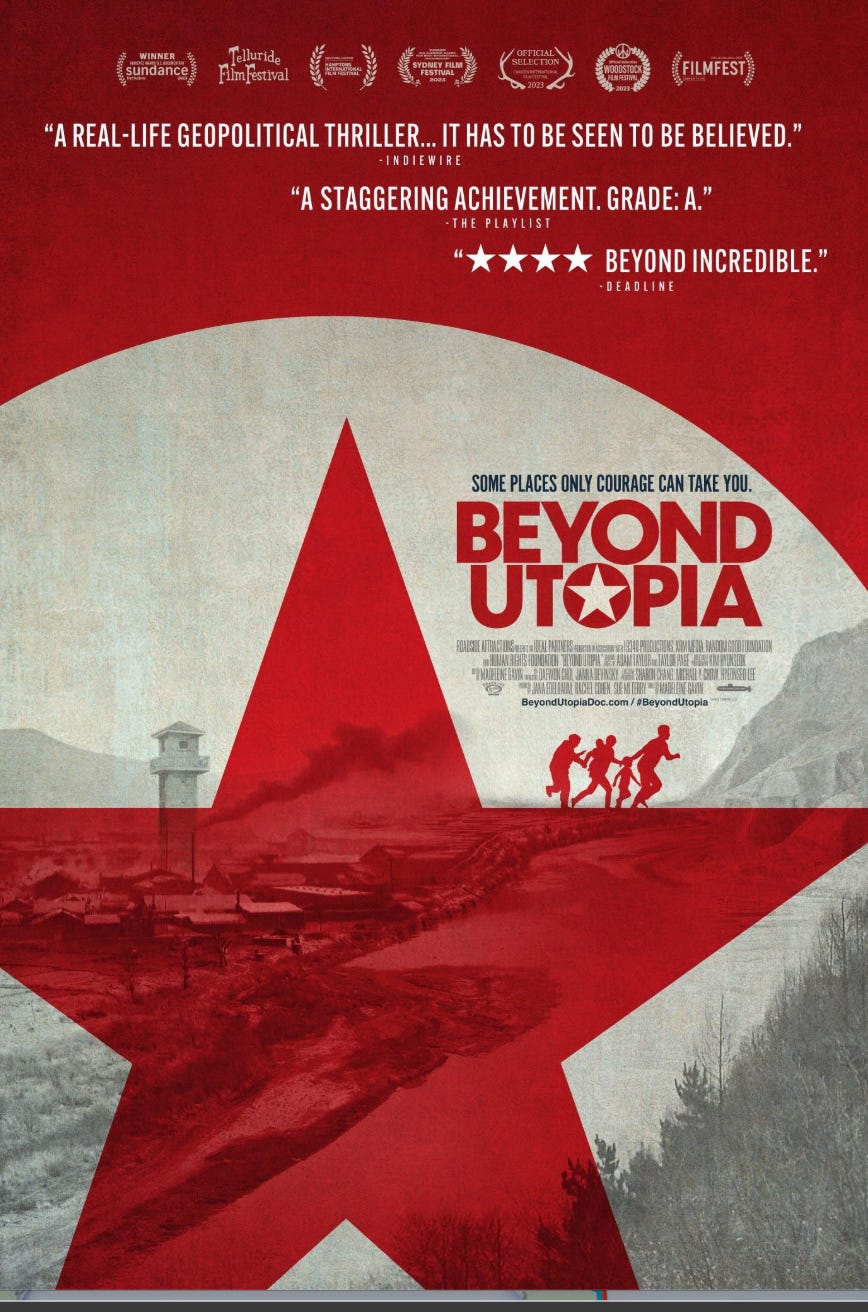
Beyond Utopia, directed by Madeleine Gavin
This is the sixtieth (!) in a weekly series. As with previous editions, I’ll move beyond things I’ve been reading, toward the end.
1) I’ve been rereading parts of Adam Smith’s The Theory of Moral Sentiments (1759). I particularly like the sixth chapter of Part III, which is where Smith outlines his theory of justice within a discussion about motivation beyond duty.1
There are “general rules” of justice, Smith tells us, which are exact and demanding. And our motivation for behaving justly, he adds, should come entirely from “reverential and religious regard” for following these rules. These two points about rules help Smith to distinguish justice from virtues like charity and gratitude. This is because he sees the “general rules” of virtues like charity and gratitude as being much more “loose” than those of justice, and the range of motivations for behaving in line with these virtues as having much greater scope.
I’m writing a piece about Smith at the moment, which I’ll publish here soon, so I’ll save my thoughts on his theory of justice for then. But in a nice coincidence, the orthodoxy of Smith’s approach was referenced in the latest episode of my podcast:
“REBECCA: So, I want to start with the relation between rights and perfect obligations. I think this is a good place to start. I think it’s somewhere where you and I have a bit of unusual crossover of views. I also think it’s a good route into getting into the question of what a right is, which is the main goal of today. So, do you agree that it’s orthodox to say that perfect obligations are in some sense the content of rights?
JOHN [TASIOULAS]: I think certainly there was a time when this was the orthodox view amongst philosophers from very different schools. So, people like Smith, Kant, Mill, I think, would have agreed that rights relates to that subsection of morality that concerns perfect obligations. So, I think there was that consensus. Whether there is a similar consensus now, either philosophically or in the wider culture, I think is way more doubtful.”
Smith doesn’t explicitly refer to rights in the sixth chapter of Part III, but he might as well have done!
2) This week, I also returned to Adam Smith on Equality — Elizabeth Anderson’s chapter in Ryan Hanley’s 2016 edited collection on Smith. Anderson argues in this chapter that Smith is a moderate moral egalitarian, rather than a radical one. I find this crazy, on various counts.
Again, I’ll save revealing my reasons for my Smith piece. Indeed, my main aim in that piece is to make a strong case for Smith as a radical egalitarian. But I found that this Anderson chapter — and particularly her definitional approach — annoyed me even more than the last time I read it.2
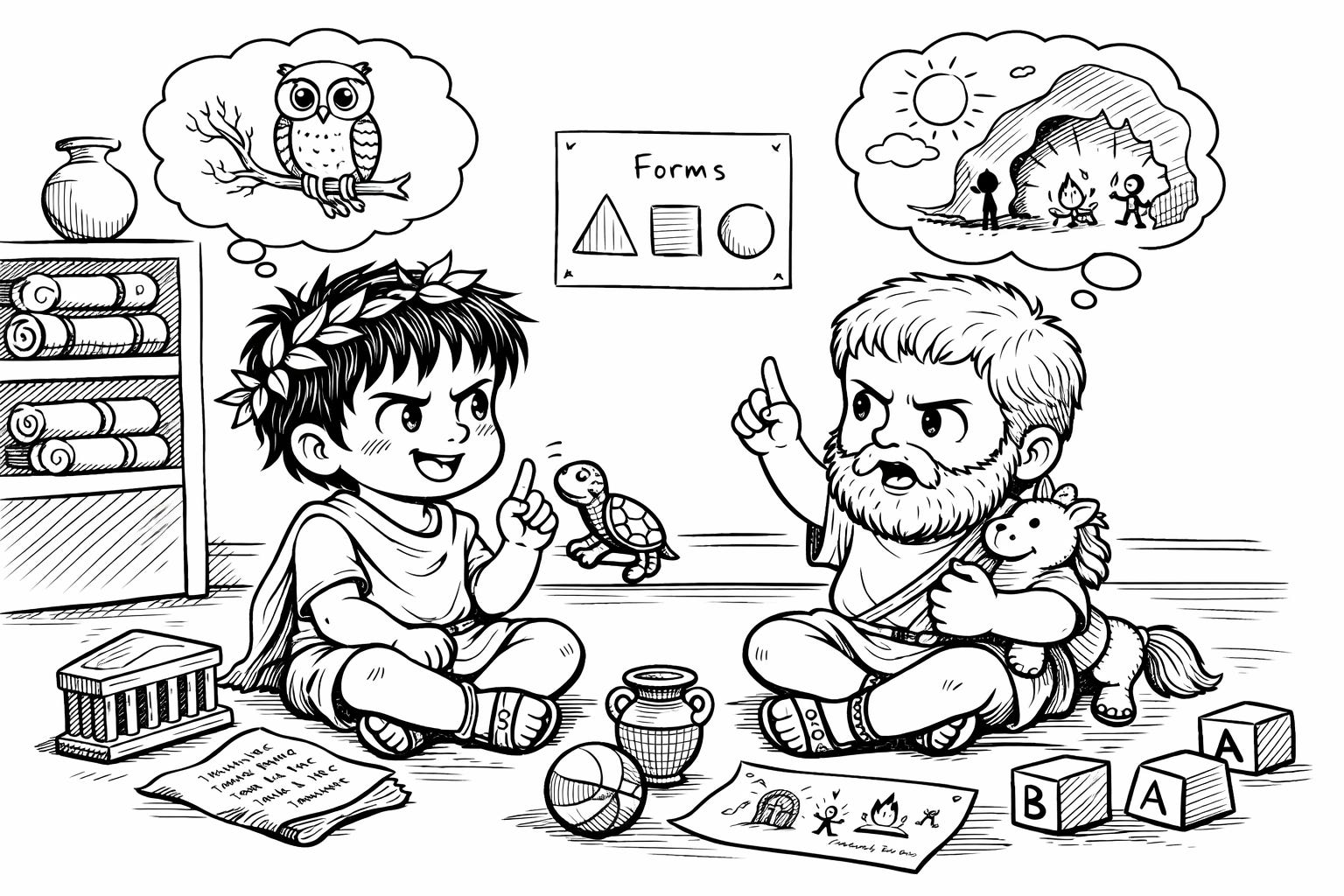
3) A while back, I wrote here about some Colin McGinn pieces I’d enjoyed reading. This week, Philosophy Twitter was full of chat about McGinn’s recent one-paragraph blog piece My Honest Views, in which he slates twenty-three philosophers, ranging from Aristotle and Plato (“philosophical preschoolers”!) to David Lewis (“off his rocker”!).
McGinn’s piece neatly represents why I moved from England to America. I don’t want to be among the cynical people any more! I want to live forever in the land of enthusiasm! The hardcore ‘American version’ of the McGinn piece would’ve been an unabashed run-down of philosophical excellence.3 To avoid the irony, therefore, of including two segments in a row about bits of philosophy that have annoyed me this week, I’ll end this segment by relinking to my recent McGinn appreciation post.
I’d also point you to the one-paragraph blog piece in which McGinn reveals his favourite philosophers, but I’m a hardcore individualist, so the idea of intellectual heroes really doesn’t do anything for me…
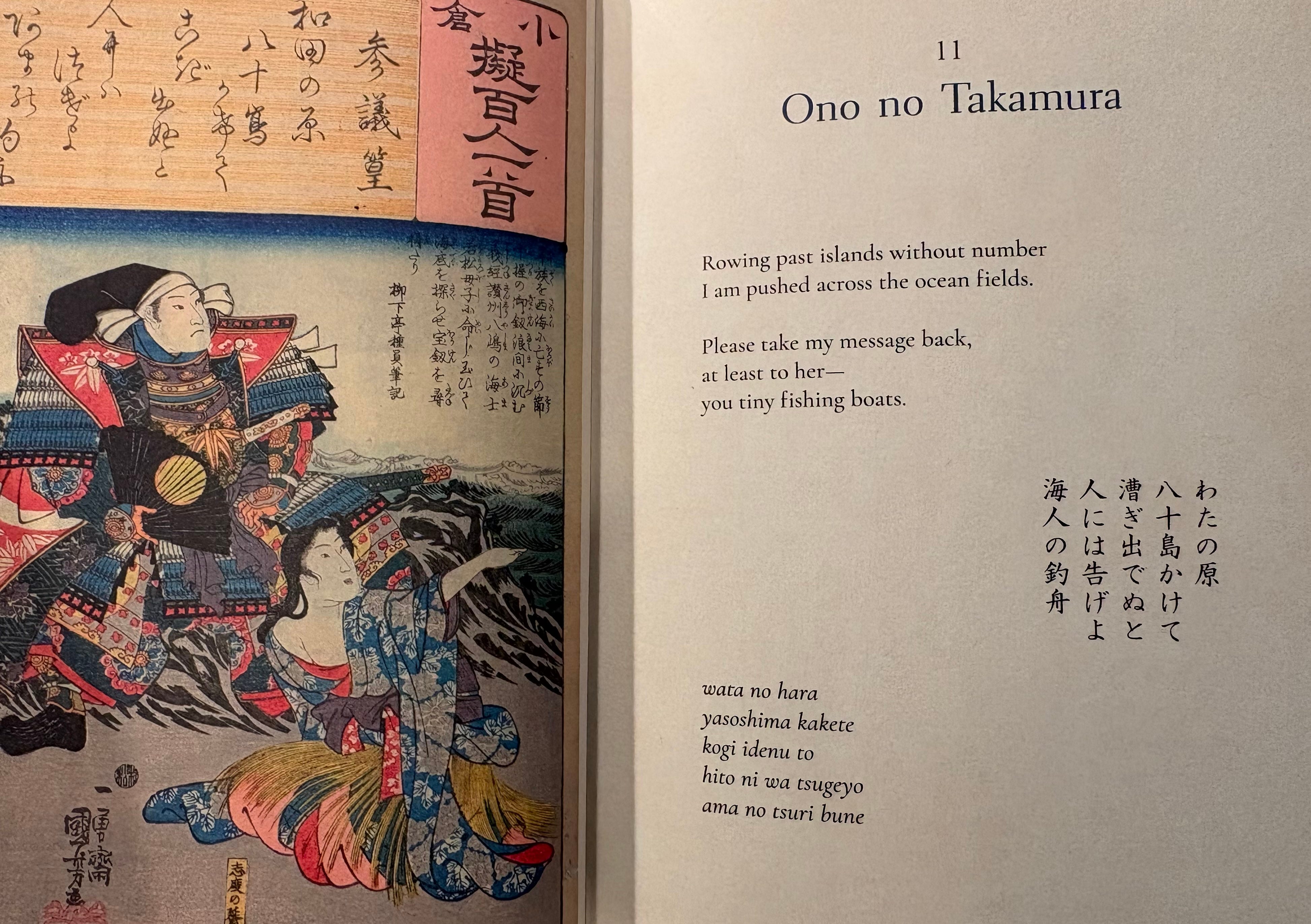
4) I’ve been enjoying One Hundred Poems from Old Japan (Tuttle Publishing, 2025). These poems, which collectively form the Hyakunin Isshu, were collated by Fujiwara no Teika in the thirteenth century. The Tuttle edition is translated by Michael Freiling, and features reproductions of classic nineteenth-century woodblock illustrations.
The poems are short and formulaic (5-7-5-7-7). They come from the ancient court, are mostly about courtship, and are by poets including Sei Shōnagon. I also finally just got round to starting reading her Pillow Book, so maybe I’ll write about that next time. But for now, here’s one of the hundred that I particularly liked:
5) Yesterday, I watched Beyond Utopia (2023), a documentary about what it takes to flee North Korea. It’s also very much a documentary about the network of people inside and outside of North Korea who make such escapes possible. This network is mostly made up of ‘brokers’ — paid mediators and accomplices, who are presented as treating the escapees as widgets.
It also includes the hero of the film — a South Korean pastor called Seungeun Kim, who not only raises funds to pay the brokers, but also risks his life, again and again, in unthinkably physically and emotionally tough ways. We learn that he does this partly in honour of his dead son, and partly out of gratitude for his North Korean wife. But mostly, I think, because he simply cannot bring himself to turn away from these people in such need.
Thanks to GPT for the “philosophical preschoolers” picture.
This is the chapter entitled In what cases the Sense of Duty ought to be the sole principle of our conduct; and in what cases it ought to concur with other motives. In the Penguin Classics edition, this is the sixth chapter of Part III. But some other editions are numbered differently.
If you click the link, you can get a preview of my views on this topic — from when I spoke at a Sam Enright conference on Smith.
Okay, McGinn is a British guy who moved to America, but maybe it’s too late for some..
Thanks fo4 sharing
If you don’t like the Anderson, then you will hate this
https://www.paulsagar.com/_files/ugd/ec3ee6_2ef5a7a20d5240f182b6dd2f9e1b44a5.docx?dn=Adam_Smith_Sufficientarian.docx