


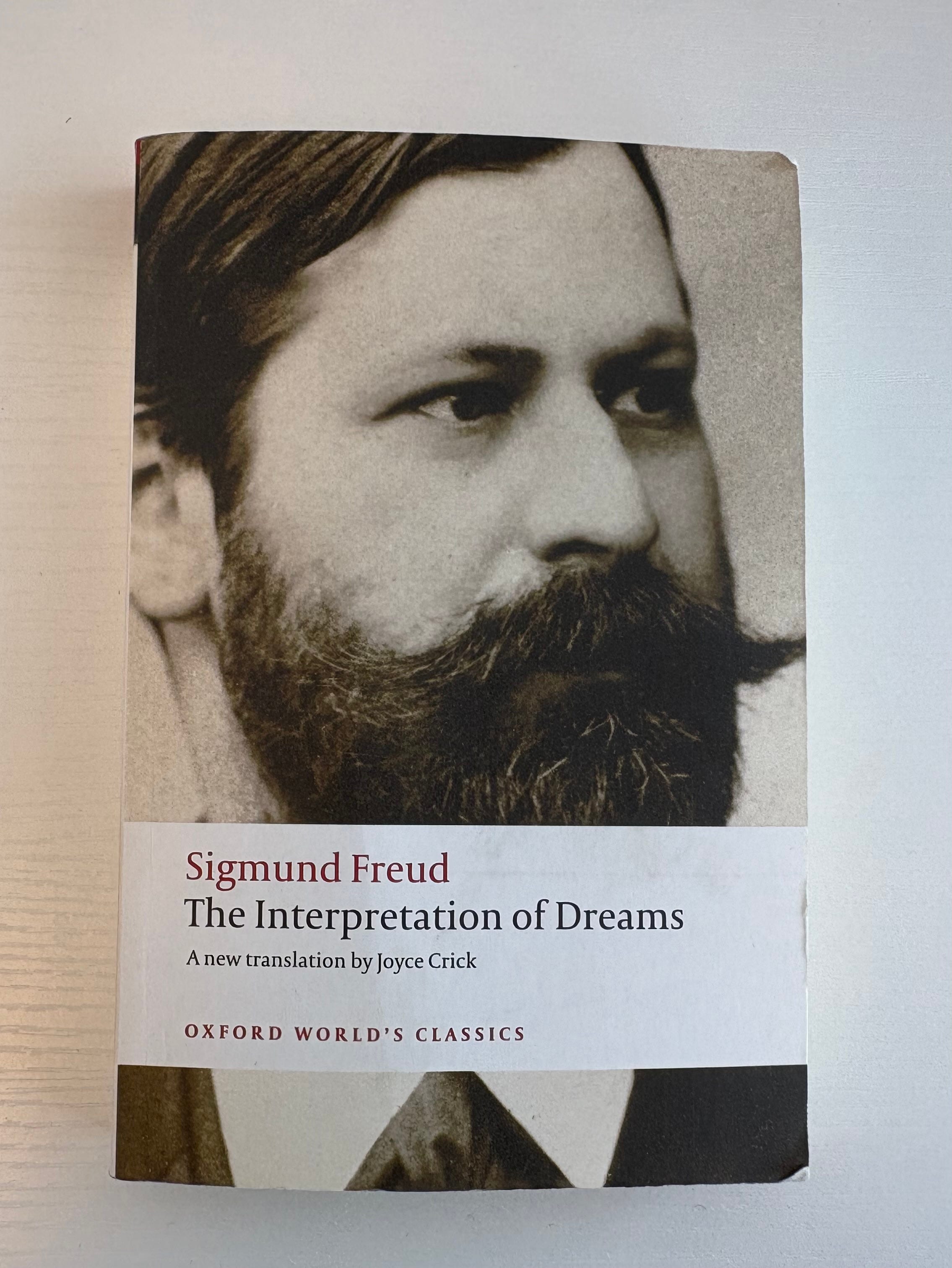
Ethical Feelings in Dreams, Sigmund Freud
Podcasts on consciousness and pacifism
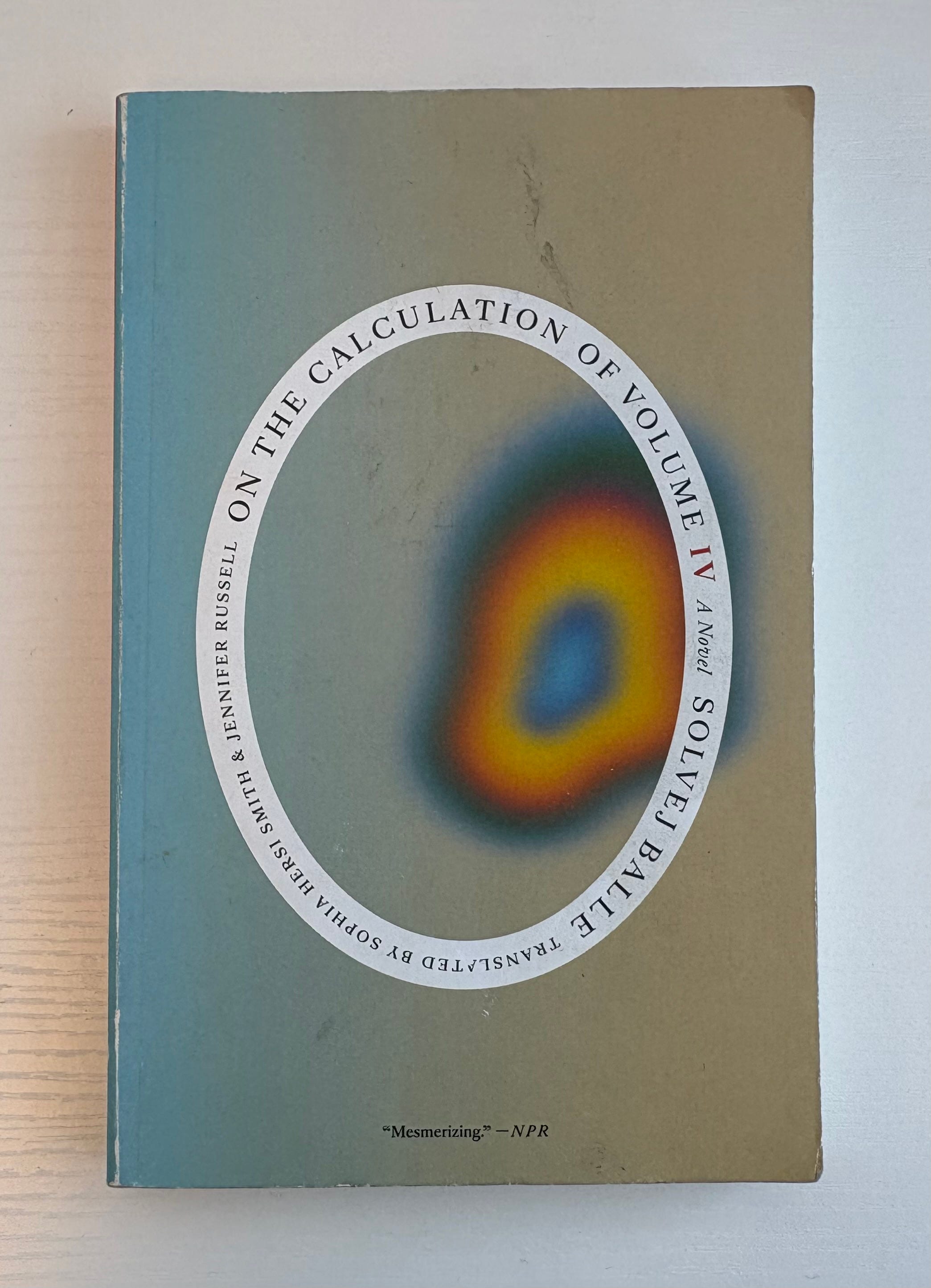
On the Calculation of Volume IV, Solvej Balle
A Luxury Survivalist Community Is Tearing Itself Apart, Joe Barrett
The Otto Wagner Kirche in Vienna
This is the seventieth in a weekly series. As with previous editions, I’ll move beyond things I’ve been reading, toward the end. That said, this feels like a good time to shake things up. So, from now on, you can expect a ‘5 top things’ piece only once a month. The other weeks, I’ll publish a short philosophy essay — typically between 500-1000 words — addressing some question I’ve been thinking hard about.
One reason for this change is that I think there’s clear space in the world for more short-form philosophy. Another is that, for me, the opportunity cost of writing non-philosophy is writing philosophy, and I take this seriously.
1) I spent last week in Austria, most of it at an excellent conference on fin de siècle Vienna. In preparation, among other things, I read some of Sigmund Freud’s The Interpretation of Dreams. I started with a short section near the beginning entitled Ethical Feelings in Dreams. The title of this section concerned me from the off, but I’ll skip that for now, and get on to the rest of it.
In this section, Freud takes out his frustration on two groups of people. First, a group of influential thinkers who, broadly, hold positions that cohere around the idea that we are ‘ethically indifferent’ in our dreams. And second, a group of influential thinkers who, broadly, hold positions that cohere around the idea that we each remain bound in our dreams by our real-world ‘ethical character’.
Freud wants us to believe that the positions held by these two groups of thinkers are diametrically opposed. This is even though he points out ways in which these two sets of positions overlap — and even though it’s easy to think of other positions that would oppose members of these two sets of positions in a much closer to ‘opposite’ sense! That said, I should admit at this point that I do get overly frustrated when people talk loosely about words or concepts or positions as being ‘opposite’! This happens a lot, for instance, when I read literary criticism.
Anyway, Freud’s frustration at these two groups lies partly in relation to their approaches to assigning responsibility for immoral behaviour within dream-world, and partly — relatedly — to their approaches to addressing the source of this immorality. He finds most of these people’s takes on these matters inconsistent down various lines, regardless of their group memberships. Nonetheless, he proceeds towards some conclusions of his own largely by synthesising his favourite bits of these people’s views!
One of the conclusions that Freud reaches is that the “involuntary” immoral ideas that arise in our dreams “are the opposite [my emphasis] of our normal feelings”. Argh. Okay, in context, Freud seems really to be signalling here the quite simple view that, in dream-world, we do things that we wouldn’t do in the real world. But as soon as you start trying to think about this in terms of opposites, then it becomes extremely confusing!
I mean, say you begin with the seemingly straightforward example of having the real-world principle that you should only ever intentionally kill a cat in self-defence. Now, this clearly means that in dream-world you would find yourself doing…. what!? This challenge becomes even harder if you don’t depend on the notion of principles…
Okay, okay, maybe you want to remind me that this book is often treated as a great work of literature, and that demanding greater precision — particularly of the kind we analytic philosophers aim for and admire — is inappropriate. Well, I’ll add that Freud is trying pretty hard in this section to persuade us of some general truths about humankind! As implied above, I struggle with his general ‘picking out the bits of the consensuses and synthesising’ approach to this. But I also struggle with the idea that there are general truths of such kinds about this sort of thing.
All that said, one of the claims that Freud chronicles in this section is Hildebrandt’s claim that while a great deal of odd stuff doesn’t shock us in our dreams, nonetheless “we never lose our ethical sense”. In other words, you don’t bat an eyelid at the flying giraffe, do you? And you don’t even notice the weirdness of time! Whereas bad things still feel bad, and good things feel good. I enjoyed thinking about this claim.
2) Another thing I enjoyed thinking about this week is how Freud’s conception of the unconscious relates to the mind-body problem. This was neat timing, because I released the latest episode of my philosophy podcast, Working Definition, while I was in Vienna — and it’s an episode on consciousness! It features my old friend Tim Crane, who is easily one of the best philosophers I know. Here’s an extract:
TIM: […] But I think the temporal way of which things exist in consciousness is very important. That will be my starting point.
REBECCA: So, could we conclude from this, then, that if you’re not the kind of thing that persists across time, you can’t be conscious?
TIM: Yeah, I think not just persisting across time, I think it’s the way you occupy time. So, I mean, I persist across time. But there’s a difference between me and my life, I think. Whereas, I think I exist for each moment of my existence. I’m wholly — as Hugh Mellor said — I’m wholly present. I’m totally there for each moment of my existence. It’s not a part of me that’s here, and part of me that’s somewhere else. I know some philosophers are going to disagree with that. But this is my starting point.
REBECCA: You’re wholly there in a bodily sense, but —
TIM: I’m wholly there. This is the whole.
REBECCA: But I mean you’ve just told us that you’re not always aware in the internal sense of awareness across time.
TIM: That’s true. That’s true. Sometimes, I’m completely out of it. [laughter] But I exist in my entirety at each moment of my existence. Whereas an event, my life, does not exist in its entirety at each moment of its existence. It’s rather spread across time, which has temporal parts. So, I like that distinction. And I think that consciousness is primarily predicated of events and processes. Primarily.
So that’s where I would start with the category of event and process. But then the question you asked is, well, what kind of property is it? I want to say it’s a property rather than a capacity. When we talk about capacities here, we’re talking about things like the capacity for vision, or the capacity to feel sensation, or the capacity to reason, or something like this. Whereas, there isn’t a capacity to be conscious. That’s the wrong classification.
REBECCA: I think if you’re thinking about capacities, it seems a little more, to me, like it’s the thing that obtains, when the capacity is in operation. Or something like that.
TIM: That’s right. Yeah, exactly. Good. That’s a good way to put it. Yeah, I’d say like the exercise of the capacity. So, your capacity, for example, to feel bodily sensation, to feel pain, or pressure, or warmth, and things in your body. You exercise that capacity, and the exercises of that capacity are conscious events. That’s my ontology, so to speak.

While we’re on podcasts, here’s a link to the latest episode of The Street Porter and the Philosopher. This is the podcast that Henry Oliver and I run through our joint substack, The Pursuit of Liberalism. This latest episode features my friend Tyler Cowen and me debating liberal attitudes to war and peace, through a focus on Benjamin Britten. Here’s an extract:
LOWE: […] I think the strongest argument, though, that being a liberal pacifist is incoherent, says something like, look, if you’re a liberal, then you buy at least into some kind of justification for the limited state. You think that it’s not just that, within the state, you have the right to defend yourself, but also that you have some rights and obligations around collective protection. To the extent that if somebody comes and attacks you in the street, you can expect that other people should come and help you. You’ve got some kind of right to push back against that person. You might even expect that they’d be punished. There are laws about this stuff, and these laws are enforced.
But then, all of a sudden, as soon as a whole load of people from some other nation come and attack you, well, you’re not allowed to respond, and you’re not allowed to preemptively push them away. This seems like, in terms of the liberals’ commitment to these collective rights and obligations around protection, that pacifism—if pacifism, in its absolute form at least, is that no wars are justified, that even we have problems with enforcement, we have problems with any kind of aggression—this just seems like, well, if you’re an anarchist, fine. But for the liberal? Can a liberal be a pacifist?
COWEN: I often make an argument like that to Bryan Caplan. I don’t think he ever has a very good response, but I think the problems run even deeper than that. So someone can say World War II, that’s a single, quite extreme example. There was, of course, self-defense. The war itself maximized liberty in the longer run. Those are all relevant and, I think, correct points.
But the longer-term historical fact that my polity, United States, and your polity, Great Britain or the United Kingdom, they were built by force. And to get these nation states large enough to create free-trade areas for prosperity to flourish took a lot of initiated violence to begin with. And it’s not clear there was any other path besides that initiated violence.

3) Regular readers might remember my obsession with Solvej Balle’s ongoing On the Calculation of Volume series of novels. I’ve written about these novels often here, including a recent long piece about Balle’s interaction, throughout the series, with philosophical theories about time.
I just finished reading the fourth of these novels. Unlike the previous three, each of which I read the day I got hold of it, I read this fourth book over a period of some weeks. Now, this doesn’t necessarily mean I liked it less; often, I force myself to slow down while reading the books I like the most. But, in many ways, I did like it the least of the set, so far.
One small thing that annoyed me about this book was its occasional grammatical mistakes. I don’t remember this as a feature of the previous three. A bigger thing, however, is that I am increasingly convinced that Balle does not have a coherent grasp on the way in which time works in the world she has created — or the most important implications of Balle Time for the inhabitants of Balle World.
I’m afraid I can’t back up this big claim without risking wrecking the books for those who haven’t read them yet. (Though you can probably work out what I’m getting at here if you’ve read the first four books and my recent long piece!) And I hope very much that reading the next three instalments will help me to change my mind.
Nonetheless, this fourth book is a beautiful creation. And just like the previous three, it is easily one of the best novels I’ve read in recent years.
4) This fantastic recent WSJ piece about a prepper community “clustered on a former munitions depot” in South Dakota made me think of J.G. Ballard. I’m all for finding ways to live forever. And wherever I am in the world, I make sure to work out what I’d try to do to survive if a nuclear war began. But it doesn’t really surprise me that people whose shared plans include hoarding all the machine guns sometimes end up beating each other up in advance of what they’ve been preparing for!

5) I saw many great paintings in Vienna, and heard some wonderful music. But the art object that surprised me the most was the Otto Wagner Kirche, up a hill in the grounds of a psychiatric hospital. Of course, this church is not only an art object; it’s a working place of worship. But I found it, in so many ways, aesthetically unexpected.
Its extreme brightness, clarity, and cleanness. Its golden dome, geometric animals, and swimming-pool-tile ceiling. Of course, all churches are different from each other, and all churches have certain features in common. Yet I’ve seen so many of them — including others in modernist styles — and this one felt unusually new.
