


TLDR:
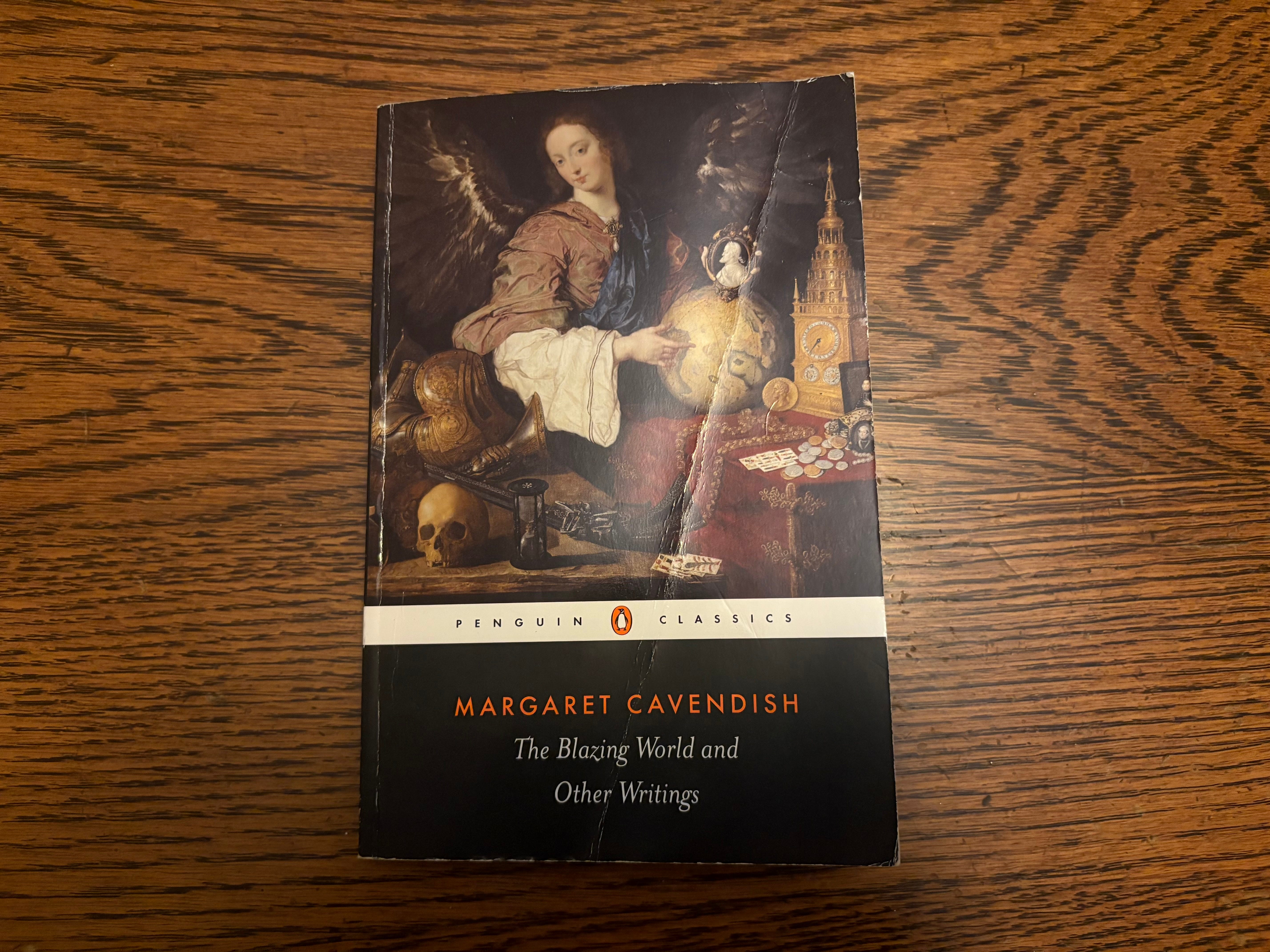
The Blazing World, Margaret Cavendish
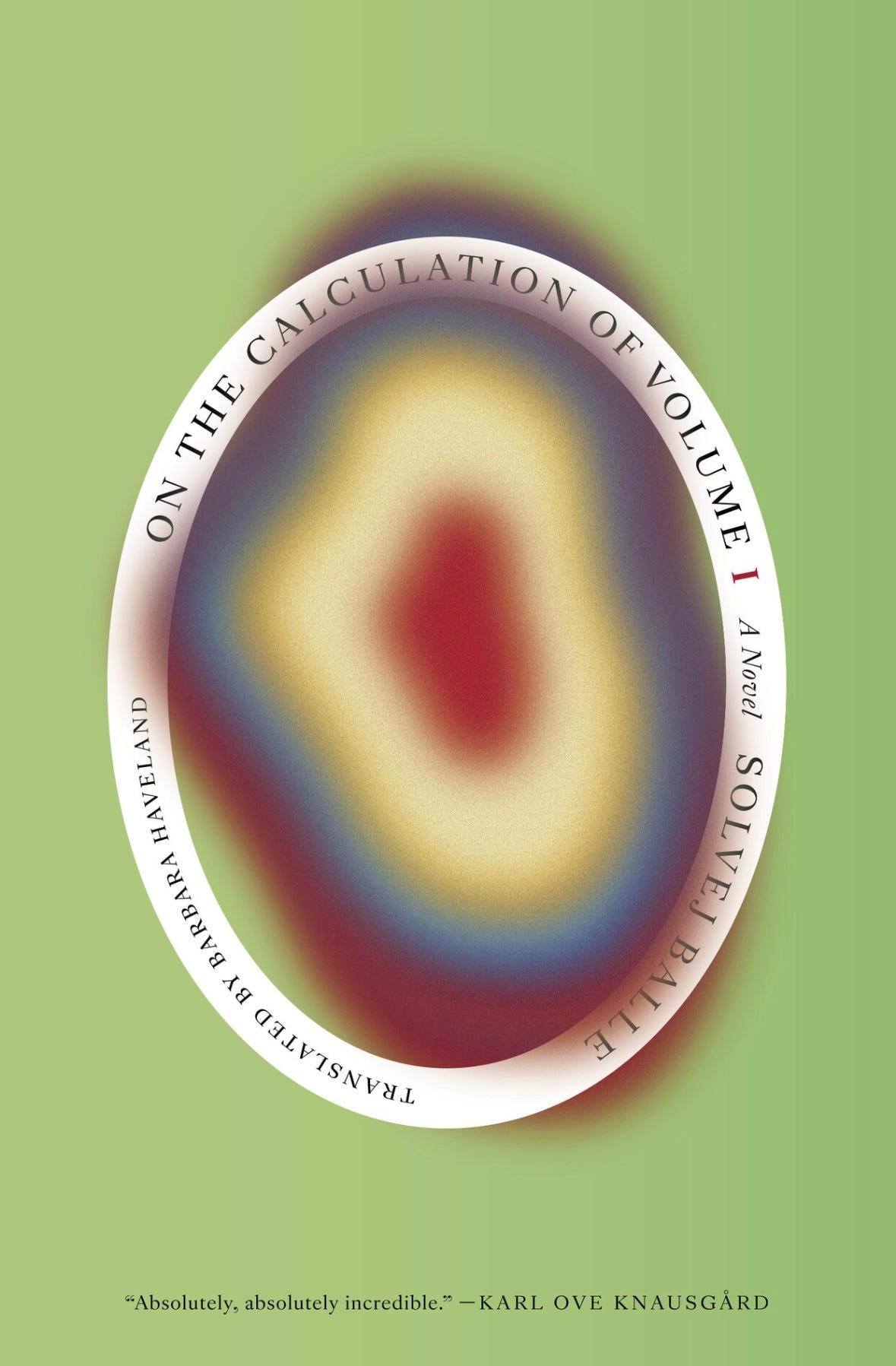
On the Calculation of Volume 1, Solvej Balle
Space Exploration: Real Reasons and Acceptable Reasons, Michael D. Griffin
From Mexico to Mongolia: the up-and-coming wine regions of 2025, Jancis Robinson
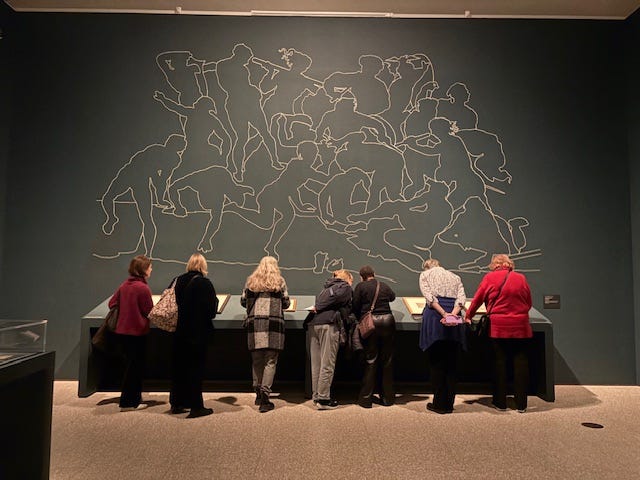
Michelangelo, Leonardo, Raphael: Florence, c. 1504, Royal Academy
This is the seventh in a regular Sunday series.1 As with previous editions, I’ll move beyond ’things I’ve been reading’, towards the end.
1) I’m currently writing a book called Freedom in Utopia, so you might spot some utopian texts slipping into these lists. This week, I read Margaret Cavendish’s multi-levelled story of a woman who, after escaping an enforced sea voyage, becomes the Empress of a fantastical utopian-seeming place, inhabited by part-human chimeras. The Description of a New World, Called The Blazing World (1666) begins with a characteristically convoluted half-page sentence — segmented by 13 semi-colons and colons — aimed at explaining why Cavendish decided to “join a work of fancy to [her] serious philosophical contemplations”.
Sometimes touted as an important work of feminist philosophy, and sometimes as one of the earliest important instances of sci-fi, on my view, however, Blazing World is largely just a curio. It is most surprising, perhaps, for its author’s anachronistic self-promotion and power-hunger. We see this not only in the meta-material that book-ends the text, but also in Cavendish’s fictional depiction of herself as the Empress’s adviser, the Duchess. The most memorable section, however, consists in an exhausting inside-baseball commentary on a wide range of theories of the day. The bird-men explain that lightning comes from “an exhalation” of differing temperatures “kindled in the clouds”. The fish-men explain that when cheese spontaneously changes into maggots it no longer counts as cheese. And the fly-men explain that spirits “lodge in the vehicles of the air”.
More relevant, perhaps, is the book’s depressing conclusion that, to remain “peaceable”, a nation cannot have more than one (i.e., absolute) ruler, one religion, and one language. Just before we leave the Blazing World, we learn that its empress has revoked the pluralistic reforms she’d previously instituted, in favour of a Hobbesian-type approach to governance. It’s unsurprising that her change of heart comes after spending time with the fictional Cavendish.
2) Solvej Balle’s On the Calculation of Volume 1 is a novel set almost entirely on one day — a day experienced hundreds of times by its protagonist, Tara. I won’t reveal the ways in which Balle develops this familiar ‘Groundhog Day’ idea, but it’s quite amazing how, in her hands, it quickly becomes an idea so full of potential that you can’t wait to read the other five volumes in the On the Calculation set. The writing is great, the depiction of what Tara’s experience means for her loving relationship with deuteragonist Thomas is devastating, and its philosophical content is satisfying. I read the whole thing as a comment on the debate about the independence of time, but maybe that’s just me.
3) Before I read Space Exploration: Real Reasons and Acceptable Reasons, I didn’t like its title. I still don’t like its title, but now it’s one of my favourite political speeches. Written in 2007 by former NASA administrator, Michael D. Griffin, the central aim of this speech is to persuade people in the space business to talk differently about the importance of space exploration. As analytically-minded scientists and engineers, Griffin says, you guys are too focused on the dry ‘Acceptable Reasons’ offered by cost-benefit analysis! Whereas, what you should be using are the deeper ‘Real Reasons’ that lie behind the great human accomplishments: the Real Reasons that drove the “impulse behind cathedrals and pyramids”. These Real Reasons, Griffin tells us, are “intuitive and compelling to all of us”, and they are required for ‘Real Success’. Of course, as soon as you try to write this stuff down, it all starts to look a bit like homeopathy.2 Except, when it’s in Griffin’s words, it mostly really doesn’t.3

4) Today, I enjoyed reading this Jancis Robinson FT piece about the wine regions to watch out for in 2025. I was already convinced by the greatness of Xinomavro from Naousa, which Robinson neatly compares with Nebbiolo. But now I’m fully committed to exploring Mexican wines, the quality of which she tells us “has been increasing in leaps and bounds”.
5) A couple of days ago, I went to Michelangelo, Leonardo, Raphael: Florence, c. 1504, at the Royal Academy in London. Like all my favourite exhibitions, this exhibition is tightly focused, with a relatively small number of art objects, in a small number of rooms. My favourite of its three rooms was the third, dedicated to two murals that were never painted: Leonardo’s Battle of Anghiari, and Michelangelo’s Battle of Cascina. In place of these murals, we see preparatory drawings, alongside derivative works by other artists, including Bastiano de Sangallo’s muscular painting of the central section of the Michelango. If you’re in London before 17 February, you should go.
I’m publishing this after midnight UK time, but it’s still Sunday in some other places. I’m sorry there was no ‘top 5’ last Sunday: I was away.
And all those concerns you have about the term ‘reason’ start to re-emerge..
While we’re on space, I also recently enjoyed Our Ethical Obligation to Planetary Science in the Age of Competitive Space Exploration, by James S.J. Schwartz and Casey Dreier. It makes a convincing case that planetary scientists should consider prioritising experiments that can only be done in environments which are under threat from the effects of other kinds of space activity.
Would love to hear more about your book. Non-fiction? Are you putting a stake in the ground for what a utopia would look like? Or discussing how to get from here to there?
I always wondered about blazing world since discovering it throughout alan moore's work. It seems to be a favourite among his type of 'english weird' sci fi writers in the late C20. There's an overlap with Ballard, Sinclair, and even people like Jez Butterworth writing about the country and the city and the secrets in between.