


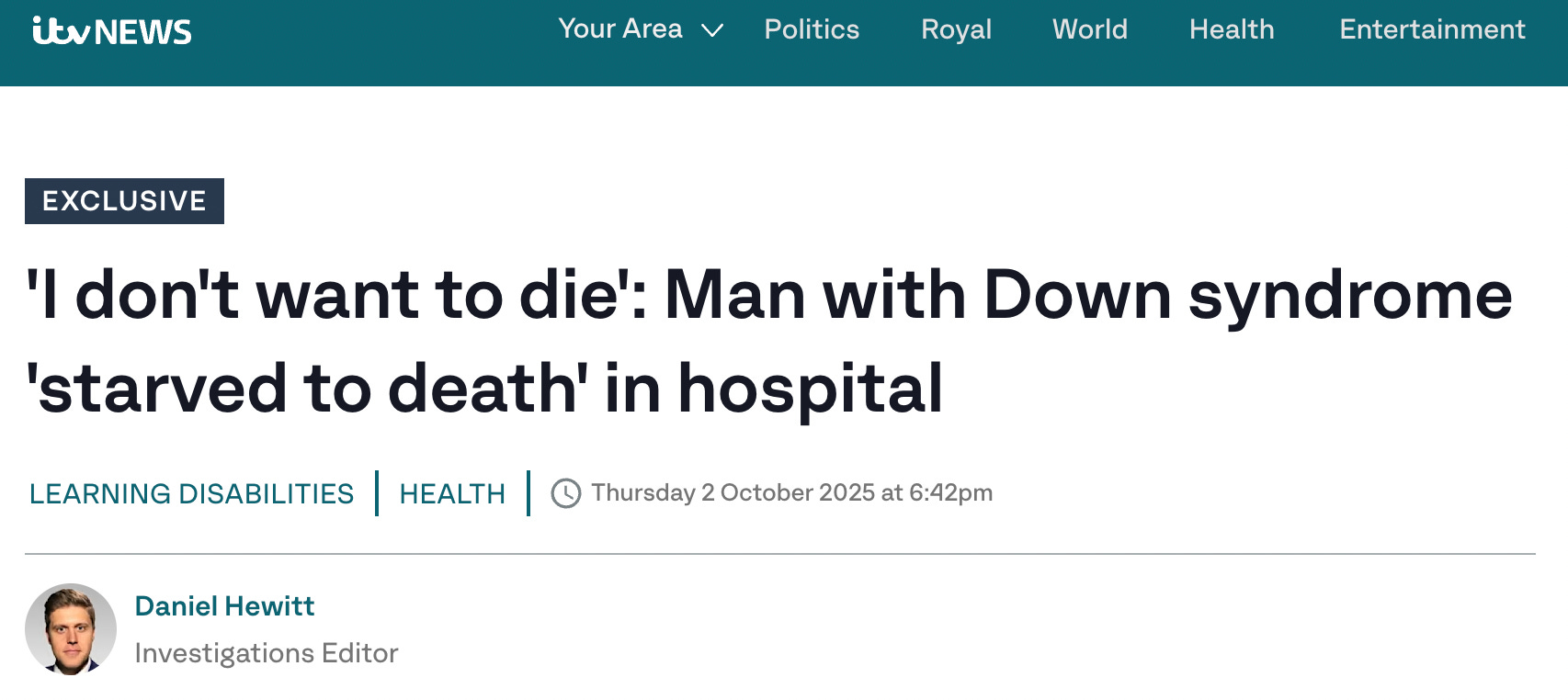
‘I don’t want to die’: Man with Down syndrome ‘starved to death’ in hospital, Daniel Hewitt
The Politics, Aristotle
The Appeal of Libertarianism, Daniel Dennett
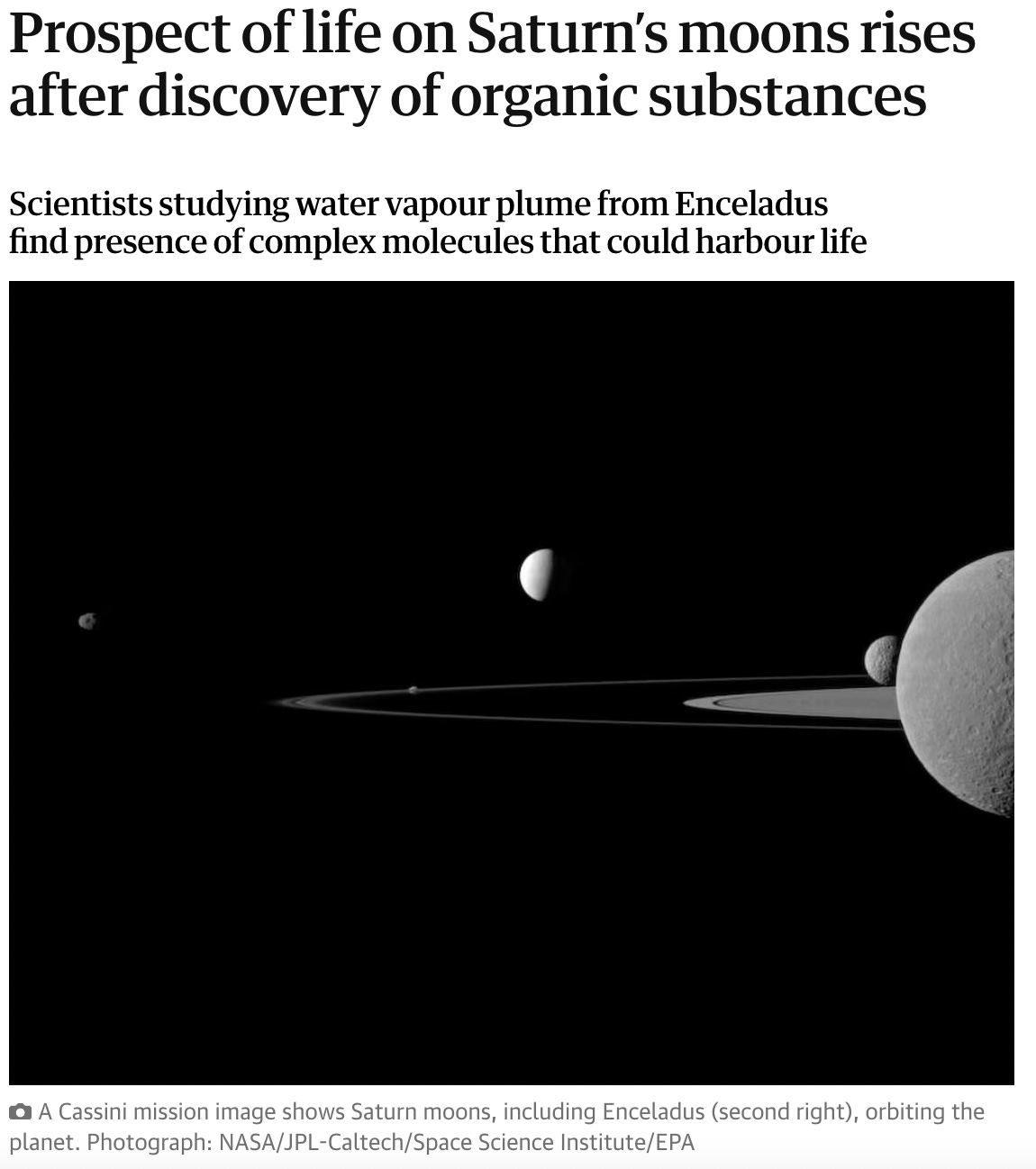
Prospect of life on Saturn’s moons rises after discovery of organic substances, Nicola Davis
Fugue for Tinhorns, Frank Loesser
This is the forty-fourth in a weekly series. As with previous editions, I’ll move beyond things I’ve been reading, toward the end.
1) Broadly, I think things aren’t as bad in the UK as many people elsewhere have come to believe. This isn’t to disregard the horrific terror attack that took place in a Manchester synagogue last week. And it isn’t to deny the country’s long-term systemic gridlock, or the gradual disintegration of respect for free speech that’s been taking place over decades. Rather, it’s that I think many people elsewhere are currently suffering from an overcorrection in their general perception of the UK.
Until very recently, that is, they generally thought the UK was grey but great. Now they seem to think civil war is about to break out. On topic, I have little time for the increasingly popular narrative that British people have suddenly (or gradually) turned angrily, violently, en masse, against immigration — against it in principle, against it in its current practice, and against it as instantiated by their fellow members of UK society. I just don’t believe any of this is true, or not at any scale anyway. I think politicians have got the public wrong, and are stuck in a spiral. Perhaps this is because I’m miles off, on this topic, now I’m living in America. Or perhaps it’s the fault of my seemingly unbreakable positivity about human nature.
This positivity has resilience against horrific acts of terrorism, as extreme cases of human malfunctioning. These are cases in which a person’s reasoning power has tragically ceased to work; in which their goodness has been crowded out by psychological disorder. Whereas my seemingly unbreakable positivity is, I think, tested more thoroughly by cases in which otherwise ‘ordinary’ people, in ordinary times and ordinary places, abdicate or delegate their moral responsibility, allowing horrific things to take place around them, sometimes again and again. These people don’t attack others with knives or bombs; they stand by, or stand down, or don’t do sufficient, failing to put their skills to use when expected and required.
My positivity was tested to the extreme last week, therefore, on reading this UK news article about a set of cases in which it seems that medical negligence played a significant role in the deaths, in hospital, of children with learning disabilities or autism. You should read the whole article, so I’ll end this item here.
2) The other day, I reread the opening section of Aristotle’s The Politics, in preparation for recording the latest episode of my new philosophy podcast, Working Definition. I’ll be releasing this episode — on the topic of politics, with Oliver Traldi as guest — next week. But in the spirit of the podcast, here’s my rough simple summary of how Aristotle engages with the concept of ‘politics’, at least in that opening section of The Politics.
For Aristotle, the term ‘political’ describes a particular kind of grouping or “association” of people, aimed at bringing about “the good life”, through its members’ intentions and institutional structures and practices. He calls this association “the state”. To Aristotle, the state is the political association. Such an association arises from its members’ joint aim to “secure life”, and it persists to meet their joint aim of “secur[ing] the good life”. Aristotle sees humans as naturally “political animals”; only in the state’s conditions can we develop fully as individuals, and live together justly.
As with Plato, therefore, Aristotle’s conception of ‘politics’ is focused on a particular kind of collective living, which is aimed at bringing about the good, in particular ways.

3) Yesterday, I read some of Daniel Dennett’s Freedom Evolves, including a section entitled The Appeal of Libertarianism. (As in free-will libertarianism, not political libertarianism.) While, as usual, Dennett’s writing is really clear and engaging, I found this section argumentationally loose, and frustrating in its failure to live up to its aim. It’s not just libertarianism that isn’t presented as fully and charitably as it might have been: I don’t think being a materialist necessitates being consigned to missing out on libertarianism’s appeal, but an explicit disdain for dualism largely does it here for Dennett.
4) I’ve said it before, but it feels as if every week brings yet more astonishing space news. A few days ago, it was the turn of Enceladus — one of Saturn’s icy moons — where, thanks to the discovery of some oceanic molecules, the likelihood that life exists has increased. As Nicola Davis reminds us in this nice piece for the Guardian, the 1997-2017 NASA Cassini mission discovered “a plume of water ice grains and vapours erupting from beneath the surface at [Enceladus’s] south pole”. And now, Davis reports, the researchers who found the molecules, using Cassini data collected from the plume’s ice grains, believe “we have all [the] elements required for Enceladus to harbour life”.
5) I was talking with a friend about Guys and Dolls yesterday, so I listened to a few recordings of my favorite song from it. 90 seconds of American excellence.

If you have a second can you comment on the translation of the penguin edition of the politics? I need to read it in preparation for Jared Hendersons substack book club thing and I really enjoyed the penguin edition of the nicomachean ethics.
It's the best song. And now it's in my head all day thank you.