TLDR:
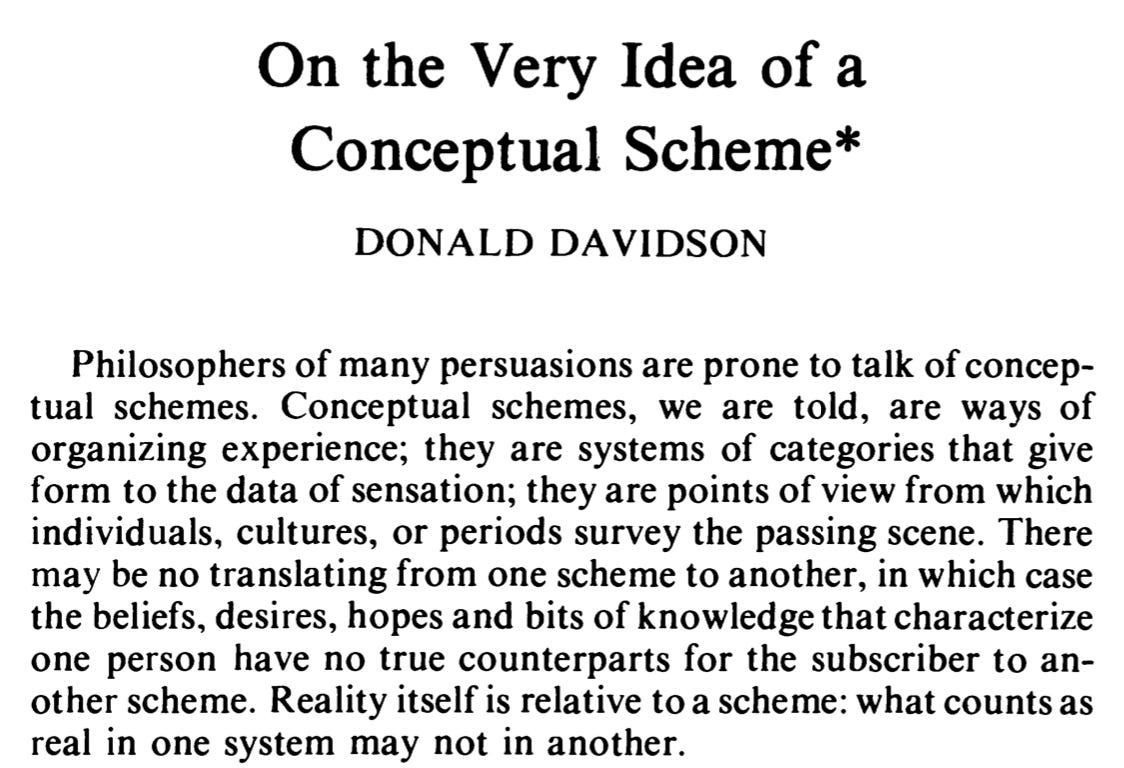
On the Very Idea of a Conceptual Scheme, Donald Davidson
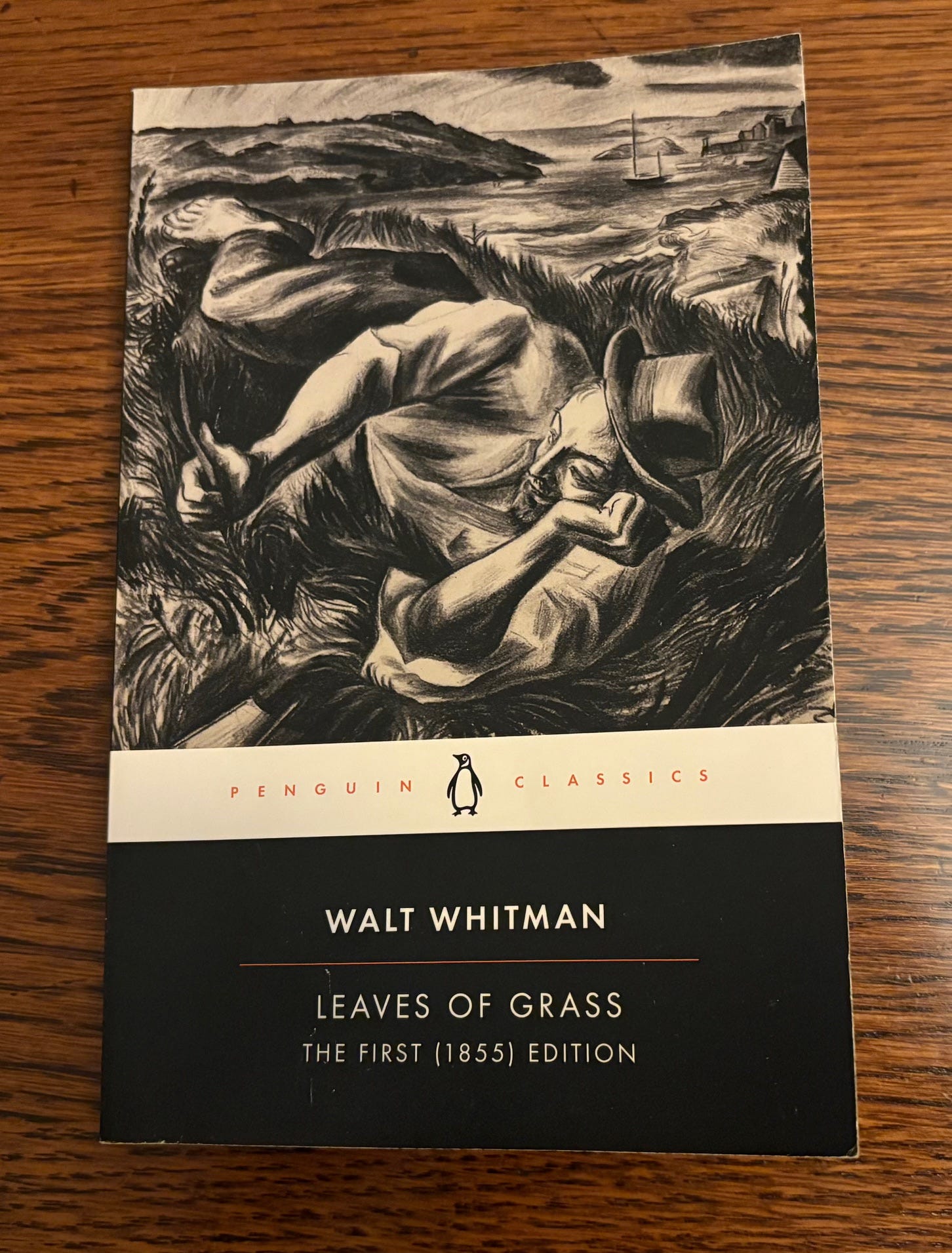
Song of Myself, Walt Whitman
Autobiographical Notes, Albert Einstein
King of Fruits, Étienne Fortier-Dubois
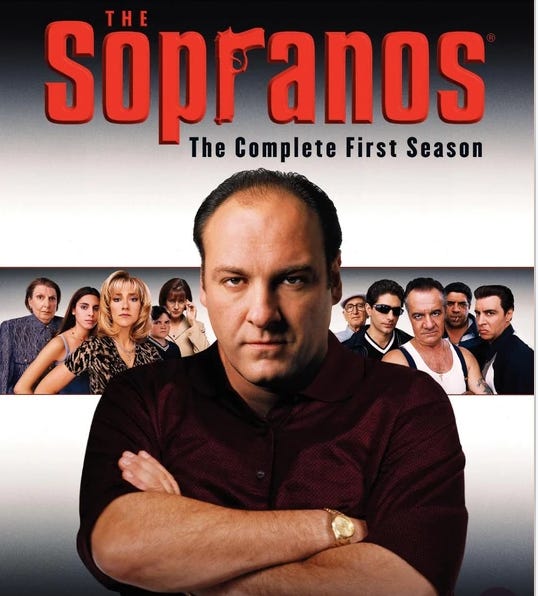
The Sopranos
This is the fifteenth in a weekly series. As with previous editions, I’ll move beyond things I’ve been reading, toward the end.
1) As part of my ongoing project of reading classic twentieth-century philosophy papers, this week I turned to Donald Davidson’s On the Very Idea of a Conceptual Scheme (1974). Here, Davidson argues against the ‘conceptual scheme’ concept, on the grounds of intelligibility.
In particular, Davidson takes on the idea that, because we can’t ever know whether inter-language translations are accurate, then we should assume that what “counts as real” to the speaker of one language might be totally different from what “counts as real” to the speaker of another. Davidson’s problem with this ‘untranslatability’ idea, at heart, isn’t that he disagrees that such speakers are unable to communicate conceptually. It’s that he thinks it’s impossible to conclude either that different people have different conceptual schemes, or that everyone shares the same one.
Davidson makes arguments about other things, in this paper: arguments about the relativism he sees as inherent in the concept of the conceptual scheme, and arguments about the ins and outs of the positions of people like Quine and Kuhn who were busy getting hung up on the conceptual scheme idea. But the thing that hit me the most — and it does hit you like a hurricane, this paper, even when you know what’s coming — is the implication that if we can’t ever know whether or not we share a conception of “what counts as real” with anyone else, then each of us is stuck in our own little box. I know this isn’t really what Davidson wants us to conclude. And I know that he wants us to focus on the implications of his position for the objectivity of truth, and our access to it. But the impossibility he points at is unnerving, whether or not you agree with him.
2) Song of Myself is the first poem in Walt Whitman’s collection Leaves of Grass (1855). It’s a poem about someone — Whitman! — who works so hard to value the good things in life, that he can’t resist searching for goodness in the idea of death. He’s incomparably positive and excitable. He speaks as himself, and as America, and as humanity. He sees the best features of America — its beautiful diversity, and its egalitarian goals — as an instantiation of the human good, even amidst slavery and warfare. He finds uncontrollable joy in the natural features of the world: the skies, the mountains, and the grass of course, but also human bodies and the “grand opera” of human voices. “Come loafe with me on the grass,” he says, near the start. But it’s hard to imagine him loafing long. Even in death, he believes he’ll “grow from the grass I love,” and “be good health to you nevertheless”.
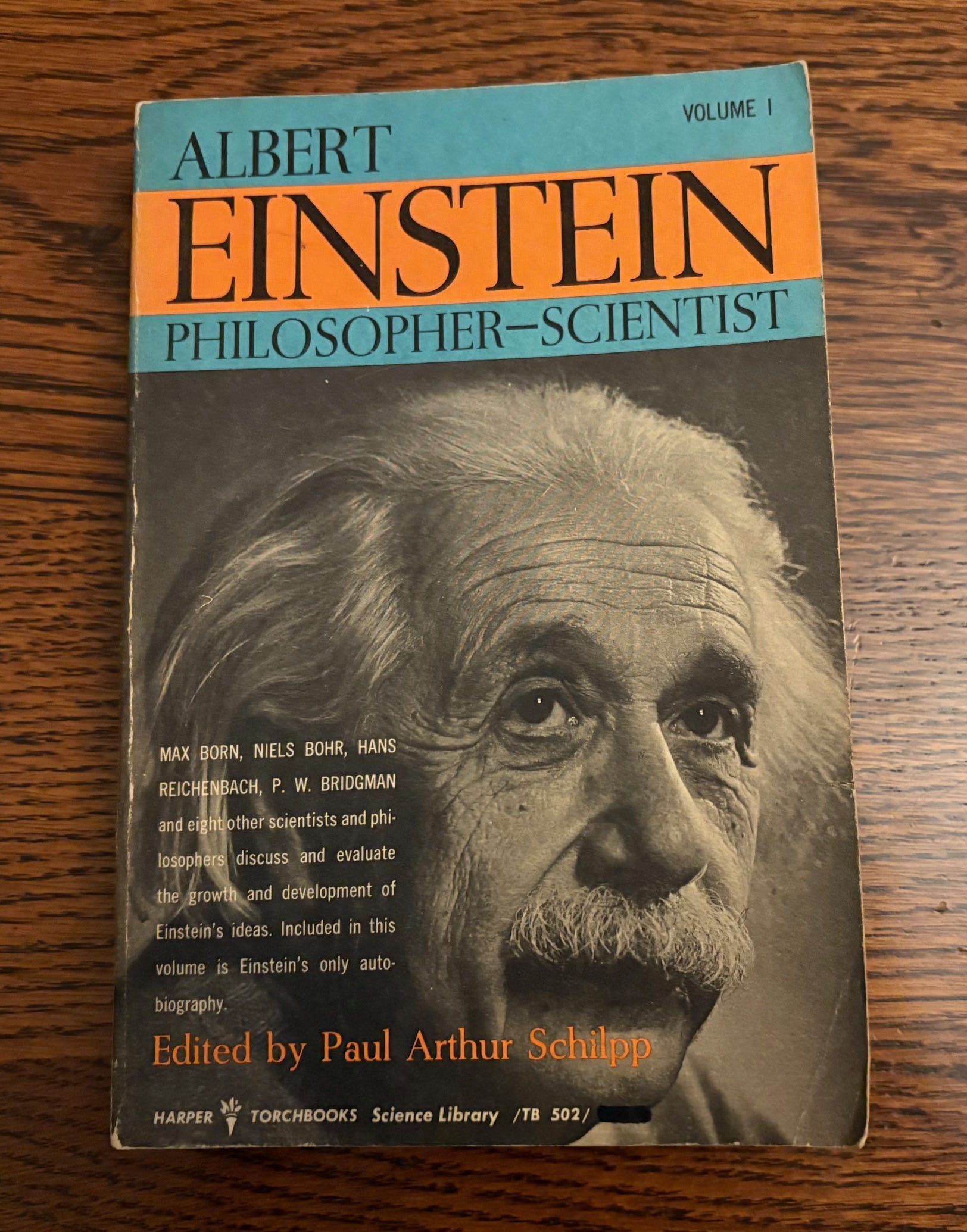
3) The cover of this 1959 volume about Einstein boasts the inclusion of his “only autobiography”. The Autobiographical Notes (1946) are presented here side-by-side in English and German, but they still total just under 100 pages, which seems short for an attempt to explicate Einstein’s scientific achievements!
Moreover, the opening section is focused instead on his epistemic development. He begins by reflecting on his conclusion, aged 12, that “the stories of the Bible could not be true”. His previous “deep religiosity”, he tells us, represented “a first attempt to free myself from […] an existence which is dominated by wishes, hopes, and primitive feelings”. The external world, he recognised, stands “before us like a great, eternal, riddle,” and understanding it became his overriding motivation. This led him, he explains, to preferencing physics over maths, and to a hardcore belief in the value of the empirical method.
I’ll probably go back to Einstein’s account at some point, to understand the scientific sections more fully. And I’d like to think some more about the brief theory of thought he outlines, because I didn’t find it very convincing. But I really liked the bareness of his ambition: I’ve never seen the word ‘striving’ repeated so much.
4) I enjoyed this new Works in Progress piece about pineapples. Étienne Fortier-Dubois describes the technological innovations that increased the European supply of this naturally hard-to-store and hard-to-cultivate fruit, long-valued for its taste and its look. I particularly liked learning that, in the nineteenth century, a “rental industry of pineapples arose to meet [the] demand” for using them as table-toppers, to signify status.
5) Lately, I’ve been watching The Sopranos. I’d avoided doing so for years, because I thought it’d be too violent. And, of course, it is too violent! But it’s also thoughtful and truthful and sometimes beautiful: in its detailed depictions of life in a particular place and time in America, and of life more generally in America and everywhere else. Perhaps it is a Whitman of TV.