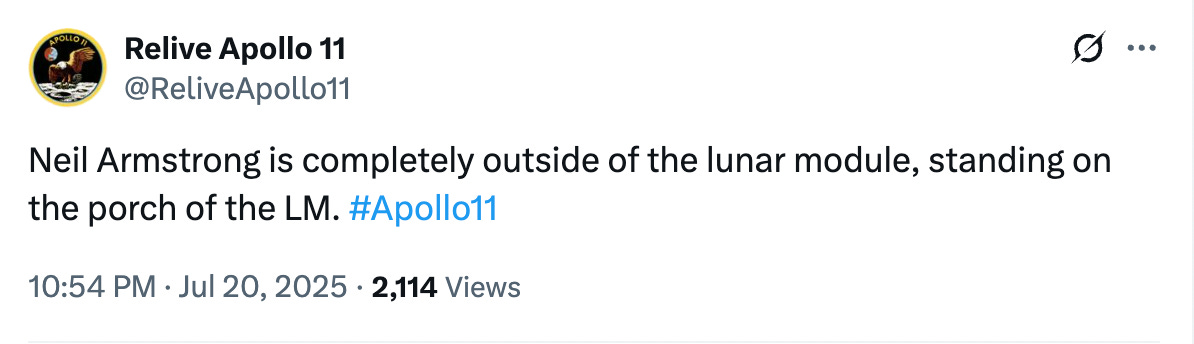
@ReliveApollo11
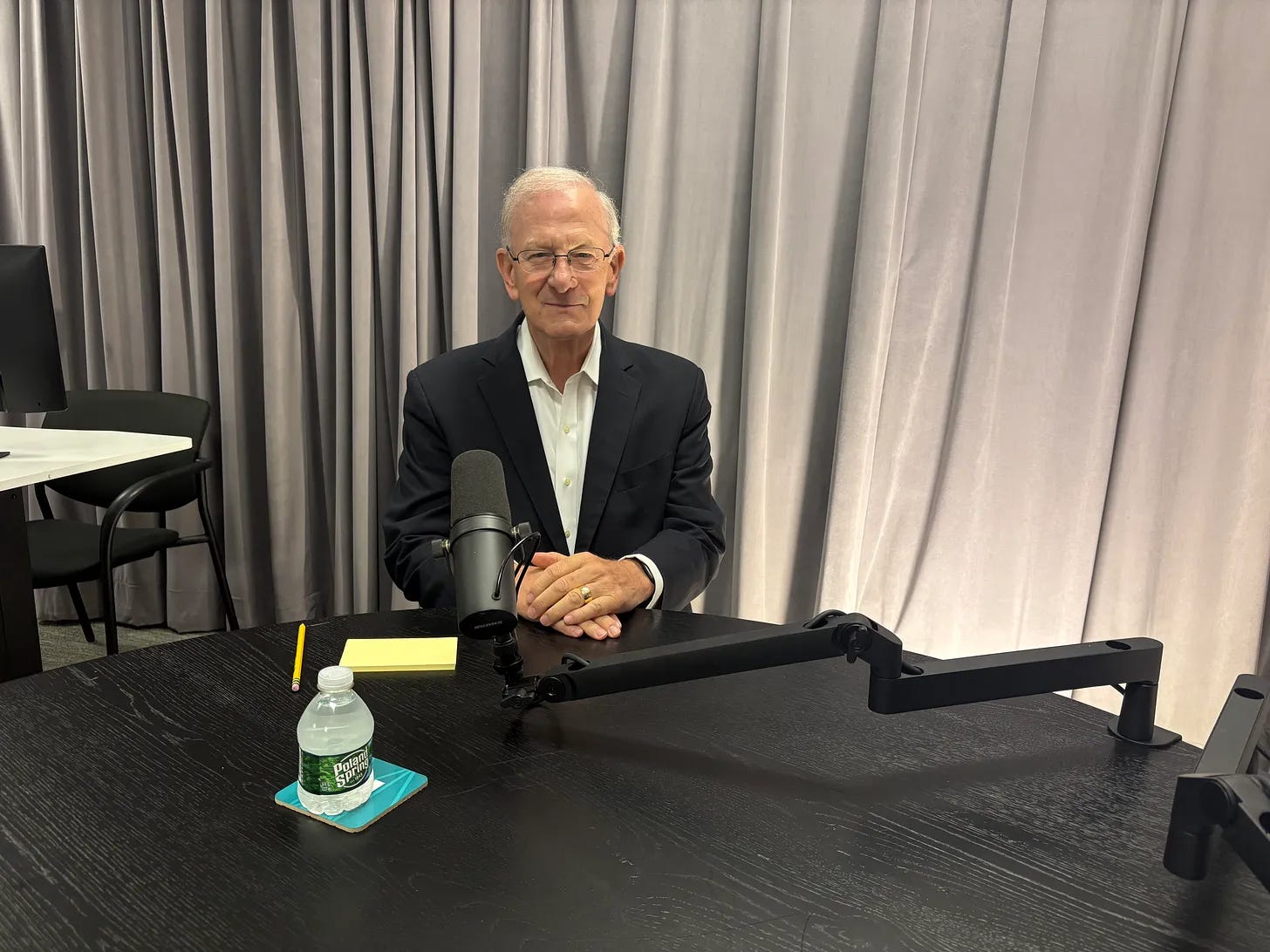
Economic Resilience: A Choice, Not an Entitlement, Thomas Hoenig
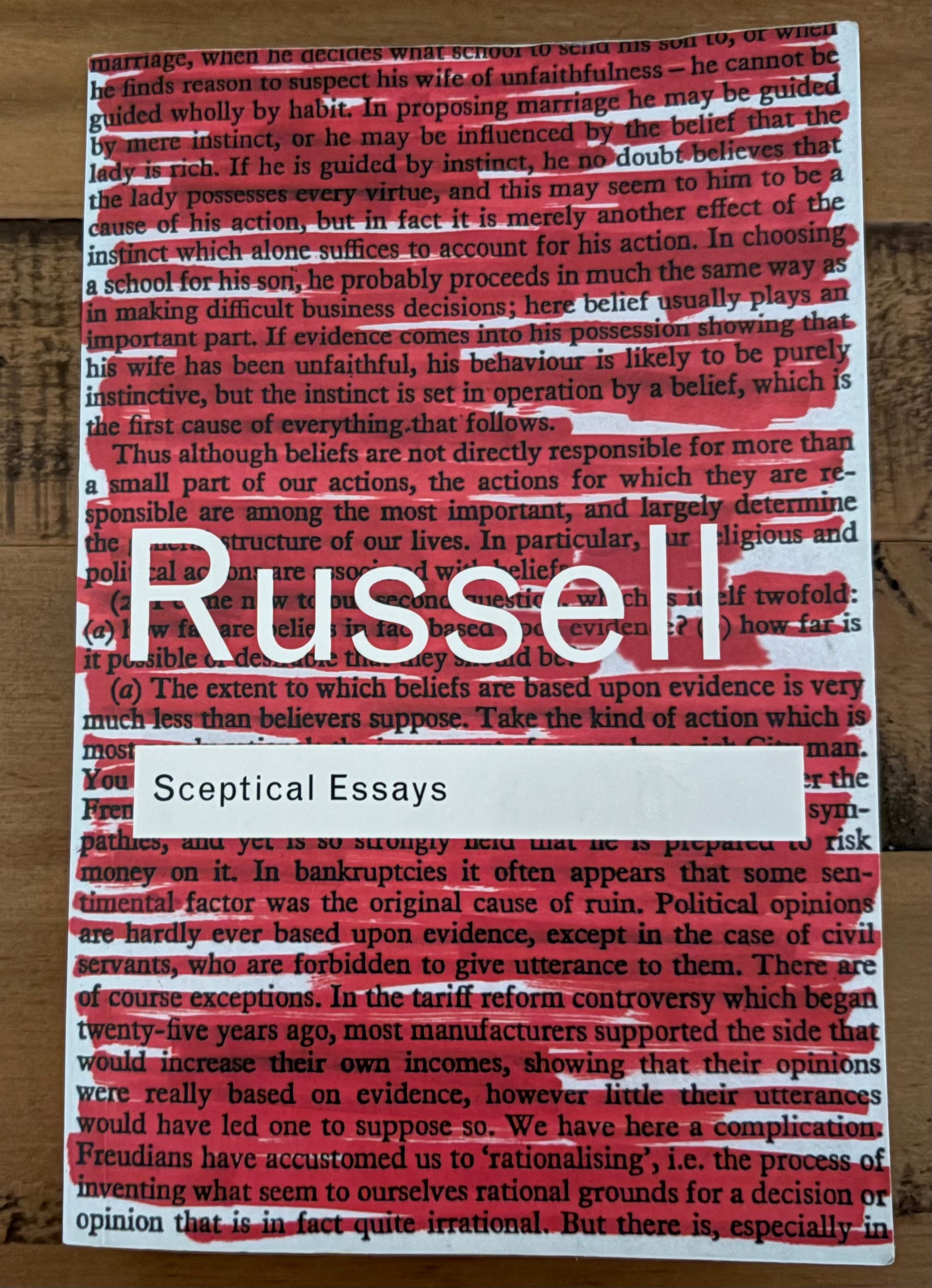
Can Men Be Rational?, Bertrand Russell
Let’s Shell-ebrate: Better Hatched Eggs Now in Stores, ASPCA
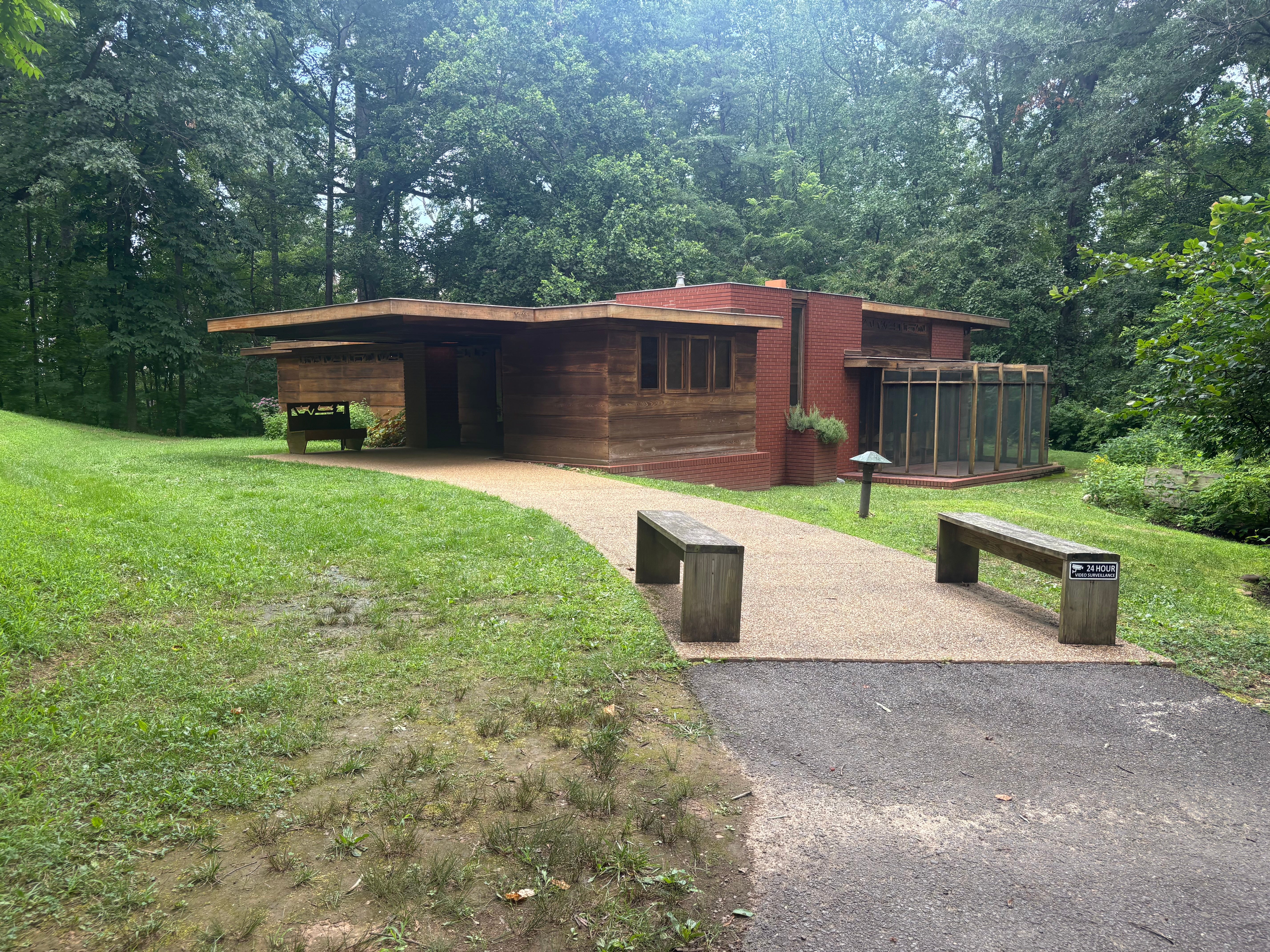
Pope-Leighey House, Frank Lloyd Wright
This is the thirty-third in a weekly series. As with previous editions, I’ll move beyond things I’ve been reading, toward the end. I’ll keep everything brief today, however, as I posted something substantial here yesterday: the first episode of my new philosophy podcast, Working Definition! I’ve since added a transcript.
1) Yesterday was also the 56th anniversary of the moon landing. Over the past week, I’ve enjoyed following @ReliveApollo11. This is a Twitter account run by the DC Air and Space Museum, which recounted the Apollo 11 mission in real time last year, too. Some of the account’s tweets report on the geographical location of the craft and crew, some cover a broader set of facts about the mission and contemporaneous events, and some take the form of moving or amusing quotations.
The content of many of yesterday’s tweets — particularly during the hours between “The Eagle has wings” and “The Eagle has landed” — would be familiar to a vast number of people across the world today, more than half a century on. Over the next few months, we’ll learn much more about America’s space exploration plans for the coming years…
2) As I may have mentioned, I launched my new philosophy podcast yesterday. The first episode stars my Mercatus colleague, Tom Hoenig. Tom is the former President and CEO of the Federal Reserve Bank of Kansas City, and the former Vice Chairman of the Federal Deposit Insurance Corporation. He’s also the writer of a speech called Economic Resilience: A Choice, Not an Entitlement, which I enjoyed reading last week.
The speech was given in October 2024. Tom begins by setting the scene: a situation in which, while Americans “overwhelmingly” still aspire to having the home, job, family, and retirement traditionally seen as central to the American Dream, “fewer believe they can achieve it”. He then addresses two constraining factors on the long-term resilience of the American economy, both of which are functions of institutional mismanagement.
First, a short-termist Federal Reserve approach, including the normalisation of quantitative easing. (In other words, QE, regardless of whether it’s being used at any particular time, has become seen as a standard option.) Second and relatedly, a short-termist Congress approach, involving over-enthusiastic spending, and a lack of concern for the resultant effect on the national debt.
Much of the burden of this, Tom emphasises, will fall on future generations. I’ll write here at some point about my view on the value of thinking in terms of ‘future generations’ rather than ‘future people’ — a distinction I’ve been enjoying thinking about lately. But one thing I particularly like about Tom’s speech is its positivity. Deleterious institutional trends can be reversed, he tells us, and crucial to this is good public information. Tune in to the podcast episode to learn more...
3) Can Men Be Rational? is a short essay by Bertrand Russell. Russell argues against the idea that because we humans have been shown to be irrational, we should give up on the aim of persuading our interlocutors to agree with us through the power of argument, and resort instead to “rhetoric, advertisement or warfare”.
Russell’s argument consists largely in fighting against the premise that we are irrational. Here, I particularly like his response to the idea that psychoanalysis shows that being rational is an impossible human aim. The therapeutic value of psychoanalysis, Russell points out, is itself dependent on irrational people being a divergence from the norm!
4) I was relieved last week to read that, soon, it will be easier in Virginia to find eggs to buy from producers that haven’t participated in the violent mass slaughter of male chicks. I hated the jokey tone of the ASPCA article in which I read this good news, however.

5) On Saturday, I went to see Pope-Leighey, an excellent Frank Lloyd Wright house, which stands in the grounds of Woodlawn, an excellent Georgian house built for George Washington’s step-granddaughter. I liked many things about Pope-Leighey, visually. But I particularly enjoyed learning that it has been moved twice, red brick by red brick, perfectly-aligned screw by perfectly-aligned screw. The first time, it was moved to the Woodlawn grounds, from Falls Church, 20 miles away. The second time, it was moved to its current position, from about 30 feet away. Are these moves enough to make it the House of Theseus?