


TLDR:
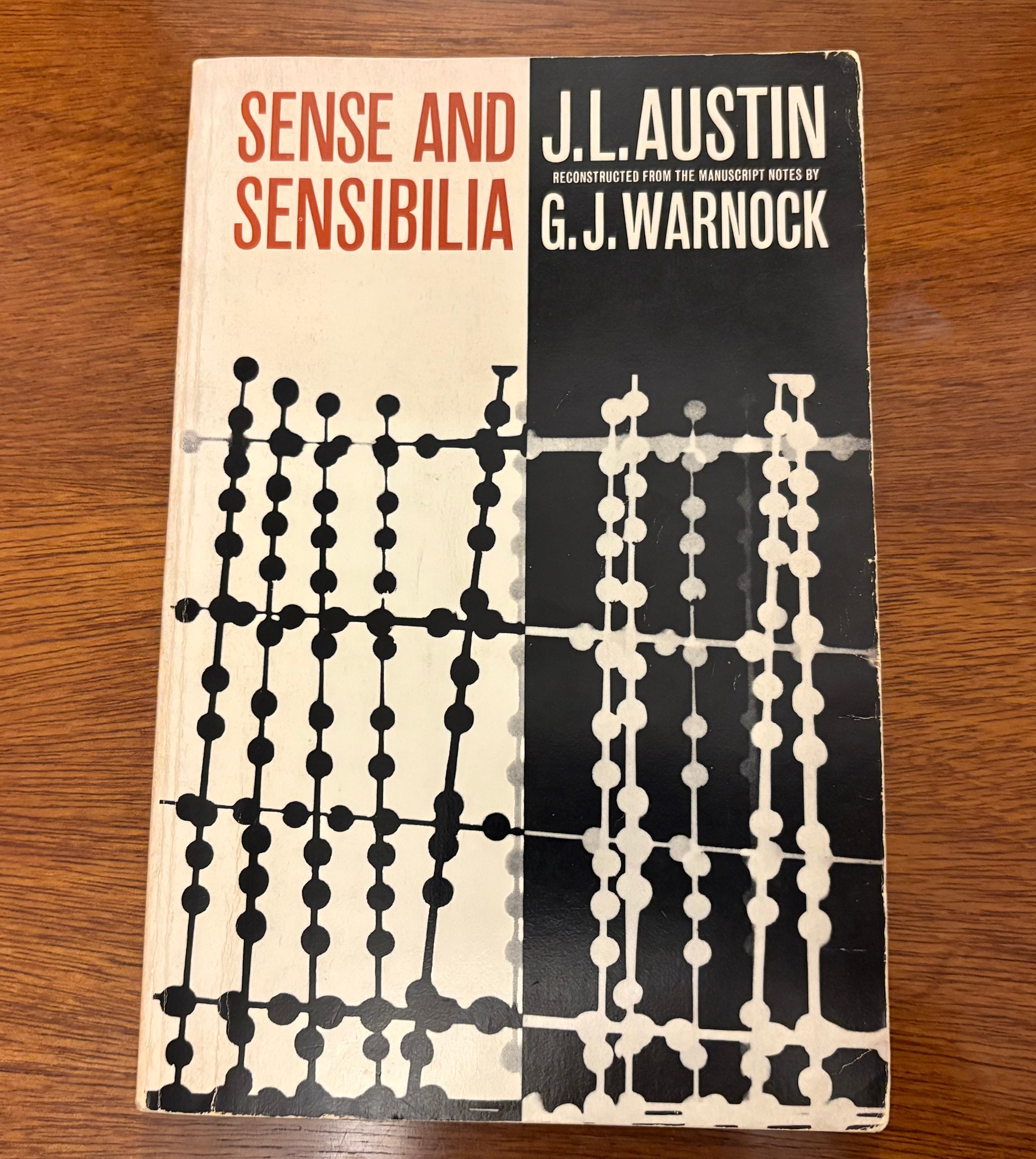
Sense and Sensibilia, J.L. Austin
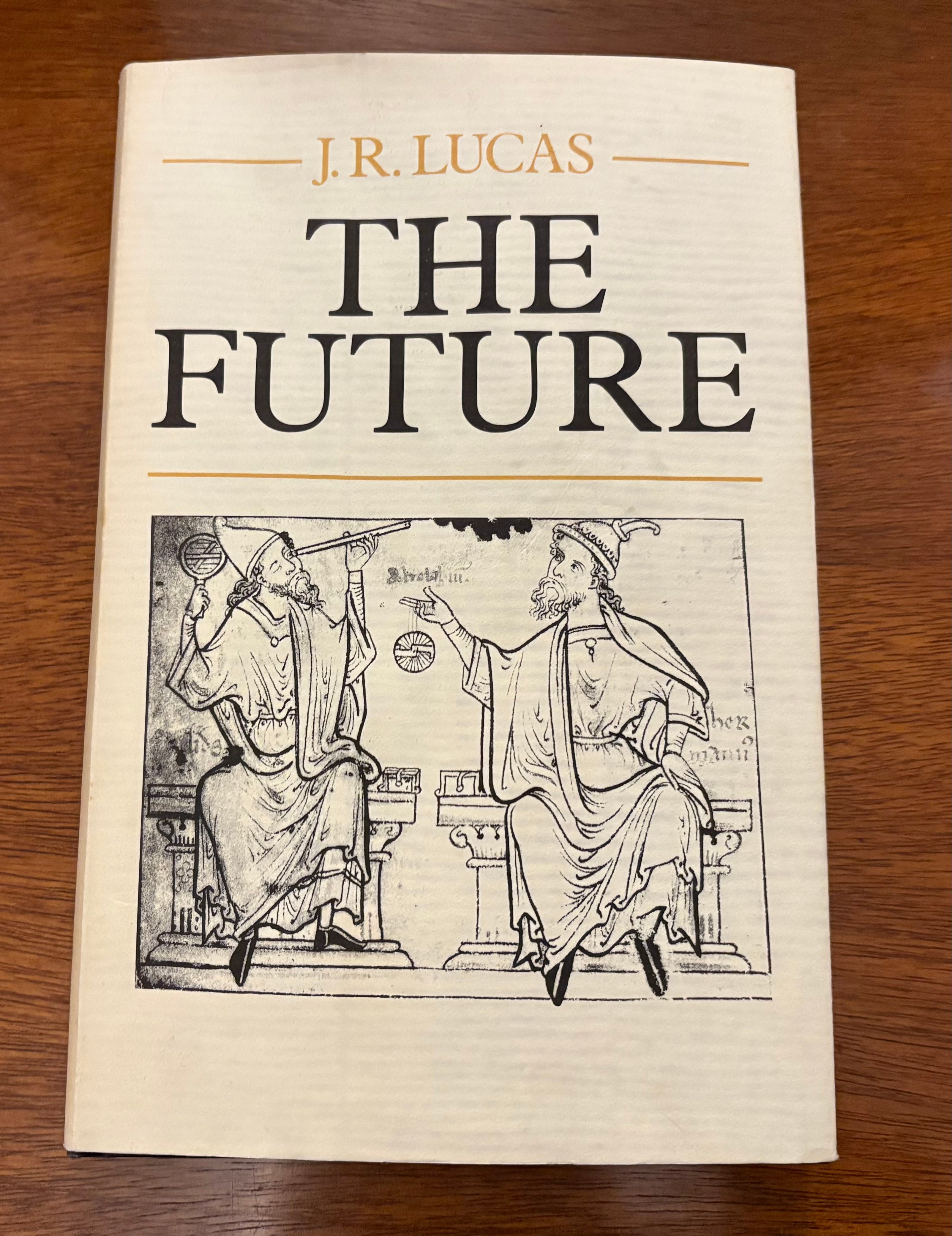
The Future, J.R. Lucas
Ode to Tomatoes, Pablo Neruda
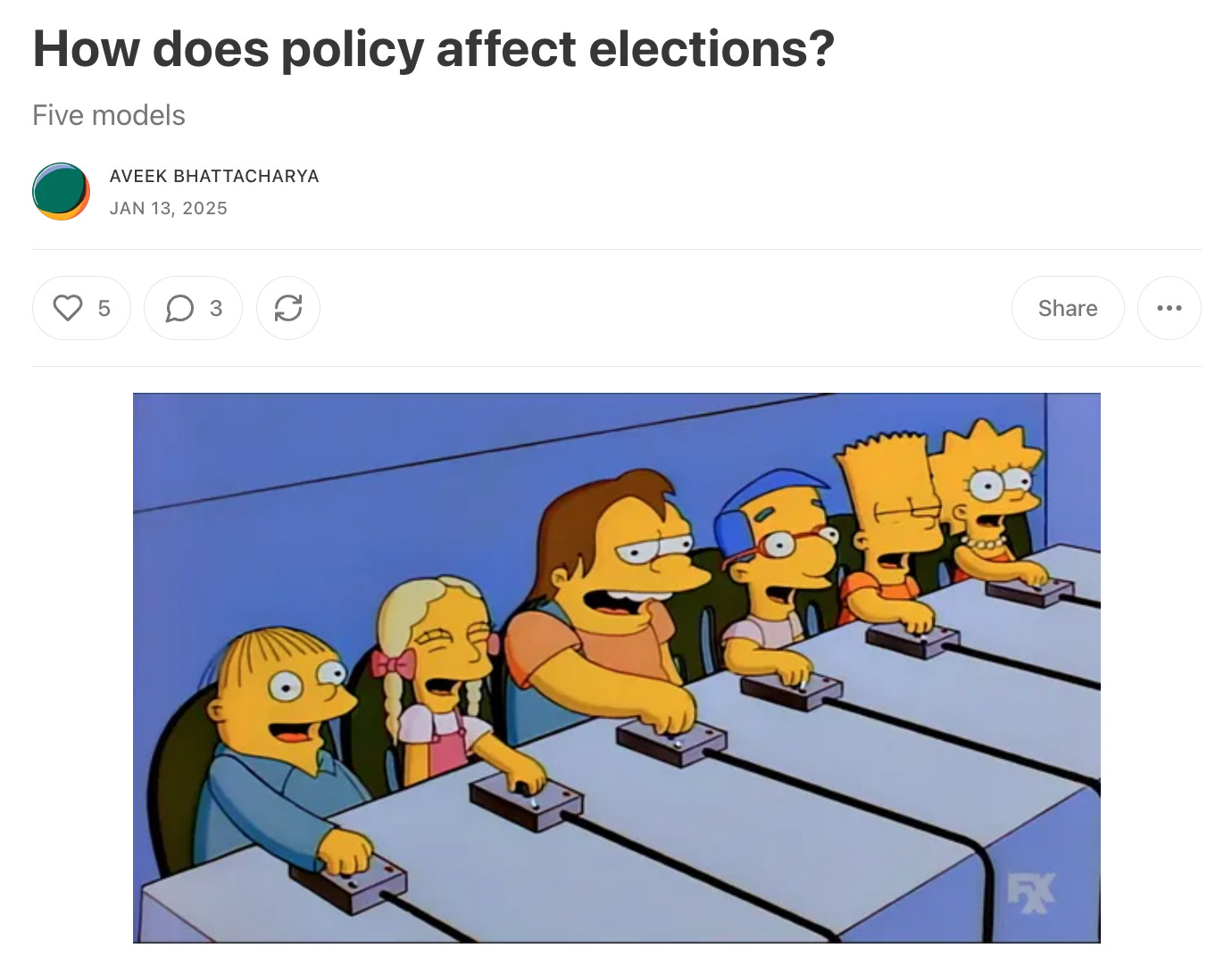
‘How does policy affect elections?’, Aveek Bhattacharya
Jenůfa, Covent Garden, conducted by Jakub Hrůša
This is the ninth in a regular Sunday series. As with previous editions, I’ll move beyond ’things I’ve been reading’, towards the end.
1) Yesterday I started reading Sense and Sensibilia (1962), in which J.L. Austin smashes into the long-standing debate about whether we can directly perceive ‘material things’, or whether we only ever perceive 'sense data' of them. Are you really seeing the bacon sandwich you’re about to pick up, or is it just an impression your brain created? Regular readers of this Substack will know how much I love Austin's How to Do Things with Words, and having finally got round to S&S, I’m already addicted. I’m forcing myself to go slowly, however, which means you can expect updates over the coming weeks. For now, here are three quick thoughts on the opening few chapters.
First, as in HTDTWW, Austin pulls no punches. He particularly enjoys criticising philosophy for its sneaky dependence on “snakes in the linguistic grass”. These are words like ‘proper’ and ‘real’ (and ‘direct’, in particular) which, Austin tells us, not only get “stretched” into meaninglessness, they often silently depend on the meaning of their ‘opposite’.
Second, I’m enjoying Austin’s clinical destruction of the ‘argument from illusion’. His takedown of the way in which this classic argument “trades on not distinguishing illusions from delusions” feels as significant as correlative moves within his HTDTWW destruction of the classic idea that statements are well-categorised as ‘statements of facts’. And I’m enjoying the examples he relies on here, which range from the illusion created by “the woman on the stage with her head in a black bag”, to the pink rats ‘seen’ by a genuine delusive.
Finally, I’m finding the argumentation in S&S conveniently straight-up. In HTDTWW, it’s frustrating when, after you’ve gone back and forth in a chapter to try to pin down definitions or conclusions, you find exactly what you were looking for at the start of the following chapter. That said, if we’ve got Geoffrey Warnock (who ‘reconstructed’ S&S by assembling and expanding on Austin’s notes) to thank for this, then some Austin must’ve been lost along the way.
2) I’ve also just started reading J.R. Lucas’s The Future (1989). Again, regular readers may have picked up on my interest in the concept of time — not least from recent comments about Solvej Balle’s fantastic On the Calculation volumes. And again, you can expect more on Lucas in the coming weeks. So far, however, my favourite sentence is this: “Yet it is one of the most fundamental facts about time that the future becomes present and the present past, and not vice versa”. I like this sentence for the work it does against ‘block universe’ theories (on which, as Lucas puts it, “past, present and future are all […] on a par”). And I like it for its slightly counter-intuitive common sense.
3) I read a load of Neruda poems this week, and one of the many I loved was Ode to Tomatoes (1954). Here, Neruda assigns the tomato many roles: it is the subject of solar metaphor, the “invader” of kitchens, the victim of knife crime, and the marital partner of the onion. It is the “star of earth”, and it comes to us as a gift.

4) In his recent Substack article ‘How does policy affect elections?’, my friend Aveek Bhattacharya sets out a five-part taxonomy of theories purporting to explain the impact of policy on the way people vote. There’s popularism (people vote for parties proposing policies they like!), minefield-ism (people vote against parties proposing policies they dislike!), narrativism (people vote for party vibes rather than specific policies!), deliverism (people vote for parties that effect attractive policy change!), and fatalism (people vote for reasons non-related to policy!). I’m always suspicious of anyone claiming to know why a large group of people voted as they did, and particularly the sweeping claims you sometimes see like ‘Brexit was all about immigration!’, or ‘Trump tracks the urban/rural divide!’. But Bhattacharya’s taxonomy is really useful — as an overview of how policymakers view their routes to impact, and an acknowledgement of the epistemic puzzle at hand, if not a full explainer of the psephological psyche.
5) Janáček’s Jenůfa is a morally ugly opera. By the end, even Laca — the cousin we’re supposed to admire for keeping his word, unlike his half-brother, and marrying the ‘fallen’ Jenůfa — has been revealed as a violent manipulator rather than a clumsy romantic. And regardless of the beauty of its minimalist sets, this ugliness was clearly exposed at Covent Garden yesterday, in the final performance of its revival of Claus Guth’s 2021 production. Even the fraying of Karita Mattila’s glorious voice added welcome forcefulness to her portrayal of Jenůfa’s murderous stepmother. One of the best things I’ve seen in ages.
Now you've made me want to revisit Austin (after a 50-year pause from my undergraduate studies in philosophy).