


TLDR:
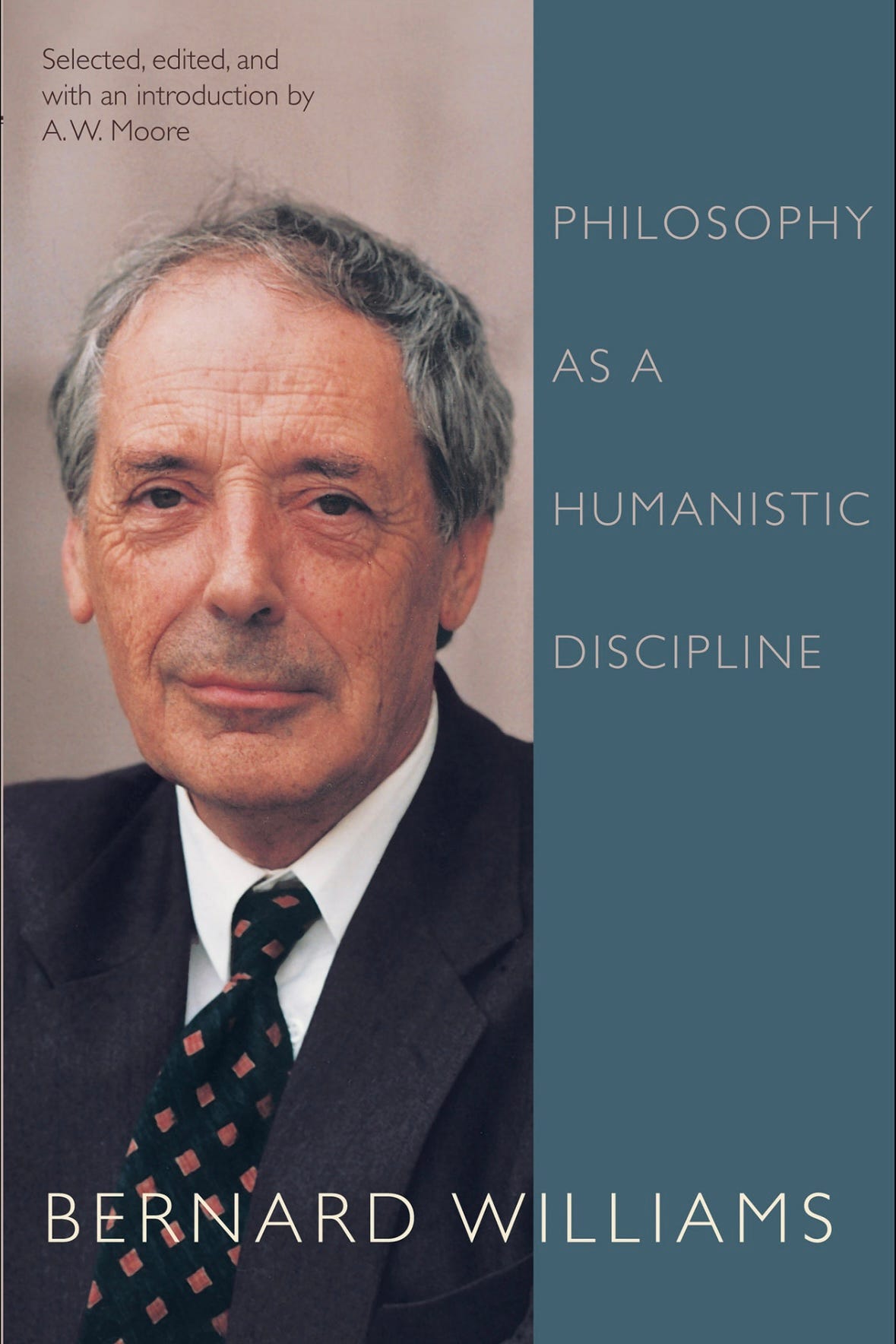
Identity and Identities, Bernard Williams
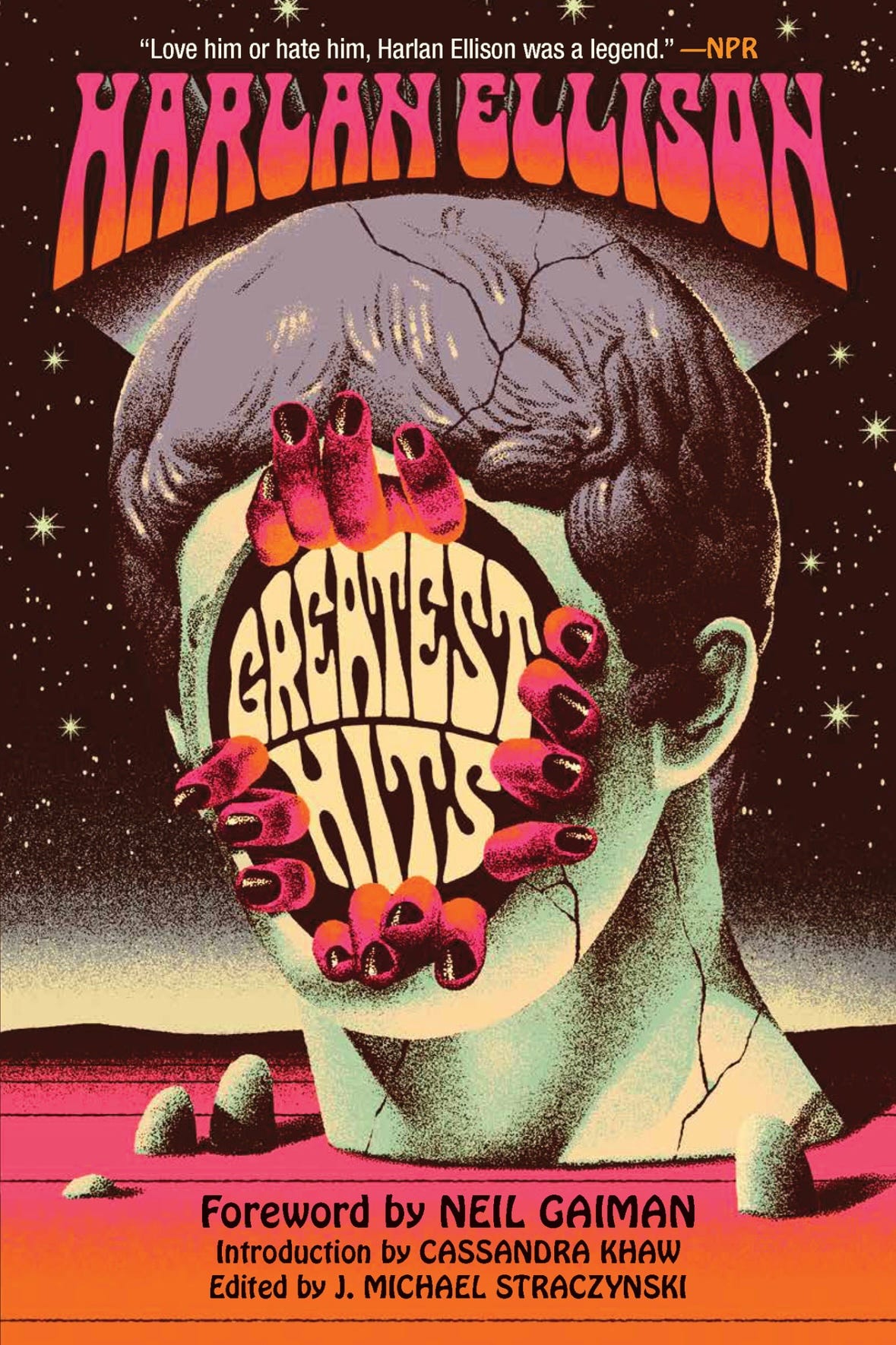
I Have No Mouth, and I Must Scream, Harlan Ellison
The Immortal, Jorge Luis Borges
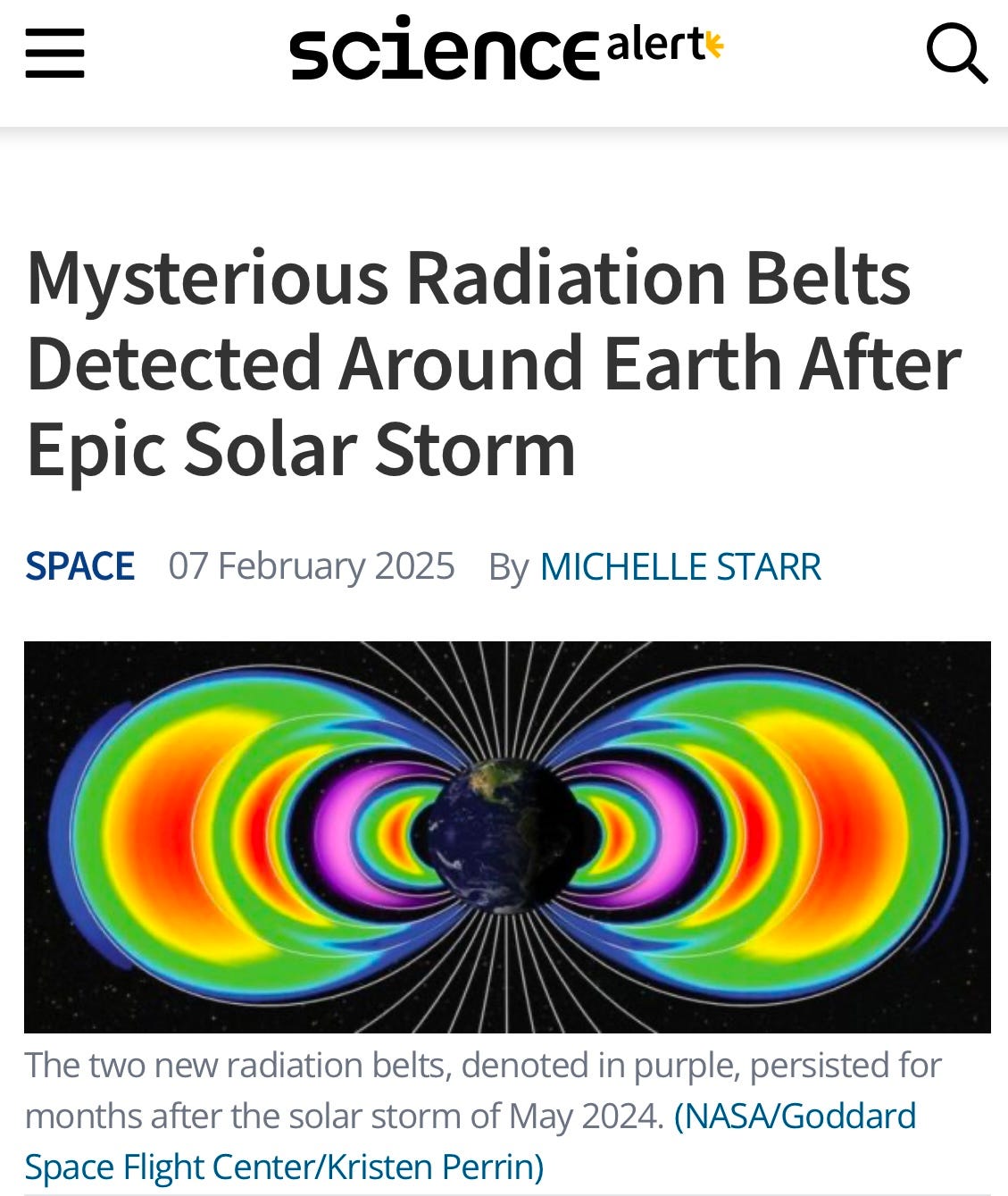
Mysterious Radiation Belts Detected Around Earth After Epic Solar Storm, Michelle Starr
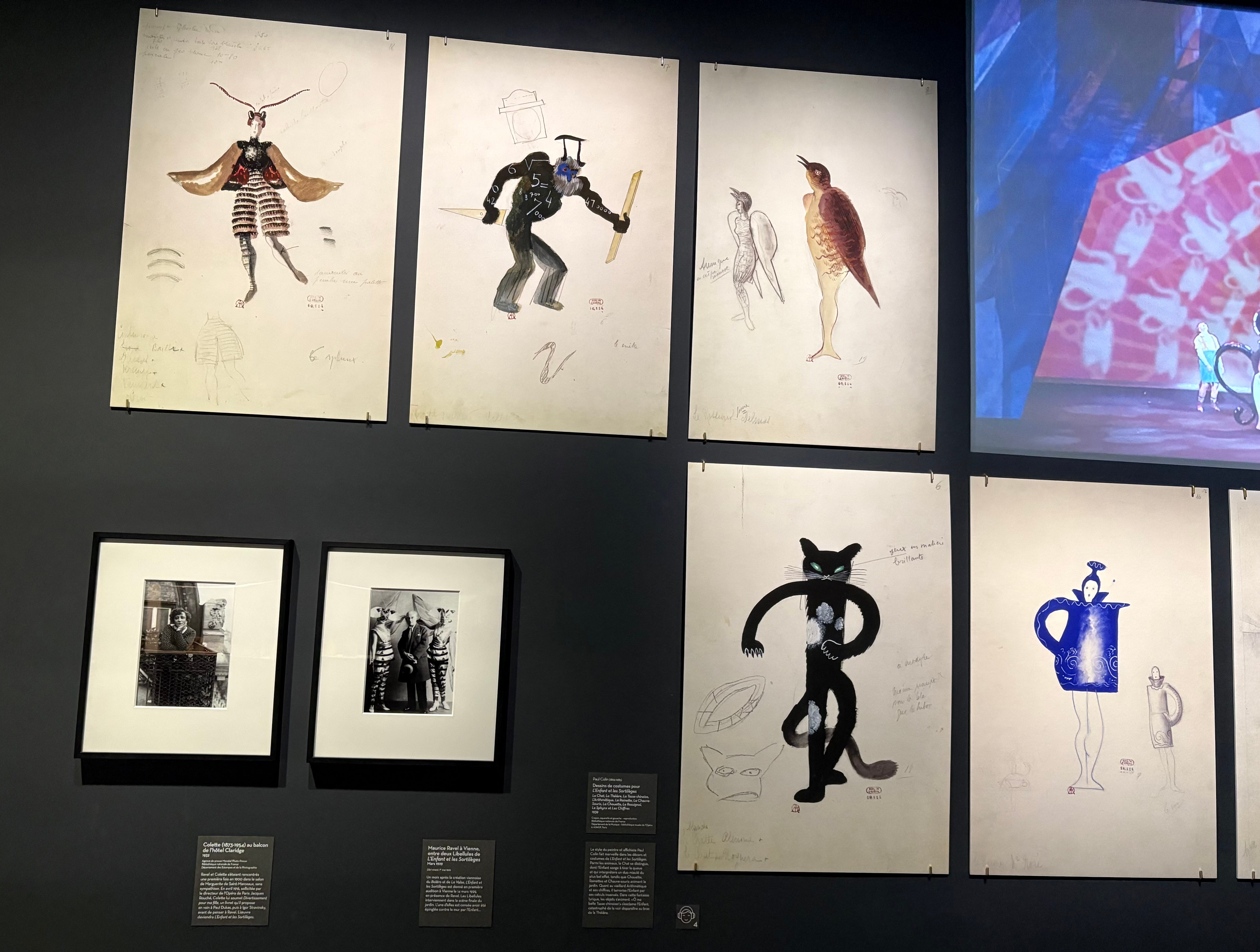
Ravel Bolero, Philharmonie de Paris
This is the eleventh in a regular Sunday series. As with previous editions, I’ll move beyond ‘things I’ve been reading’, towards the end. I’ll also keep each item brief, this week, because I already published something long today.
1) As part of my ongoing project of reading classic twentieth-century philosophy papers, this week I returned to Bernard Williams’ Identity and Identities (1995). As the title implies, Williams is interested here in different kinds of identity. Specifically, he focuses on the following two. First, “the identity of particular things”, in the sense of the what-ness or the who-ness of individuated entities, whether ships or people. And second, social identities, in the “ethical and political” sense of “one’s identity as a person who belongs to a certain family, group, or race”.
It’s a wide-ranging paper, offering valuable thoughts on identity puzzles ranging from the relation between the parts and the whole of a Portuguese man o’ war, to whether there’s such a thing as a dried-up river, to the well-worn Theseus problem. Most striking, however, and likely most practically useful, is Williams’ clear and compelling argument that a social identity is not “my identity in the particular-sense”. In other words, that to see an instance of the former as an instance of the latter is to make a category error. Williams emphasises, therefore, that whilst individuals can find great value — and even self-realisation — in social identities, nonetheless the destruction of a social identity cannot amount to the destruction of its individual members. Indeed, to claim otherwise is to ignore the particular wrongs that are done to particular individuals when a social identity is destroyed. If, for example, Williams tells us, “Native Americans on reservations are conscious of the loss of an identity, they are conscious precisely of their own loss”.
2) Harlan Ellison’s I Have No Mouth, and I Must Scream (1967), is the story of the last five humans on Earth, caught in a video-game-style nightmare, orchestrated by a powerful evil machine. It’s a violent and explicit story. It stands as a warning against human excess in the form of both war and unchecked technological advance. But it also, I think, is supposed to represent a fundamentally positive assessment of human nature. The five captives often watch out for each other, not always for selfish reasons, and sometimes tenderly. And when only one is left, stuck seemingly forever in the machine’s torturous world, he tries hard to justify his role in the death of his friends.
3) I returned this week to Jorge Luis Borges’ The Immortal (1947), for the same reason I read the Ellison: because I was writing about eternal disembodied solitude. Both writers depict a group of people struggling in the grasp of timelessness. Neither Borges’ immortals nor Ellison’s five captives are disembodied, however. And they clearly aren’t alone. But the scenario posed by each story is relevantly similar to the scenario I was thinking about, and which I argue in my piece you should be thinking about too. The Immortal begins in a garden in Thebes — or rather, it almost begins with a narrator telling us that a garden in Thebes was where his “travails began”. It’s hard to know where it ends.

4) As I wrote last weekend, soon I’ll dedicate a ‘top 5’ piece to the best space writing I’ve been reading. I’m not sure whether this recent short article on solar radiation, by Michelle Starr (!), will make the cut. But I really liked it for its clear explanations, and for the magic it romantically describes: “Radiation belts are a normal part of the architecture of a planet with a global magnetic field. Stars are constantly leaking particles, borne by a stellar wind; these stream out and, where they encounter planetary magnetic fields, become entrapped, forming vast belts in toroidal formation around the planet in the center.”
5) A few days ago, I went to a fantastic Ravel exhibition at the Philharmonie de Paris. It’s focused on the Bolero, but don’t let that put you off, if — like I did — you think this is a good piece that’s played too often. You might think differently afterwards. Beyond that, I particularly enjoyed the section about Ravel’s interest in machines, the photo of him about to go swimming in the sea, and the design sketches for the L’Enfant animal costumes.
The radiation belts headline reminds me of a Doctor Who episode in which the trees sense that a gaint solar storm is coming and they temporarily grow huge and cover the planet to protect it.
One can only imagine the scathingly BW response when 2025 talk about "literal genocide" if gender recognition rules change.