


TLDR:
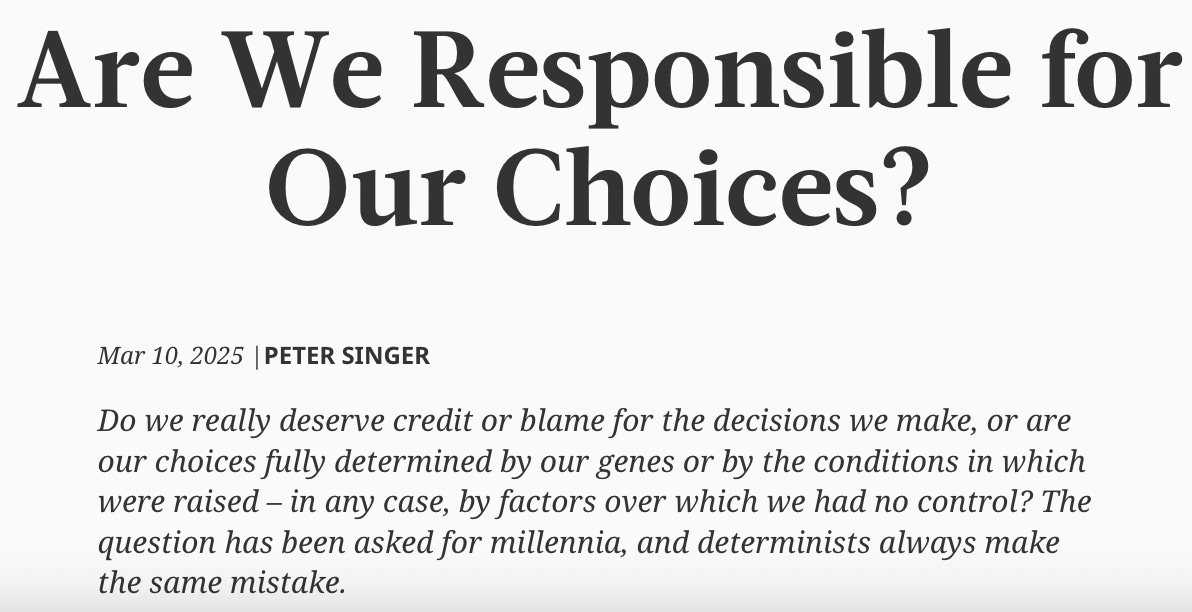
Are We Responsible for Our Choices?, Peter Singer
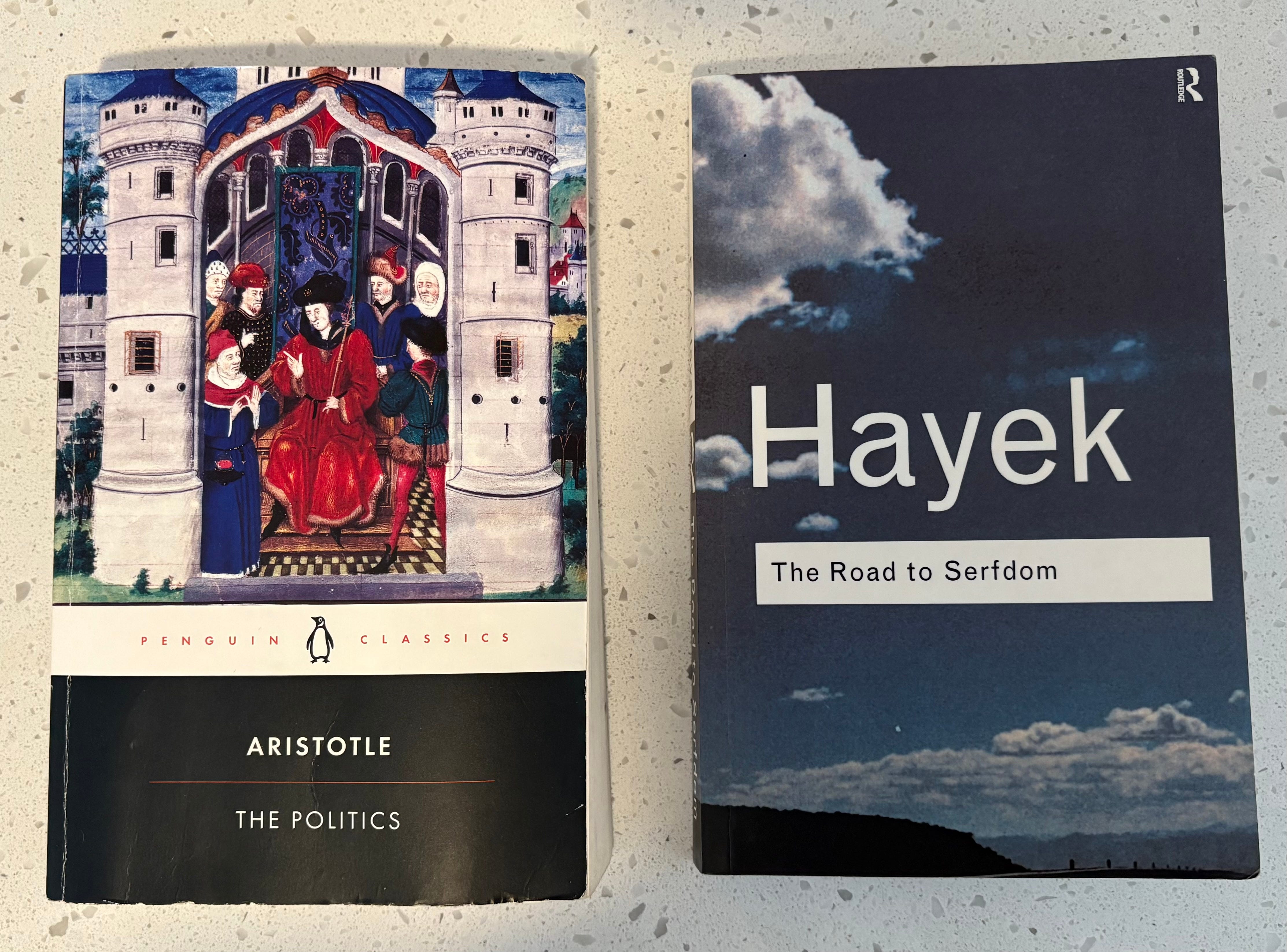
The Politics, Aristotle, and The Road to Serfdom, Friedrich Hayek
The 253 Most Cited Works in the Stanford Encyclopedia of Philosophy, Eric Schwitzgebel
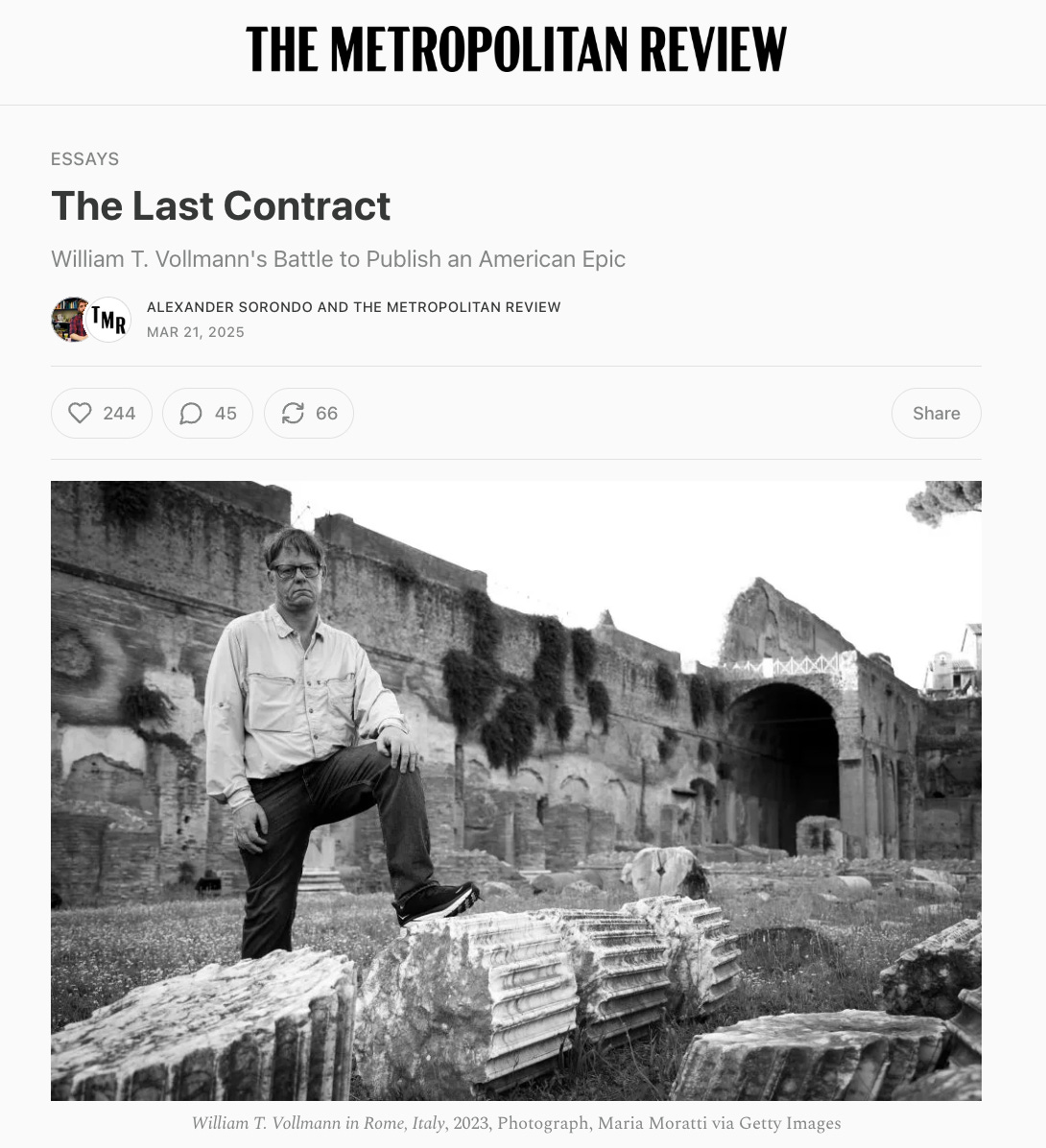
The Last Contract, Alexander Sorondo
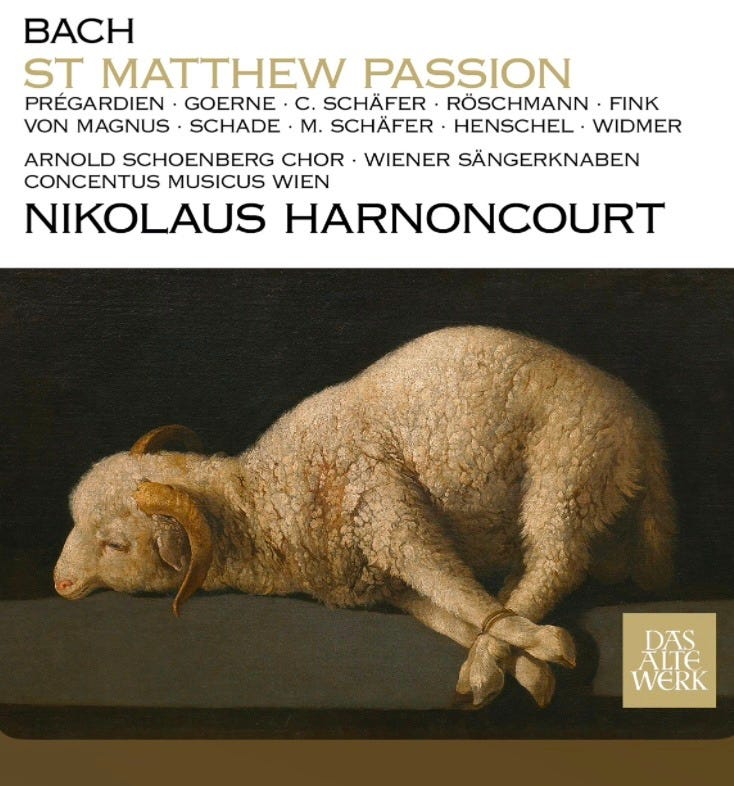
Aus Liebe will mein Heiland sterben from the St Matthew Passion, J.S. Bach
This is the seventeenth in a weekly series. As with previous editions, I’ll move beyond things I’ve been reading, toward the end.
1) You’ll have noticed these weekly ‘top 5s’ are pretty positive. The clue is in the word ‘top’. But I’m going to make an exception today, and include a Peter Singer piece I read yesterday, which I really didn’t rate.
My superficial excuse for doing so is disappointment: I usually find Singer’s writing compelling, even though I hate much of what he argues. I’d go as far as adding that I think he’s done a lot of good in the world, mainly by exposing the evils of factory farming. I just don’t think — unlike consequentialists, like Singer! — that there’s some abstract moral abacus on which the heft of all the good he’s done can negate all (or any of) his wrongs. And I believe that by propagating consequentialist reasoning, Singer has done a vast amount of wrong, even before we get to the specifics of what he’s used that reasoning to support. Infanticide, for instance.
The Singer piece I read yesterday was published earlier this month by Project Syndicate. I’ve enjoyed Singer’s Project Syndicate pieces before. But this recent piece is really sloppy. It’s about free will, and the overriding thought I had, while reading, was that Singer should check out Nagel’s introductory chapter on the topic, which I mentioned here the other week.
The Nagel chapter is rare in providing a good simple explainer of the complexities of the free-will debate. It even manages to make compatibilism seem reasonable! This is important because while on the surface compatibilism seems crazy (what do you mean that acting of your own volition can be compatible with all your actions having been predetermined?!), nonetheless a load of contemporary philosophers subscribe to it. Now, as it happens, I think compatibilism is crazy all the way down, and I’ll write about that here properly sometime. But the main point I want to make today is that I was surprised by Singer’s sloppiness.
Singer begins by suggesting he’s going to undermine the distinction some philosophers make between a person making a choice of their own volition, and a person making a ‘choice’ because that’s what a person with that person’s personality would do. The example Singer gives of the latter involves Joe and his friend coming up against a “particularly tempting” piece of cake. Joe resists the cake, but his friend gives in and eats it all up. Now, some determinists, Singer tells us, would refrain from praising Joe for his restraint, on the grounds that Joe “was able to choose not to order the cake because of his genes, or perhaps because of the way he was brought up”.
On such accounts, therefore, ‘acting non-freely’ doesn’t just describe behaviours that are ‘determined’ because e.g., the laws of nature entail them. It also describes e.g., doing the right thing ‘because’ you were born with the kind of personality that values moral rectitude. Or ‘because’ you had a happy childhood in which you were taught how to behave. Or ‘because’ you hated getting in trouble for not doing the right thing, the last time round.
This kind of thinking is extremely problematic for people who value the idea of being able to deliberate on and make their own choices. This is not least because if all of those kinds of behaviours above count as determined, then it seems maybe the only way in which anyone could ever enact non-deterministic behaviours would be at random! And where, then, is agency? That is, if every time you ‘select’ an action, your selection is a function of your nature or your conditioning, then it’s only the actions that you don’t select that could be non-determined! Now, there are arguments against this position. Strong ones, to my mind. But it’s a famously tricky problem, nonetheless, and there are further (even deeper) steps typically taken on the other side, too.
It’s a shame, therefore, that while Singer goes in fighting — claiming to have found a flaw in such thinking that tracks a failure “to recognize the distinction between behavior that results from a choice we make, and behavior that does not” — he then descends to asserting and sidestepping. That is, Singer tells us that the problem with determinists appropriating all these behaviours is “not the claim that everything has a cause, nor the belief that everything in the universe, including our behavior, is determined”. No, it’s something much simpler, Singer implies.
He then gives two examples. In the first, George plans to push his annoying neighbour under a train, and when the opportunity arises, he does. In the second, Mary accidentally causes someone to fall under a train, through some contrived set of circumstances. Singer tells us that, of course, we must count George as someone who acted freely! And Singer tells us that, of course, we must be able to hold George as responsible for what is therefore his wrong-doing! “It is reasonable,” Singer holds forth, “to say that George freely chose to kill his neighbor and is morally responsible for that person’s death”.
But the problem here (of course!!) is that the determinists who think that seemingly ‘freely chosen’ actions are truly the result of heredity or conditioning will simply apply that reasoning to George’s pushing of his neighbour! Why wouldn’t they? What’s so special about George!?
And what’s more, those determinists will bite the bullet on the responsibility point, too. As Singer surely knows — indeed as he briefly touches on at the start of his piece — it’s increasingly trendy in contemporary philosophy to act deeply suspicious of all kinds of punishment, on the grounds that responsibility can never truly be held for any action, because all actions are determined. But I guess acknowledging that wouldn’t only ‘cause’ Singer to refine his argument. It would also cost him the chance to railroad in a reference to his deterrence-only approach to punishment.
George is guilty, Singer tells us, because George freely chose to push his neighbour under a train. Whereas, I assume what Singer really holds is that we should ‘treat’ George as guilty, even if technically George is not. I assume this because treating George in such a way is defendable on Singer’s moral theory, and not doing so, on Singer’s count, would be massively costly, on aggregate. So, I also assume, therefore, that Singer must’ve calculated that instrumentalising a ‘pro-freedom and pro-responsibility’ position would do his conclusion more good than being explicit about treating poor old George as a means to an end. Do better, Singer, do better!
2) Since I’ve already subjected you to a lot of philosophy, I’ll keep these next few items brief. This week, I’ve been rereading two of my favourite philosophy books: Aristotle’s The Politics, and Hayek’s The Road to Serfdom. The Hayek was the first political philosophy book I ever read properly, as a teenage libertarian. It helped me in many arguments against my then teenage-Marxist best friend. I last read some of the Aristotle on a metro train going down to Piraeus. Both books withstand numerous readings, and I’ll write about them in more detail next time.
3) I enjoyed this recent Substack piece by Eric Schwitzgebel about, and including, the results of his latest investigation into the “most cited works” in the Stanford Encyclopedia of Philosophy. I liked thinking about Schwitzgebel’s methodological choices. I liked thinking about which of the 253 works I should've read. And I like the way the authorship of its top 10 (Rawls, Kripke, Parfit, Nozick, Wittgenstein, Lewis, Quine, Scanlon, Kuhn, Rawls) goes some way to propping up my view that there’s no better place for an analytic philosopher to live than America.

4) A few days ago, on the plane over to America, I enjoyed this surreal Alexander Sorondo article about William T. Vollmann. That said, while the article definitely is about Vollmann — it features many many words on Vollmann, and his practices, and his daughter, and his as yet unpublished latest novel — it’s about many other things, too. Particularly the publishing industry, and maybe the CIA. As an extremely long and somewhat rambling work of art about an extremely long (and it would seem somewhat rambling) work of art, it’s also very meta. At least I assume it is. I haven’t read Vollmann, and reading this article about him was maybe enough for me.
5) This morning, I listened to a couple of recordings of the Aus Liebe from the Matthew Passion. This Harnoncourt, with Bernanda Fink, is probably my favourite. The soprano leap at the recap is surely one of the greatest musical moments of all time.
"I haven’t read Vollmann, and reading this article about him was maybe enough for me."
Strong agree.