


An essay by me on the relation between free will and liberalism was just published on Liberty Fund’s Online Library of Liberty. It’s part of a new series of essays and responses written by me, Henry Oliver, Oliver Traldi, and Galen Strawson about John Locke’s Essay Concerning Human Understanding. (I enjoy that this project involved writing essays about ‘The Essay’, as Locke’s is often referred to!)
In my essay, entitled ‘Acting of Your Own Accord’, I begin by arguing that Section Five of Chapter XXI of Book II of The Essay includes “one of the most important statements in the liberal canon”. That:
[this is] where we find Locke’s deepest theory of freedom, presented most clearly. Here, Locke goes beyond addressing those classic Second Treatise questions, such as ‘what kinds of social conditions should humans, as naturally free and equal things, choose to live in?’, and ‘how should we treat each other, as naturally free and equal things?’. Here, he offers comprehensive answers to upstream metaphysical questions: questions about agency and free will; questions that broadly reduce to ‘what does it mean to be free, in the first place?’. If you think Locke is particularly good at thinking about liberal matters, therefore, then you should be interested in this chapter of The Essay.
I then go on to discuss the particular section in question, arguing that Locke concludes here that:
as a human being, you have the capacity to act on your own decisions to do, or not to do, certain things, and that when you exercise this capacity, you’re acting of your own volition. Technically, this seems to involve the combination of two capacities. First, the capacity to decide what to do or not to do. Second, the capacity to act on such decisions. If we put these together, we get the capacity to act on your decisions to act. And when you exercise this capacity, Locke tells us, you’re acting of your own volition. Or, in the simpler terms I prefer, ‘of your own accord’.
I then discuss four things that I think are particularly notable about Locke’s account of ‘acting of your own accord’, before arguing that it’s an incredibly important idea for liberalism. Not least because:
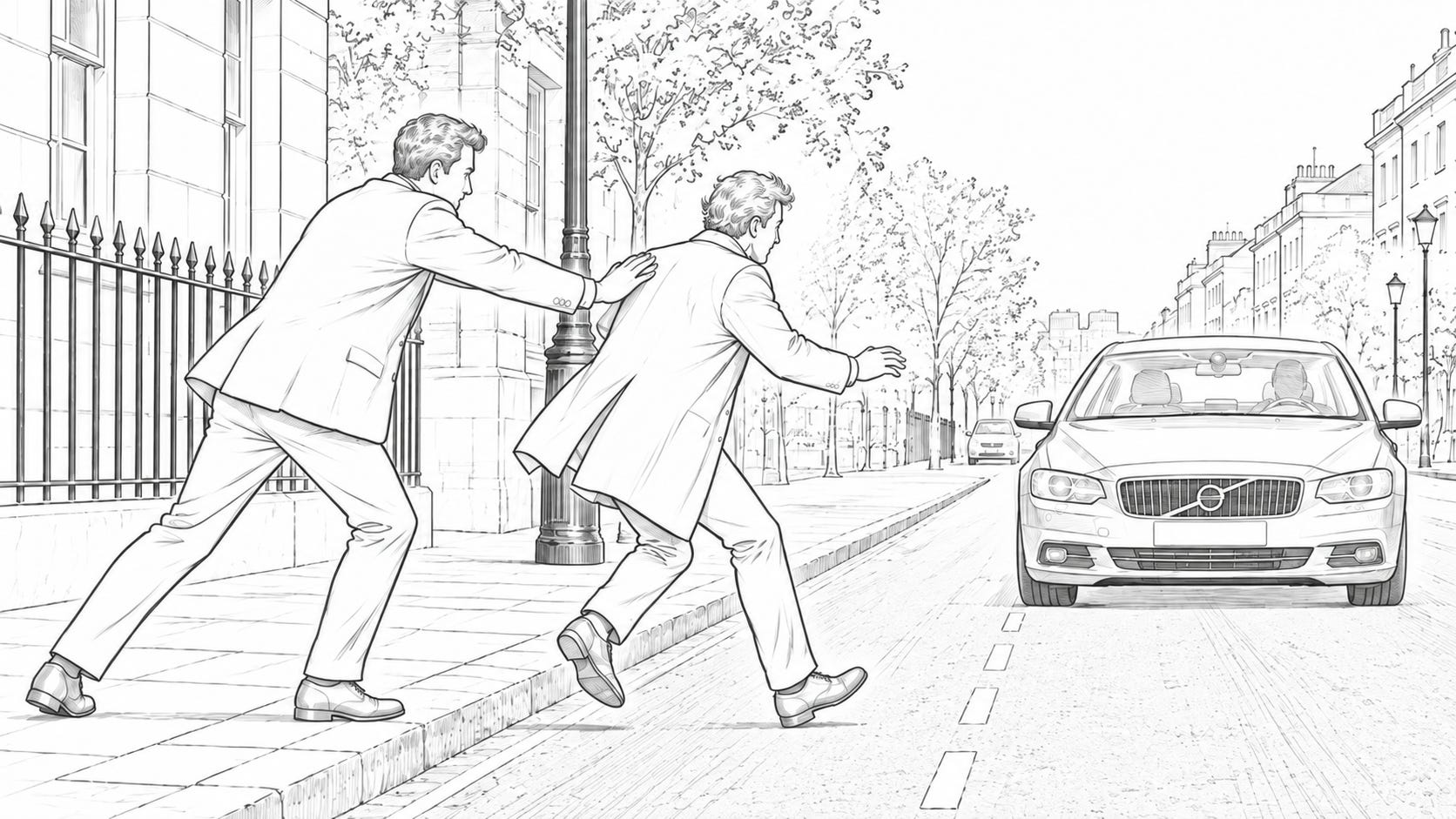
If nobody could ever act of their own accord, then why would you be justified in criticizing anyone for over-intervening in your business? What would such a thing even mean? If someone almost killed you by pushing you in front of a moving car, for instance, how could you criticize them, if they weren’t able to act of their own accord? Sure, you’re hurt, but it couldn’t have been their fault! Okay, perhaps you want to tell me they were just acting ‘on instinct’ in this instance, or something like that. But what if a government minister imposed the policy of taking all the babies away from their parents? How could you criticize the minister, in such a world? How could such an example reduce to something like instinct? Okay, perhaps the minister was horribly threatened into imposing the policy! But what would it mean to ‘threaten’, in such a world? How could you criticize the threatener? If nobody can act of their own accord, how can you criticize anyone for taking the babies away? And what’s more, if this lack of being able to act of your own accord extended to mental actions, then how could you ever conclude that you should criticize anyone for anything, in the first place? What would it mean to ‘intervene’ or ‘criticize’ or ‘push back’ or ‘conclude’, in such a world?
Without the belief that humans can, at least some of the time, act of their own accord, it seems that the liberal is incapacitated from making many of the arguments that the liberal standardly makes — even if we focus solely on the liberal commitment to defending the interests of the individual. What’s more, this seems true whether you’re the kind of liberal who spends their time pushing back against over-interference, or coercion, or aggression, or domination, or rights violation. Or whether you’re the kind of liberal who prefers to emphasize the significance or benefits of following the virtues, or acting in line with the good, or undertaking project formation. Or, indeed, any combination of these things! In other words, if you care about how the individual is treated or behaves — if you think there are limits to what the individual should have to put up with, for instance — then you’ll struggle, if you can’t depend on this idea of ‘acting of your own accord’.
I really enjoyed writing this essay, and hope you might be interested in reading it and the other essays in the series. The response pieces we’ve each written are yet to come..!